
Mold growing in the corner of a bedroom
Mold Inspections

Is It Safe to Sleep in a Room with Mold?

If you’ve found mold in your bedroom, it’s understandable to wonder whether it’s safe to keep sleeping there. There isn’t a universal number of hours or nights that makes mold exposure “safe,” and people respond differently. Mold can cause respiratory, allergic and irritant symptoms in some people, while people with asthma, lung disease or weakened immune systems may face greater risks. This guide explains when extra caution is warranted, why a bedroom moisture problem shouldn’t be ignored, what to do if the mold source isn’t obvious, and how to investigate hidden mold without assuming your symptoms prove what’s happening behind the walls.


A woman in a room with mold growing in a window reveal with obvious inflammation and sinus irritation
Mold Inspections

Can Mold Trigger Autoimmune Symptoms or Inflammation?

Can mold trigger autoimmune symptoms or inflammation? Research supports that damp and moldy environments can contribute to inflammatory, allergic and respiratory responses in some people. The evidence is much less clear when it comes to autoimmune disease. Current clinical guidance says there isn’t enough evidence to conclude that indoor mold exposure causes autoimmune diseases, even though people with existing health conditions may understandably wonder whether their environment is affecting how they feel. This guide explains the important difference between inflammation and autoimmunity, what scientists know so far, and when investigating a damp or moldy home may still make sense.

Lab tests being performed on blood to establish mold exposure
Mold Inspections

Will Mold Exposure Show Up in Bloodwork?

Will mold exposure show up in bloodwork? The answer depends on what your doctor is looking for. Blood tests can sometimes identify immune sensitization to particular molds, such as mold-specific IgE, but that doesn’t prove mold in your home caused your symptoms. Other blood tests are used only for specific medical conditions and aren’t general tests for household mold exposure. There’s also no routine blood test that can simply confirm “mold toxicity.” This guide explains what mold-related bloodwork can and can’t tell you, why results need clinical interpretation, and how investigating your home answers a completely different question.

A sick homeowner in a consultation with their doctor
Mold Inspections

How Do Doctors Know If Mold Is Making You Sick?

How do doctors know if mold is making you sick? There isn’t one test that can answer the question by itself. Doctors may look at your symptoms, medical history, where and when those symptoms occur, existing allergies or asthma, physical examination findings, and targeted tests such as skin-prick or mold-specific IgE testing when appropriate. Even then, a positive allergy test shows sensitization – not proof that mold inside your current home caused your symptoms. This guide explains how clinicians investigate possible mold-related health concerns, why ruling out other causes matters, and where a separate investigation of your home can fit into the process.

Mold growing in a bedroom corner with a sick homeowner sitting on their bed
Mold Inspections

Can Mold Exposure Cause Brain Fog, Fatigue, or Headaches?

Brain fog, persistent fatigue and repeated headaches are common reasons homeowners begin wondering whether something in their environment is affecting them. Mold Dog Network hears these concerns regularly, particularly from people who feel worse at home or have a history of water damage. Research has found associations between damp or moldy buildings and headaches and fatigue, but these symptoms are highly nonspecific and can have many other causes. This guide looks at what the evidence actually tells us, why symptoms alone can’t diagnose mold exposure, and when a combination of health concerns and building clues makes investigating your home a reasonable next step.

A homeowner sitting at a table in their kitchen obviously struggling with migraines
Mold Inspections

What Does Mold Poisoning Feel Like?

What does mold poisoning feel like? There isn’t one universal experience. Some people exposed to damp or moldy environments develop congestion, coughing, wheezing, irritated eyes or skin reactions, while others report headaches, fatigue or difficulty concentrating. Many of these symptoms can also have completely unrelated causes, so how you feel can’t diagnose mold exposure on its own. This guide explains what people commonly mean when they talk about “mold poisoning,” which health effects have the strongest medical evidence, and why symptoms become more meaningful when they happen alongside environmental clues such as water damage, musty odors or known hidden mold.

Woman experiencing mold toxicity symptoms and schheduling a mold dog inspection to find hidden mold
Mold Inspections

What Are the 10 Warning Signs of Mold Toxicity?

People searching for the 10 warning signs of mold toxicity are often already dealing with symptoms they can’t explain. Headaches, congestion, skin irritation, fatigue and difficulty concentrating may all raise questions about mold exposure, particularly when symptoms seem worse at home. But there isn’t a single symptom checklist that can diagnose a mold-related illness, and many of these problems have other possible causes. This guide explains 10 concerns people commonly report, what medical research supports most clearly, and why symptoms should be considered alongside environmental clues such as water damage, musty odors and known mold growth.

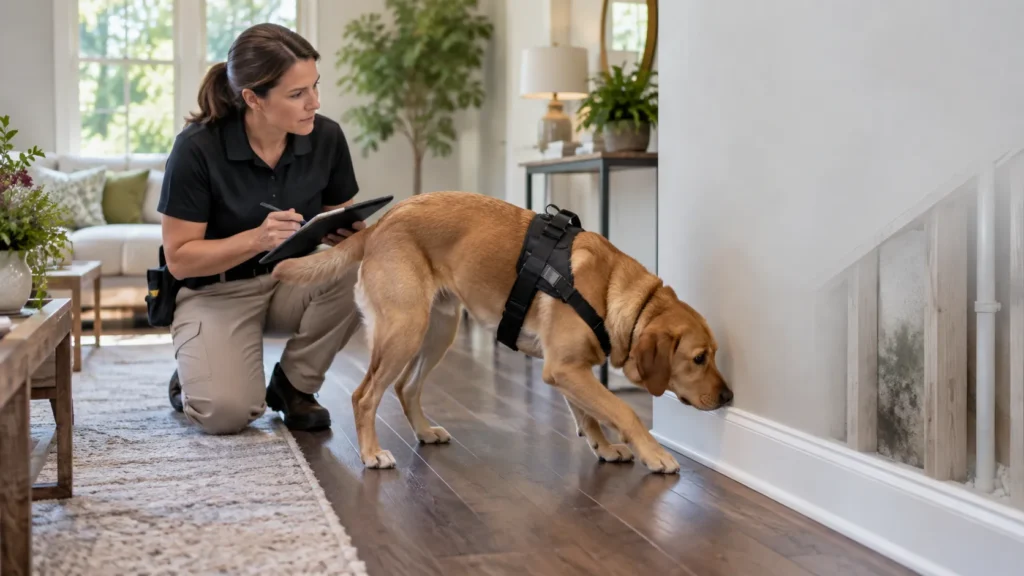
Mold detection dog inspecting a clean interior wall while its handler documents the location.
Mold Inspections

Mold Exposure Symptoms: When Your Home Could Be Part of the Problem

If you feel worse at home but can’t see mold, the uncertainty can be exhausting. Mold exposure can affect people differently, and symptoms alone can’t tell you whether your home is the cause. This guide explains which health concerns are commonly associated with damp or moldy environments, which symptoms are less specific, and when it makes sense to investigate your property. Drawing on Mold Dog Network co-owner Tina Craig’s experience with worried families, it also explains how hidden mold can escape visual inspection and how a mold dog inspection can help locate possible sources without unnecessarily tearing your home apart.

Scroll to Top