

Where Mold Hides: Walls, HVAC Systems, Flooring, Cars, RVs, and More
The bathroom looks clean. Your hardwood floor hasn’t buckled. The car you bought smells a little musty, but the seats feel dry. None of those things tells you what’s happening underneath or behind the surfaces you can see.
That’s what makes hidden mold so frustrating. You might know there was a leak, or keep noticing an odor, without finding anything obvious to explain it. You don’t want to ignore a problem, but you don’t want to start tearing things apart on a hunch either.
Understanding where mold hides starts with following moisture into places that don’t get much attention: wall cavities, subfloors, HVAC components, upholstery, and tightly fitted RV interiors.
Tina, co-owner of Mold Dog Network, has plenty of examples. In our interview, she explained where our dogs commonly alert, why apparently sound materials can conceal problems, and how inspections work across homes, workplaces, and vehicles. Here’s what those experiences can help you look out for.
- Why Mold Can Stay Hidden in a Clean-Looking Space
- Behind Walls, Shower Tile, Sinks, and Tub Enclosures
- Around HVAC Equipment and Inside Ductwork
- Beneath Carpet, Hardwood, and Other Flooring
- In Crawlspaces and Attics You Rarely Enter
- Inside Cars: Seats, Floorboards, and Ventilation
- Inside RV Walls and Behind Fitted Cabinetry
- Rentals, Workplaces, and Homes You’re About to Buy
- How a Mold Dog Inspection Helps Narrow the Search
- You Don’t Have to See Mold to Investigate a Concern
Why Mold Can Stay Hidden in a Clean-Looking Space
A fresh coat of paint doesn’t tell you whether a wall got wet years ago. A tidy room doesn’t reveal what happened beneath its flooring. And a home’s age, by itself, doesn’t tell you whether its materials were kept dry.
Tina sees this disconnect when people buy properties that look well maintained. They understandably judge what’s in front of them. What they can’t see is how previous owners handled leaks, overflows, or persistent humidity.
“And there are so many different places throughout a home.”
Tina Craig
Moisture can reach an absorbent material, support mold growth, and leave the visible surface looking surprisingly ordinary. That doesn’t mean every old leak left mold behind. It means appearance alone can’t settle the question.
When you’re considering where mold hides, useful clues include:
- A leak that was repaired without checking concealed materials.
- A musty odor that keeps returning.
- Staining, dampness, or deterioration around plumbing and equipment.
- Water intrusion that happened before you owned the property.
These spaces matter because we spend so much time in them. According to the Environmental Protection Agency, people spend approximately 90% of their time indoors. That includes workplaces as well as homes.
The aim is to investigate a reasonable concern and understand the moisture history, rather than assume a clean-looking space must be problem-free.
Still concerned after a visual check? Ask Mold Dog Network whether an inspection fits your situation.
Behind Walls, Shower Tile, Sinks, and Tub Enclosures
Bathrooms and kitchens put water close to materials you rarely see. A sink cabinet can conceal a plumbing leak. A tub surround can hide repeated splashes or water intrusion. Behind the finished surface, the affected area may be larger than the mark that first caught your attention.
How water reaches concealed materials
Tina identifies areas behind sinks and tiled shower walls as recurring inspection concerns. Small defects can be easy to overlook, particularly when everything still feels solid.
“We see a lot of that because you get these hairline fractures in the grout and sometimes even in the tile itself.”
Tina Craig
Cracked grout or tile deserves attention, but it doesn’t prove there’s mold behind the wall. The condition of the waterproofing and the rest of the assembly matters too. A qualified repair professional can assess how water is getting through and what needs fixing.
When you’re working out where mold hides in a bathroom, look beyond the exposed grout. Think about the wall behind it, the cabinet base beneath a sink, and enclosed wood around a tub.
You don’t need to remove tile yourself to take a concern seriously. Note where an odor is strongest, photograph any visible damage, and gather what you know about previous repairs. Those details give an inspector a more useful starting point than appearance alone.
A tub enclosure that concealed a recurring leak
Tina describes inspections involving garden tubs where a small crack allowed water to reach the wood underneath during baths. The enclosure hid the affected area, so the occupants didn’t see what was happening.
In her account, the dog directed attention to the enclosed tub area. Opening it during the subsequent work revealed the concealed problem.
That story illustrates why a leak doesn’t need to flood a room to deserve investigation. Repeated wetting in a hidden space can matter, even when the bathroom floor outside it looks fine.
Worried about a concealed bathroom leak? Schedule an inspection to help locate areas of concern before planning repairs.
Around HVAC Equipment and Inside Ductwork
One of Tina’s most memorable examples involved a brand-new home. A section of ductwork had been routed around other work and left with a sag, which she described as a “belly.” Water collected there in a difficult-to-access attic area.
The owners knew there was a problem, but locating its source was another matter.
“It was in a very hard to reach area of the attic, but they had a mold issue in the home and they could not figure out where it was coming from.”
Tina Craig
The lesson isn’t that new homes are inherently problematic. It’s that installation details and moisture management matter, regardless of a building’s age.
Tina also describes dogs alerting around HVAC equipment supported on wood or drywall assemblies that had become affected by moisture. These surrounding materials deserve attention alongside the equipment itself.
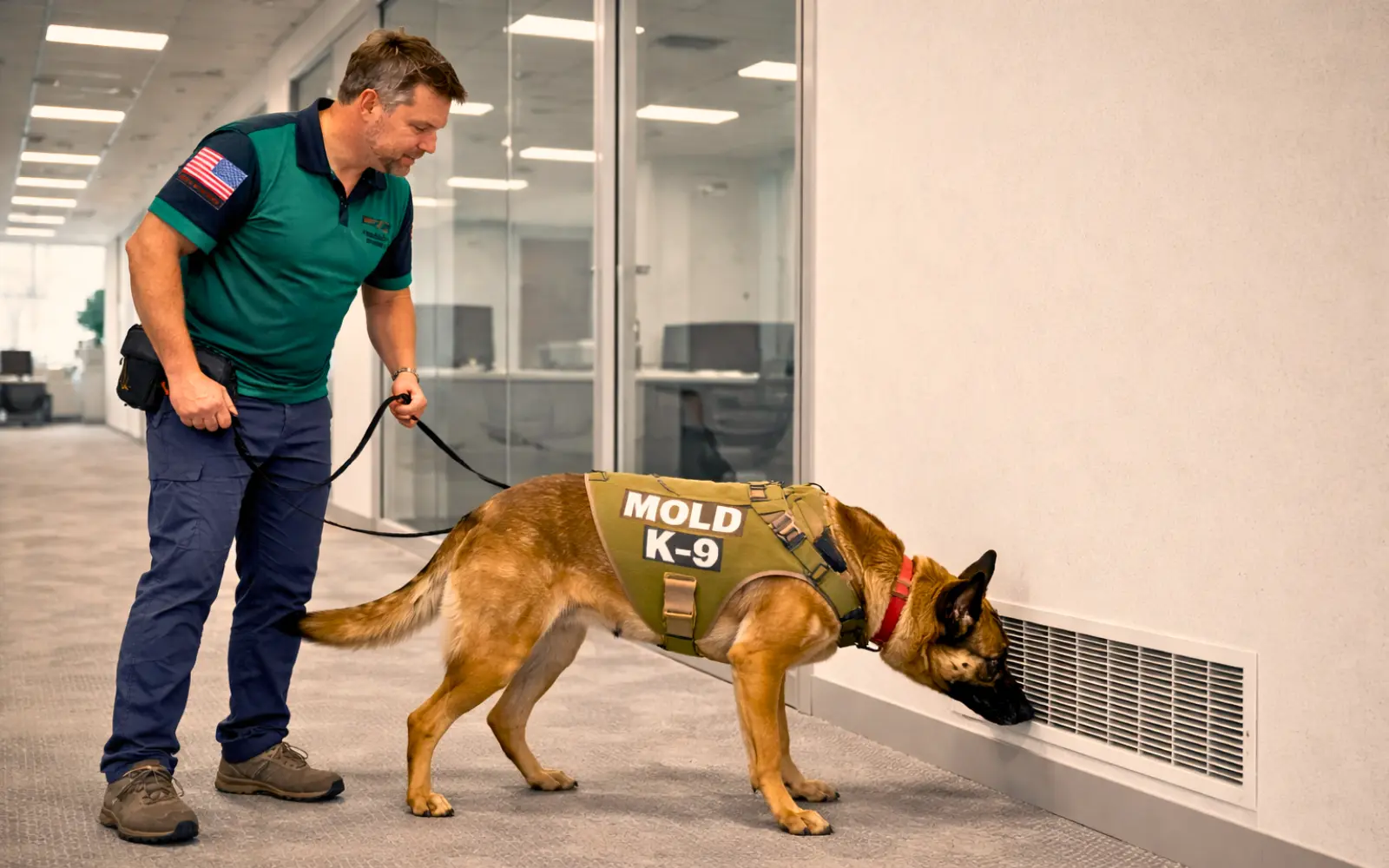
Knowing where mold hides around an HVAC system means separating several possibilities:
- Moisture affecting the equipment platform or adjacent building materials.
- Water collecting in a condensate pan or failing to drain properly.
- Damp insulation or other affected materials within the system.
- Condensation or water intrusion around concealed ductwork.
An alert near an air handler doesn’t automatically mean every duct contains mold. Likewise, an odor at a vent doesn’t establish exactly where the source is. Air movement can complicate the picture, which is why the findings need to be interpreted alongside the building and moisture conditions.
The EPA advises against running an HVAC system known or suspected to be contaminated with mold. Arrange appropriate professional evaluation rather than assuming a filter change will resolve the underlying issue.
Keep any service records or photographs of past condensation and drainage problems. They can help the inspection team understand what changed, where moisture was noticed, and which concealed components may need closer attention.
Ask which parts of the system will need an HVAC specialist.
Can’t trace a recurring odor near your HVAC system? Contact Mold Dog Network about investigating hidden areas.
Beneath Carpet, Hardwood, and Other Flooring
Tina recalls a home where the dog alerted at five locations across the floor. The family couldn’t understand why. There was no obvious buckling or visible damage suggesting a problem beneath their feet.
“There was no indication whatsoever.”
Tina Craig
According to Tina, a remediation company later opened the flooring and discovered substantial visible mold growth underneath. The inspection finding gave the family a reason to investigate something the finished surface hadn’t revealed.
It’s an important example of where mold hides without announcing itself through dramatic damage. Flooring can look usable while concealed layers tell a different story.
Carpet, padding, hardwood, underlayment, and subflooring are different materials with different drying characteristics. Wiping water from the top doesn’t establish that every layer beneath it dried adequately.
Tina also gives the example of a dehumidifier overflowing onto hardwood. Someone might clean up the water and move on because the boards still look fine. Her point is that an unchanged appearance doesn’t confirm the condition beneath the planks.
Water damage is a familiar insurance issue too. Insurance Information Institute data from ISO for 2019–2023 show an average of 1.50 water-damage and freezing claims per 100 insured house-years. That measures claims in the covered dataset, not how many homes contain mold. The dataset excludes tenant and condominium policies, along with Alaska, Texas, and Puerto Rico.
Three practical lessons follow:
- Keep the leak history. Note where water went, how long it remained, and what drying work was done.
- Don’t use buckling as your only warning sign. Its absence doesn’t establish that concealed layers are unaffected.
- Investigate before deciding the repair scope. A scent alert can guide attention, while further assessment establishes what materials need work.
If the flooring sits above a crawlspace, the concern may involve its underside. Tina’s example shows why the accessible surface and the concealed assembly need to be considered together.
Had a leak but can’t see damage? Ask about a residential inspection to help identify concealed areas that need attention.
In Crawlspaces and Attics You Rarely Enter
Most people don’t regularly examine the underside of their floors or the far corners of their attic. Access can be awkward, visibility poor, and moving around unsafe. That makes these spaces easy to overlook when considering where mold hides.
Tina explains that the search is adapted to safe access. Dogs may investigate from the occupied floor above a crawlspace or at an accessible entrance. Attic entry depends on conditions too.
“The canine will go to the attic entrance and do the actual detection at the entrance.”
Tina Craig
| Space | What can go unnoticed | How access affects inspection |
|---|---|---|
| Crawlspace | Moisture and affected materials beneath occupied rooms | The team may check accessible entrances and flooring above it. |
| Attic | Roof leaks, damp materials, and problems around concealed equipment | Direct entry depends on safe conditions for the handler and dog. |
An alert at an entrance helps direct further investigation. It doesn’t identify every affected surface or prove the extent of a problem throughout that space.
The EPA identifies high-humidity crawlspaces as common locations for hidden mold growth. Finding affected materials is only part of the response; the moisture source needs attention too.
If remediation is required, its scope should follow a proper assessment of the space and conditions. Don’t assume that treating one visible patch resolves everything, or that every crawlspace needs the same treatment.
Before an appointment, describe the access point and any known hazards. Photographs can help the team understand the layout. Nobody should enter an unsafe space simply to get a closer look at a suspected mold problem.
Concerned about an inaccessible attic or crawlspace? Tell our team about the space so we can discuss inspection options.
Inside Cars: Seats, Floorboards, and Ventilation
You don’t need to live in a flood zone for your vehicle to get wet. A spilled drink, an open window during rain, a failing seal, or a sunroof leak can introduce moisture into materials that are difficult to inspect thoroughly.
Tina says seats and floorboards are common locations for vehicle alerts. Dogs may also direct attention to ventilation components or cabin filters.
“It’s somewhere in where there’s cloth and padding.”
Tina Craig
When considering where mold hides in a car, the exposed fabric is only part of the picture. Padding and concealed interior materials can be harder to assess than the surface you touch when getting in.
Flood history deserves particular attention when buying used. In an October 2026 release, CARFAX estimated that as many as 48,000 U.S. vehicles may have sustained flood damage from storms earlier that year. That’s a flood-damage estimate, not a count of confirmed mold cases.
A canine inspection follows a controlled search. Tina describes the handler opening doors and directing the dog through different areas. Owners are advised that the dog may need to get onto seats to investigate an odor higher in the interior.
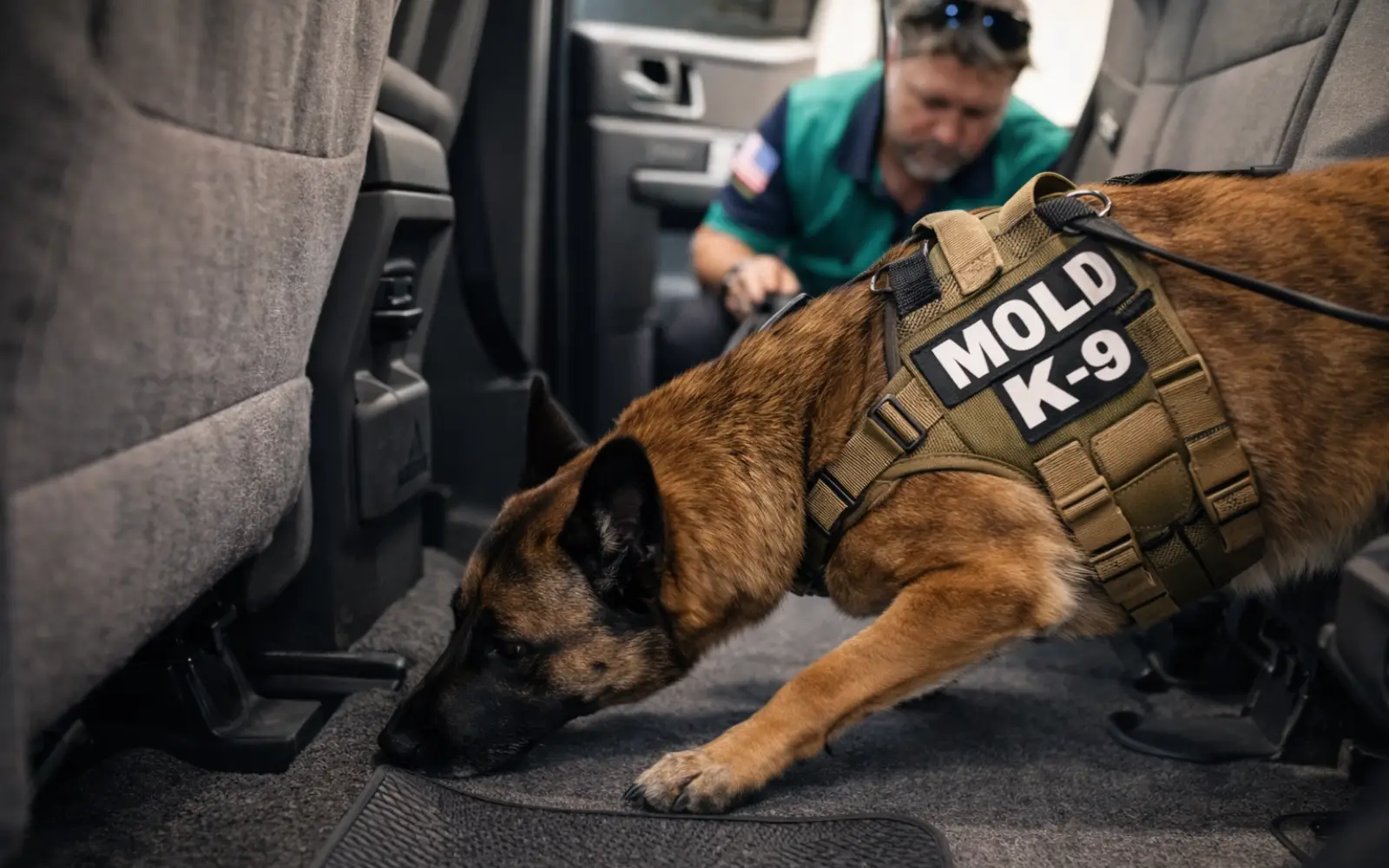
For buyers, this can complement a vehicle-history check and an independent mechanical inspection. Each answers different questions about the vehicle’s condition.
If you recently bought the vehicle, gather any available records of water damage or interior repairs. A detailed history can be useful even when the upholstery has already been cleaned and the vehicle looks presentable.
Tina also hears from people who feel unwell in particular vehicles. That’s a concern to discuss with a healthcare professional; an inspection can investigate the environment without diagnosing the cause of symptoms.
Does your car have a persistent musty smell or water-intrusion history? Ask about a vehicle mold inspection.
Inside RV Walls and Behind Fitted Cabinetry
An RV combines vehicle exposure with many of the moisture concerns found in a home. It has plumbing, roof penetrations, windows, seals, and fitted interiors. It may also sit unused long enough for a small leak to escape notice.
Tina explains why those interiors can make investigation difficult.
“It’s a lot harder in an RV a lot of times to identify when a leak has happened.”
Tina Craig
Water might enter near the roof, travel down a wall, and reach materials behind a cabinet. The visible ceiling or furniture can conceal part of that route. By the time an owner notices an odor or damage, the original entry point may not be obvious.

Beds, cabinetry, appliances, and wall-mounted equipment make good use of limited space. They also restrict what you can see. Understanding where mold hides in an RV means considering the materials behind those fitted features, not just the open living area.
Storage conditions matter as well. Tina points out that parked vehicles remain exposed to weather and humidity. Leaving an RV unused doesn’t protect it from a compromised seal or unnoticed water intrusion.
She recommends checking RVs regularly. The appropriate timing depends on use, storage, condition, and any known leaks. A persistent odor, recent water intrusion, or concern before a trip gives you a specific reason to investigate.
Keep a record of seal repairs, plumbing leaks, and any damp areas noticed during storage. That history can help focus attention when the visible surfaces reveal very little.
Getting ready for another trip? Discuss leak history or musty odors with our vehicle and RV inspection team.
Rentals, Workplaces, and Homes You’re About to Buy
The physical clues don’t disappear because you rent a property, work in it, or haven’t bought it yet. What changes is who needs to be involved when investigating where mold hides.
If you rent
Report recurring musty odors, leaks, and visible moisture damage to the property manager or landlord. Keep photographs and a written record of what you noticed and when. Discuss inspection arrangements and access before booking work. Don’t remove fixed materials yourself to search for concealed damage.
If you own or manage a business
Tina highlights workplaces because people spend substantial portions of their day there. A building’s maintenance history, shared HVAC equipment, concealed plumbing, and previous leaks can all be relevant.
Ask what has been repaired and whether the affected materials were assessed. Our commercial mold inspections help investigate suspected hidden sources in these environments. An older building isn’t automatically contaminated, but its appearance alone won’t answer every question.
If you’re buying a home
A well-presented property can still have an unknown water-damage history. Tina regularly encounters buyers who assumed good upkeep meant concealed materials would be equally sound.
“There’s a lot of life that’s lived in these older homes, and you don’t know what happened prior to you buying that home.”
Tina Craig
Ask about past roof leaks, plumbing failures, flooding, and the work completed afterward. A dry moisture reading today doesn’t establish whether previous mold growth was removed. Equally, a new home can warrant investigation when there are specific moisture concerns, as Tina’s ductwork example shows.
Arrange any additional inspection early enough to fit the purchase timetable and agreed property access. A mold dog inspection adds information about suspected sources; it doesn’t replace the other assessments a property may need.
Planning an inspection for a rental, workplace, or home purchase? Contact us to discuss access, timing, and property history.
How a Mold Dog Inspection Helps Narrow the Search
The setting changes, but Tina describes a consistent approach across homes, commercial spaces, and vehicles.
“The process is the same. The handler and the dog know exactly what they’re doing.”
Tina Craig
Our mold dog inspection services use a trained dog and handler to investigate where mold hides through a systematic scent search.
- Share what you know. Explain past leaks, recurring odors, previous findings, and any areas that concern you.
- The handler guides the search. The team works through accessible areas while accounting for the setting and safe access.
- The dog gives its trained alert. This directs attention to an area where the target odor has been detected.
- The findings are documented. You receive information about alert locations to support appropriate follow-up.
The inspection itself is non-invasive. You don’t have to begin by opening every suspicious wall or lifting every section of flooring.
There are limits. Dogs aren’t infallible, and an alert doesn’t identify the mold species, establish a medical diagnosis, or define every boundary of concealed damage. Further assessment may be needed to confirm conditions and plan repairs.
Our role is to help locate suspected hidden mold. Repairing leaks and carrying out remediation are separate steps handled by the appropriate professionals.
That distinction helps you use the report sensibly: as guidance for the next investigation or repair decision, rather than a substitute for every other assessment.
Ready to investigate? Schedule a mold dog inspection and give your next steps a clearer starting point.
You Don’t Have to See Mold to Investigate a Concern
Tina’s examples share a familiar theme: the surface didn’t tell the whole story. Flooring looked normal. A tub enclosure concealed repeated wetting. A new home had a moisture problem tucked away in its ductwork.
Learning where mold hides helps you ask better questions about the places you live, work, and travel. It doesn’t mean assuming every odor is mold or every old leak left damage behind. It means taking a reasonable concern seriously and choosing an investigation that fits it.
Keep the moisture history, pay attention to recurring clues, and get appropriate help when the source remains unclear. Whether the concern is behind a shower wall or inside an RV, locating the affected area is a useful step toward deciding what needs to happen next.
You deserve a clearer starting point than guesswork.