
How to Tell If Mold Is Behind Your Walls
A wall can look perfectly clean and still be hiding a problem.
That’s the part that makes homeowners feel stuck. You walk past the same wall every day. The paint looks fine and there’s no obvious black patch. Maybe there was a leak months ago, but it was “handled.” Maybe the stain was painted over. Maybe the room just has a weird smell you can’t trace.
And still, something doesn’t feel right.
Mold behind walls is one of the hardest hidden mold problems to confirm because the issue is, by definition, out of sight. The visible side of the wall may look dry while moisture is trapped inside the cavity. Drywall paper, insulation, framing, sheathing, and baseboards can all hold moisture where you can’t see it.
Tina Craig, co-owner of Mold Dog Network, explained the problem in one sentence:
“We just can’t see it.”
Tina Craig
That doesn’t mean you should start cutting holes in drywall at random. It means you need a better way to narrow down where the source may be hiding.
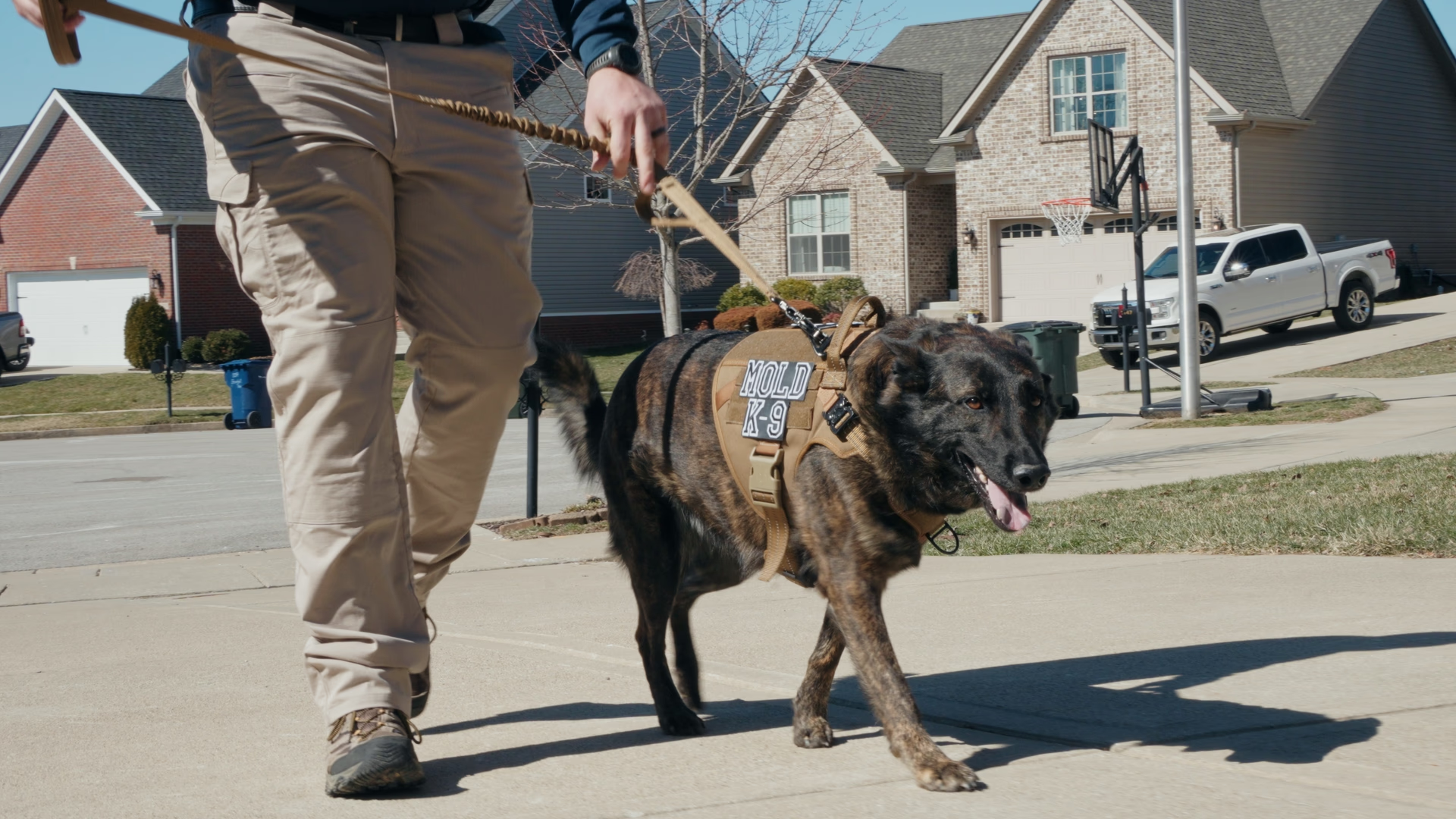
A trained mold detection dog can help locate mold scent signatures behind walls, floors, ceilings, cabinets, and other finished surfaces. That gives you a clearer starting point before anyone starts tearing your home apart.
In this guide, we’ll explain how to tell if mold is behind your walls, what signs to look for, why wall cavities can stay wet after the surface looks dry, and how a mold dog inspection can help you stop guessing.
- Can Mold Really Grow Behind Walls?
- Signs Mold May Be Behind Your Walls
- Why a Wall Can Look Dry While the Cavity Is Still Wet
- Hidden Wall Mold From Building Defects and Insulation Problems
- Why Visual Inspections and Air Tests May Miss Mold Behind Walls
- How Mold Dogs Help Find Mold Behind Walls
- What to Do If You Think There’s Mold Behind a Wall
- Don’t Guess What’s Behind the Wall
Can Mold Really Grow Behind Walls?
Yes, mold can grow behind walls when moisture gets into the wall cavity and stays there long enough.
Mold doesn’t need to be visible on the room-facing side of the wall to be active inside. It can grow on drywall backing, paper facing, wood framing, insulation, sheathing, dust, and other organic material inside the wall system.
The CDC notes that mold grows where there’s moisture, including around leaks in roofs, windows, or pipes, or where flooding has occurred.
Common causes of mold behind walls include:
- Plumbing leaks
- Roof leaks
- Chimney leaks
- Window or siding leaks
- Flooding or water intrusion
- Condensation inside wall cavities
- HVAC coolant-line sweating
- Missing or incomplete exterior building materials
- Poor insulation or air barrier problems
- Drain line or supply line failures
Some of these problems are obvious when they happen. A pipe bursts. A roof leaks. A basement floods. You know water got in.
But some wall mold problems are much quieter. Moisture may enter slowly during storms. Humidity may infiltrate a poorly built wall section. A coolant line may sweat inside a wall. A chimney may leak behind the fireplace wall. A pipe may drip inside the cavity without ever creating a dramatic puddle.
Tina described moisture and mold conditions this way:
“Humidity and water, the things that give mold the breeding ground or the idea that it wants to make your home its home, are not biased.”
Tina Craig
That’s why mold behind walls can happen in homes that otherwise look clean, cared for, and well maintained. Mold isn’t judging whether the room looks nice. It’s responding to moisture.
If your wall has had any kind of moisture exposure, don’t assume the visible surface tells the whole story. A mold dog inspection can help determine whether mold odor is present behind the wall.
Signs Mold May Be Behind Your Walls
There’s no single sign that proves mold is behind a wall without further investigation. But there are clues that deserve attention, especially when several show up in the same area.
You may be dealing with mold behind your walls if you notice:
- A musty smell near one specific wall (often one of the first signs of mold in your house)
- Odor that gets worse after rain or humidity
- Odor that gets stronger when the HVAC runs
- Bubbling, peeling, or cracking paint
- Warped baseboards or trim
- Soft or damp drywall
- Old water stains or discoloration
- Repaired areas that still smell musty
- A history of plumbing, roof, window, or chimney leaks
- Allergy-like symptoms that seem worse in certain rooms
- Unusual dust or particulate buildup
A musty smell with no visible mold is often one of the biggest clues. If one wall or room smells different from the rest of the house, pay attention. The odor may be coming from the cavity, from behind trim, from inside insulation, or from moisture traveling through hidden building materials.
Tina also described a pattern some homeowners notice with dust:
“You’ll hear the homeowner occupants say, ‘I dusted two days ago and I have to dust again because it looks like I’ve gone a month without dusting.’”
Tina Craig
Dust alone doesn’t prove there’s mold behind a wall. Homes can be dusty for plenty of reasons. But unusual particulate buildup combined with musty odors, past leaks, and health complaints may be part of the larger hidden mold picture.
Health symptoms can also be part of why homeowners start investigating. Mold Dog Network doesn’t diagnose medical conditions, but many homeowners call because they feel worse at home. The CDC states that mold exposure can cause symptoms such as stuffy nose, sore throat, coughing, wheezing, burning eyes, and skin rash in some people, while others may have no reaction.
So if you’re asking yourself how to tell if mold is behind your walls, look for patterns. One small clue may not mean much. But a musty wall, past moisture, visible material changes, and symptoms that seem worse in that room are worth taking seriously.
If several of these signs are showing up in the same area of your home, it’s worth locating the source before the problem spreads or gets covered up again.
Why a Wall Can Look Dry While the Cavity Is Still Wet
This is one of the biggest misunderstandings after water damage: dry on the outside doesn’t always mean dry inside.
A wall surface can look normal while moisture remains:
- Behind drywall paper
- Inside insulation
- On studs or framing
- Behind baseboards
- Around sill plates
- Between floors and ceilings
- Behind cabinetry or built-ins
That’s why painting over a stain doesn’t solve the underlying issue. Paint can cover discoloration, but it can’t dry wet insulation or remove mold growing inside the cavity.
EPA guidance says buildings and building materials should be dried quickly (within 24–48 hours) to help avoid mold growth.
The problem is that hidden cavities often don’t dry on the same timeline as visible surfaces. A homeowner may run a fan, wipe up visible water, or paint over a stain and think the job is done. But if water stayed inside the chamber, mold may still grow.
Tina described this exact issue after leaks:
“It stays wet inside that chamber and grows mold and the dogs are like, it’s right there.”
Tina Craig
This can happen after a plumbing leak, roof leak, bathroom leak, upstairs laundry issue, refrigerator line leak, or water intrusion around a chimney or window. The stain may be gone. The drywall may feel dry to the touch. But inside, the materials may have held moisture long enough to support mold growth.
That’s why wall cavity mold can be so frustrating. You may have done the visible cleanup and still be left with a hidden problem.
If you painted over a stain or dried only the visible surface, a mold dog inspection can help check whether odor remains inside the wall or ceiling cavity.
Hidden Wall Mold From Building Defects and Insulation Problems
Not every case of mold behind walls starts with a dramatic leak.
Sometimes, the problem is the way the home was built.
Tina described inspections where exterior building materials that should have protected the home were missing, incomplete, or installed poorly. In one case, a wall section had extremely thin foam board where more substantial protective materials should have been. Moisture and humidity were getting into the wall system, and the homeowner had no reason to know until the dog alerted.
That kind of issue can create hidden mold because the wall cavity is being challenged by moisture over and over again.
Common building-related causes include:
- Missing exterior materials
- Incomplete insulation
- Poorly sealed penetrations
- Weak or missing air barriers
- Failed flashing around windows or doors
- Poor siding or exterior wall details
- Temperature clashes inside the wall cavity
- Humidity infiltrating the wall system
When warm indoor air and cold outdoor air meet inside a poorly protected wall, condensation can form. When humid outdoor air pushes into a wall cavity, moisture can collect. When insulation is missing or incomplete, certain sections of the wall may behave very differently from the rest of the home.
Tina said that in one of these cases, the homeowners were shocked:
“They said we never ever would have known this if it had not been for the dog.”
Tina Craig
That’s exactly why hidden wall mold can be so hard to track down. There may not be one obvious leak. There may not be a visible stain. The wall may simply have a design or construction flaw that lets moisture in year after year.
If one wall smells different, feels different, stains repeatedly, or sits on a side of the home exposed to heavy weather, it may deserve a closer look.
If one wall seems to smell, sweat, stain, or feel different from the rest of the home, don’t ignore it. A mold dog can help determine whether there’s hidden mold odor in that wall system.
Why Visual Inspections and Air Tests May Miss Mold Behind Walls
Visual inspections and air tests can be useful. But they have limits when the problem is hidden inside a wall.
A visual inspection can only assess what’s visible and accessible. If mold is growing behind drywall, inside insulation, behind trim, or inside a cavity, there may be nothing obvious to see from the room.
Air testing has a different limitation. It samples air at a specific moment in time. If the mold is contained behind a wall and isn’t releasing enough spores into the sampled air at that moment, the test may not identify the hidden source.
This doesn’t mean industrial hygienists or inspectors aren’t helpful. Many are skilled professionals using the best tools available. The issue is that hidden mold doesn’t always present itself clearly to human eyes or sampling tools.
Tina explained the gap this way:
“Humans go into these properties with experience, textbook training, field training and they go in with tools… they’re using devices to try to make up for the God-given device that a canine owns.”
Tina Craig
That’s the difference. Humans use tools to interpret possible signs. Dogs are trained to locate scent.
So if a homeowner smells something near a wall, feels worse in a certain room, or knows there was a past leak, but visual checks and testing haven’t explained it, a mold dog inspection may be the next logical step.
If your inspection or air test didn’t explain the smell, a mold dog inspection may help locate the hidden wall source more directly.
How Mold Dogs Help Find Mold Behind Walls
A mold detection dog doesn’t inspect a wall the way a person does.
A person looks at paint, stains, moisture readings, construction details, and visible damage. A trained dog searches for mold scent signatures.
That’s what makes mold dog inspections so useful when you’re trying to figure out if mold is behind your walls.
Tina explained the dogs’ focus clearly:
“They don’t care what a wall looks like. They don’t care what the layout of a house looks like… All they want is that scent.”
Tina Craig
During a mold dog inspection, the process is straightforward:
- The dog and handler move through the home systematically.
- The dog searches for the scent signature associated with mold growth.
- If the dog detects mold odor, it gives a trained alert.
- The handler documents the alert area.
- The homeowner receives a report that can guide next steps.
That matters because the alternative is often exploratory demolition. Cutting holes. Pulling trim. Opening multiple walls. Guessing which cavity might be the problem.
A mold dog inspection helps narrow the search before that happens.
We find the source so the next step can be targeted. If the dog alerts near a specific wall, the homeowner can use that information to work with a remediation company, contractor, industrial hygienist, or other qualified professional to investigate that area more carefully.
Before cutting random holes in drywall, schedule a mold dog inspection to find out where mold odor may be strongest behind your walls.
What to Do If You Think There’s Mold Behind a Wall
If you think there’s mold behind a wall, the most important thing is not to panic and not to start opening the wall without a plan.
Disturbing moldy materials can spread spores and contamination if it’s done carelessly. And if you open the wrong area, you may create damage without getting any closer to the source.
Here’s what to do instead.
Do:
- Note where the smell is strongest
- Pay attention to whether rain, humidity, or HVAC use changes the odor
- Document past leaks, stains, repairs, or water damage
- Check nearby plumbing, windows, chimneys, roof areas, and exterior walls
- Keep indoor humidity controlled
- Schedule a mold dog inspection if the concern persists
- Use the inspection report to guide the next professional step
Don’t:
- Keep painting over stains without investigating
- Assume “dry to the touch” means dry inside
- Cut into suspected mold without containment or a plan
- Ignore musty odors after water damage
- Try to remediate hidden mold without fixing the moisture source
The goal is certainty.
Tina described the relief homeowners feel when they finally know where to focus:
“No more of that. The guessing game is over. You now know what you’re dealing with.”
Tina Craig
That’s what Mold Dog Network is built to provide: direction before damage, answers before guesswork, and a clearer path forward when hidden mold is suspected.
If you’re worried mold is behind your walls, Mold Dog Network can help you move from suspicion to a clearer inspection report.
Don’t Guess What’s Behind the Wall
Mold behind walls is hard to confirm by sight alone.
A wall can look clean while moisture remains inside. A stain can be painted over while mold grows behind it. A room can smell musty even when every visible surface looks fine.
We get it. It’s unsettling to suspect something is wrong inside your home and not be able to see it.
But you don’t have to guess what’s behind the wall.
Mold Dog Network uses trained mold detection dogs to locate mold scent signatures non-invasively, helping homeowners identify where hidden mold may be present before opening walls or starting remediation.
As Tina said:
“The cool thing about Mold Dog Network is you’re gonna know if you have a problem and you’re gonna know where the problem hides.”
Tina Craig
If you suspect mold behind your walls, schedule a mold dog inspection with Mold Dog Network and find out where the problem may be hiding.