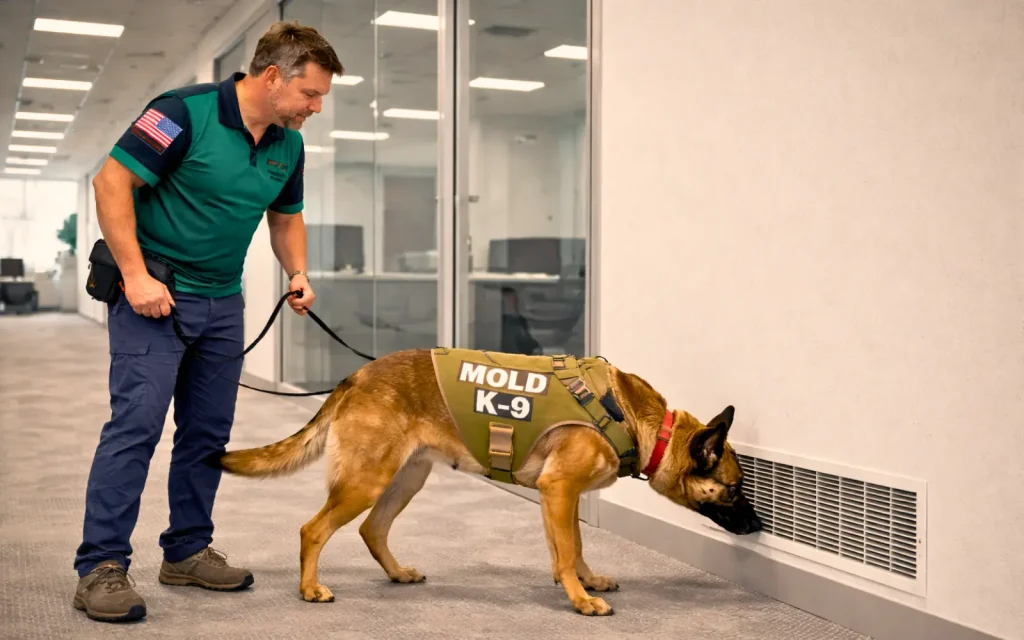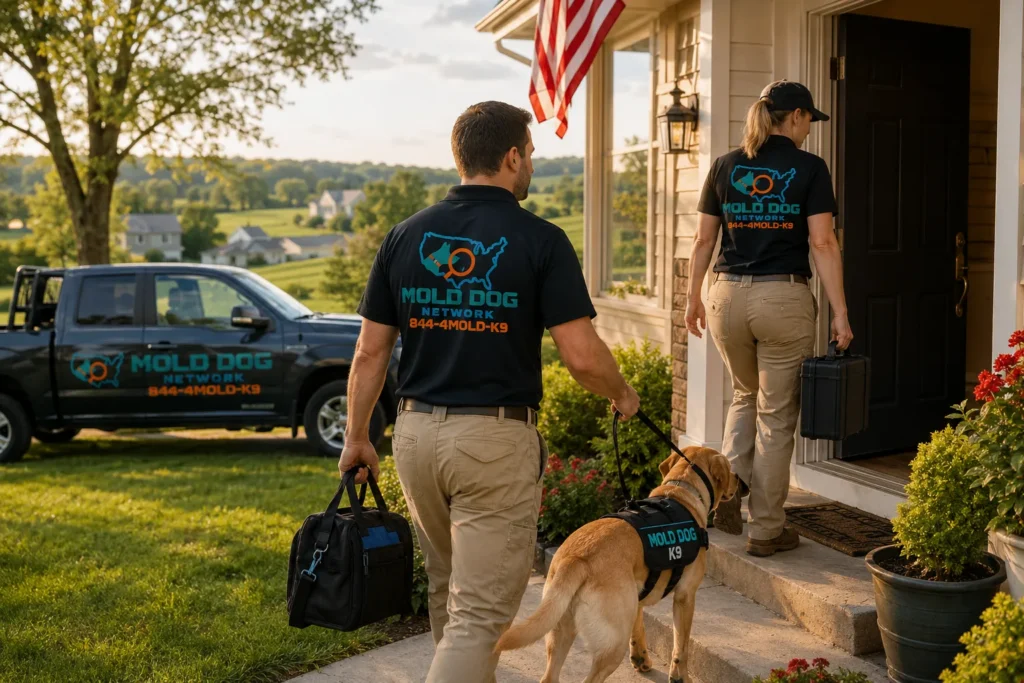

A mold dog shaking hands with handler in an office lobby after a mold dog office inspection
Mold Inspections

Can I Do a Mold Inspection Myself? What Homeowners Should Know

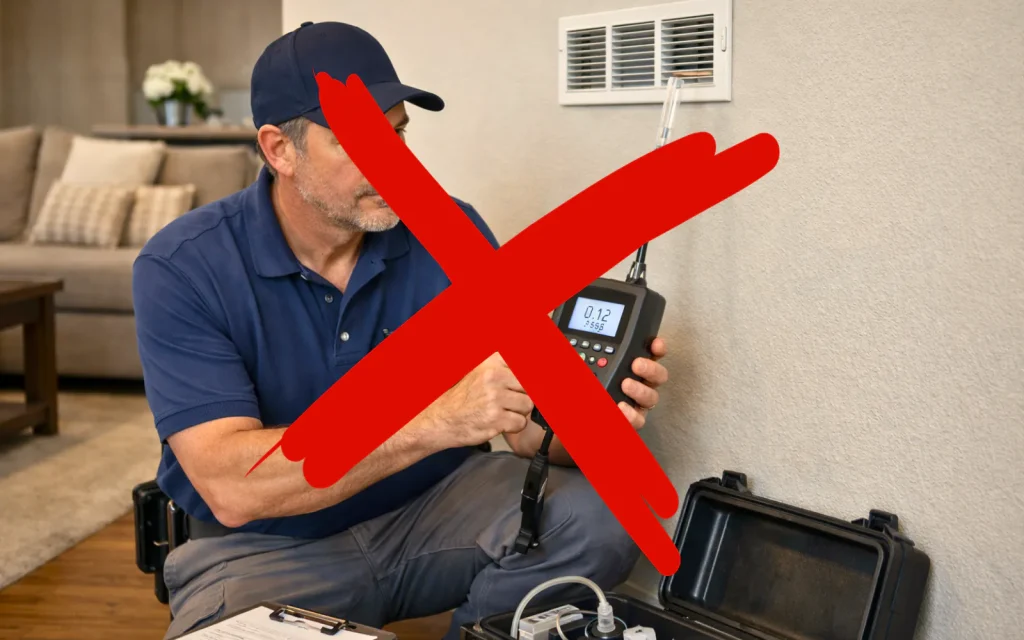
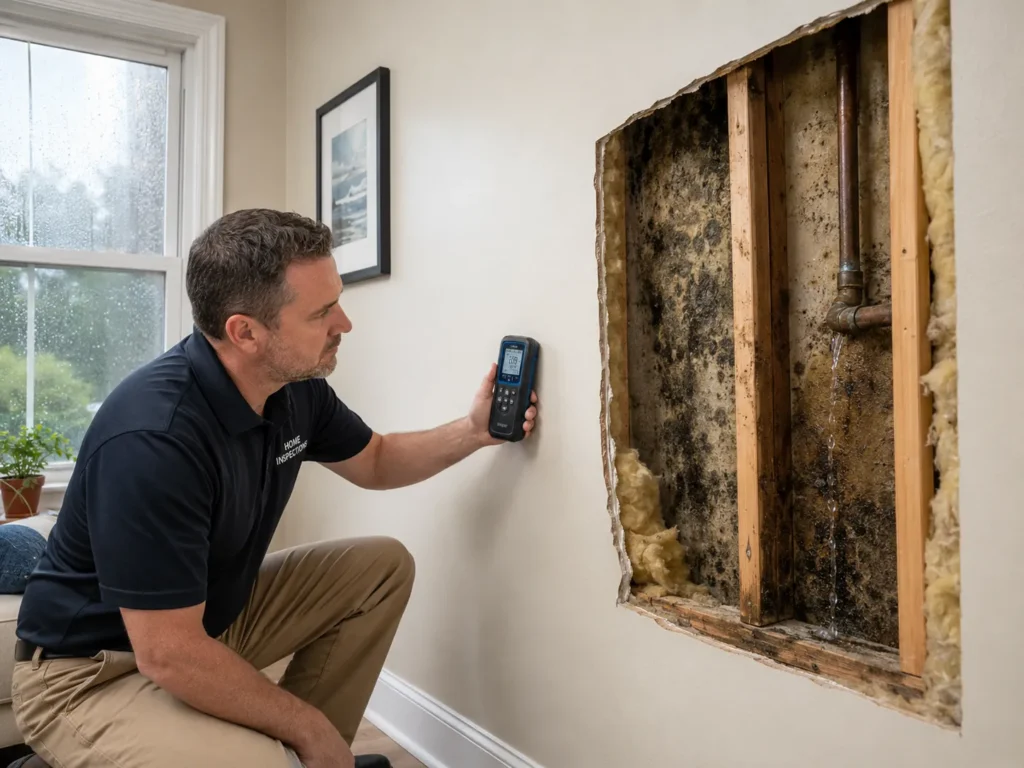
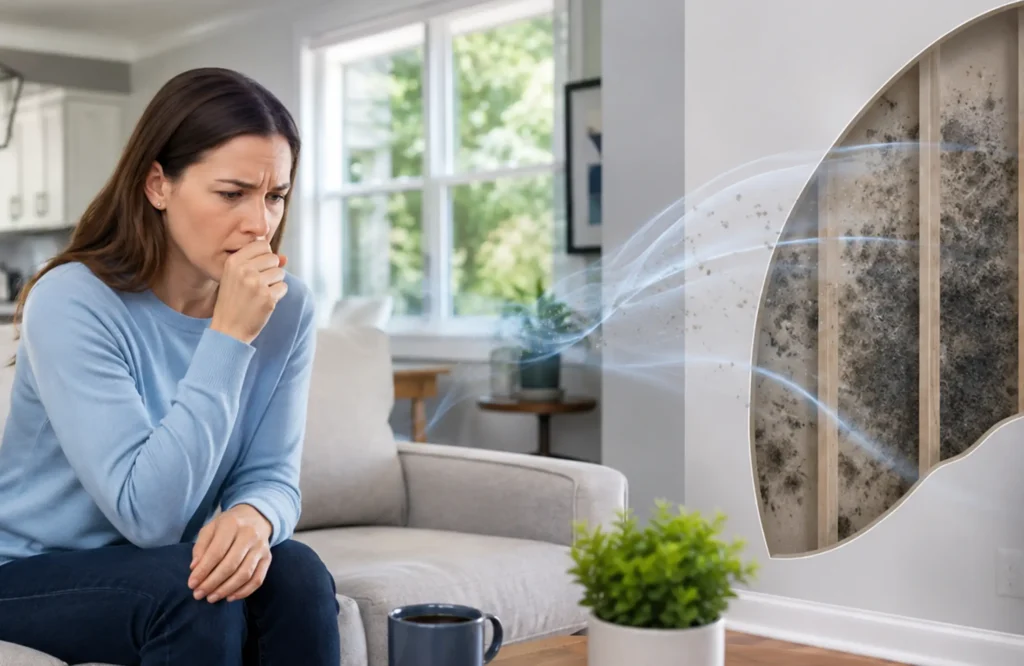
You can check your home for obvious signs of mold, but a DIY mold inspection has limits. Mold often hides behind drywall, under flooring, inside cabinets, around plumbing, and in HVAC-related areas where homeowners can’t easily see it. This guide explains what you can safely look for yourself, what signs matter most, why air tests and swabs don’t always locate the source, and when mold dog inspections may be the better next step. If your home smells musty, has a water damage history, or still feels wrong after testing, it may be time to stop guessing.

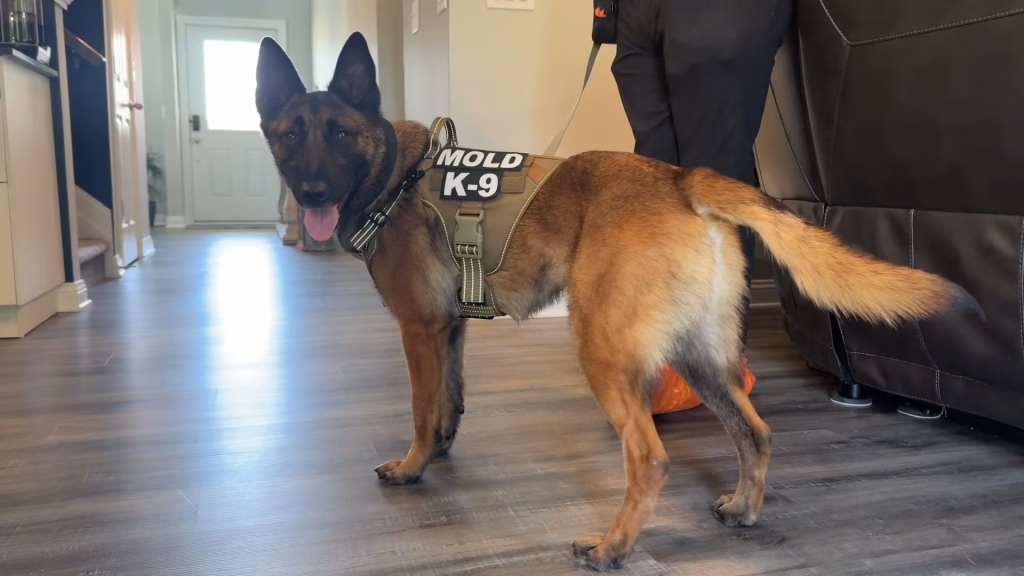
A mold dog home inspection in progress
Mold Inspections

Mold Inspections: What They Include, What They Cost, and When You Need One

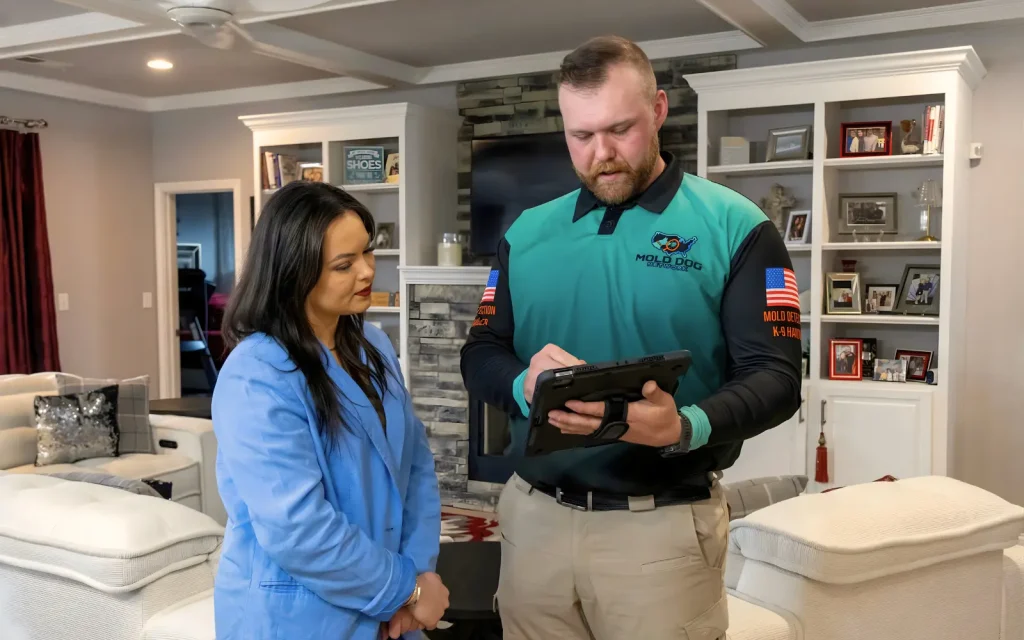
If you think you need a mold inspection, the biggest question is often not whether mold exists somewhere in the home. It is where the mold is hiding. This guide explains what mold inspections include, what they cost, when to schedule one, and why traditional visual inspections, swabs, and air testing may fall short when mold is hidden behind walls, under flooring, inside cabinets, or in HVAC systems. Drawing from Mold Dog Network co-owner Caleb Jones’ experience in remediation and canine mold detection, this article explains how a mold dog inspection helps homeowners stop guessing and start finding the source.

Scroll to Top