
Thermal Imaging vs Mold Dogs for Hidden Mold Detection
Thermal imaging can be a useful tool during a home inspection, especially when moisture may be involved.
But there’s one thing homeowners need to understand clearly:
Thermal cameras don’t detect mold.
They detect temperature differences. Those temperature differences may suggest moisture, missing insulation, air leaks, or other building conditions. But a thermal camera can’t confirm that mold is growing behind a wall.
That’s where the comparison between thermal imaging vs mold dogs matters.
Thermal imaging can help identify suspicious moisture patterns, but a mold dog inspection helps locate the odor of active mold growth.
And those are very different jobs.
Caleb Jones, co-owner of Mold Dog Network, uses this same kind of thinking when comparing mold dogs with other inspection tools.
“We each solve two different things.”
Caleb Jones
So the real question isn’t, “Which tool is better in every situation?”
It’s: Are you trying to find moisture, or are you trying to find hidden mold?
What Thermal Imaging Actually Detects
Thermal imaging cameras detect surface temperature differences.
During an inspection, a thermal camera may show warmer or cooler areas on walls, ceilings, floors, or other surfaces. Those patterns can sometimes point to moisture intrusion, missing insulation, air leakage, plumbing issues, roof leaks, or other building problems.
That can actually be very helpful.
For example, if a wall has a cool patch below a window, that may suggest moisture. If a ceiling area shows a temperature anomaly after a roof leak, that may be worth investigating. If an exterior wall shows unusual temperature patterns, there may be insulation or air leakage issues.
But temperature difference is not the same as mold.
The EPA says, “The key to mold control is moisture control.” Source: EPA
That’s why thermal imaging can be useful in a mold investigation. Moisture is often the underlying condition that allows mold to grow. If thermal imaging points to a moisture concern, that area may deserve closer attention.
But there are limits.
Thermal imaging can suggest that moisture may be present. It can’t tell you whether active mold is growing. It can’t identify mold species. It can’t locate mold odor. And it can’t confirm whether hidden mold is present inside a cavity.
That’s why thermal imaging should be treated as an investigative tool, not a mold detector.
Thermal imaging can help identify where moisture may be present, but moisture alone doesn’t confirm mold.
Related read: The best mold inspection methods
Why Thermal Cameras Can’t Confirm Hidden Mold
Thermal cameras can be impressive. They make hidden patterns visible, and that can give homeowners a sense that the camera is “seeing” behind the wall.
But what it’s really detecting is temperature variation.
That means there’s room for both false reassurance and false alarm.
A cool spot on a wall might be moisture. Or it might be an insulation gap, air leakage, thermal bridging, or a normal temperature difference caused by the way the home is built.
On the other hand, mold can be present even when a thermal camera doesn’t show an obvious temperature anomaly. If a leak happened months ago and the area is now dry, mold may still be present, but the thermal image may not show moisture. If mold is growing behind materials without an active temperature difference, the camera may not flag the area, and that’s the limitation.
A thermal camera can help identify possible moisture patterns, but it can’t answer the full mold question.
Caleb made a similar point when talking about traditional testing. Some tools may suggest whether there’s a problem, but they don’t always show the source clearly.
“It tells you if you have a problem. It just doesn’t tell you where…”
Caleb Jones
With thermal imaging, the issue is slightly different. It may show where moisture could be, but it doesn’t tell you whether mold is actively growing there.
Thermal imaging can’t confirm:
- whether mold is present
- whether mold is active
- what type of mold exists
- whether a musty odor is coming from that area
- whether a past leak created hidden mold
- whether an area without a temperature anomaly is mold-free
That’s why homeowners should be careful about relying on thermal imaging alone when the concern is hidden mold.
Thermal imaging is excellent for finding moisture patterns but it shouldn’t be mistaken for a mold detector.
Related read: Visual Inspections vs Mold Dogs
How Mold Dog Inspections Complement Thermal Imaging
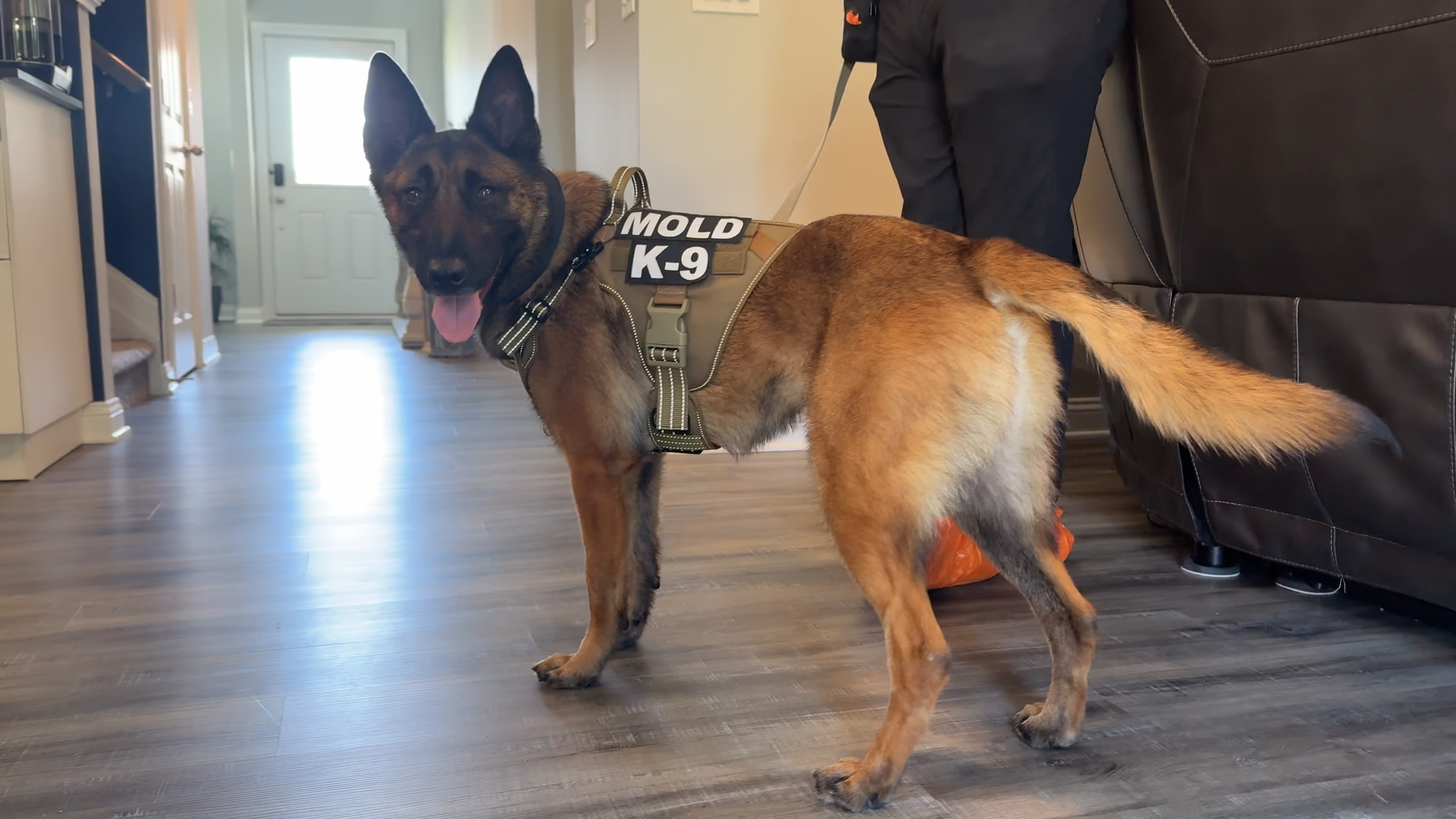
A mold dog inspection works differently because the dog is trained to detect odor from active mold growth.
During the inspection, the dog moves through the property with a trained handler. When the dog detects mold odor, the handler documents the alert location. That gives the homeowner same-day, location-focused findings.
Caleb explains Mold Dog Network’s role this way:
“The canine inspection is just an inspection-based service that will show you where the mold is on the same day.”
Caleb Jones
That makes mold dogs especially useful when a homeowner suspects hidden mold but doesn’t know where it’s coming from.
Thermal imaging may say, “This area has a suspicious temperature pattern.”
A mold dog inspection may say, “This area has active mold odor.”
Together, those pieces of information can be extremely helpful.
For example:
- Thermal imaging may identify a possible moisture issue near a window.
- A mold dog may alert near the same wall, suggesting active mold odor may be present.
- That gives the homeowner a stronger reason to investigate that area further.
Or the opposite may happen:
- Thermal imaging may show no obvious moisture pattern.
- The mold dog may still alert near a cabinet base or wall cavity.
- That may indicate a hidden issue that isn’t showing up thermally.
This is why thermal imaging and mold dogs shouldn’t always be treated as a competition. The better approach is to understand what each tool does best.
Thermal imaging helps identify possible moisture or building performance issues.
Mold dog inspections help locate active mold odor.
Both can support a more targeted investigation.
If thermal imaging has identified suspicious moisture, a mold dog inspection can help determine whether hidden mold may also be present.
Which Inspection Should You Choose?
The right tool depends on the question you’re trying to answer.
| If your concern is… | Best tool |
| Possible water intrusion | Thermal imaging |
| Hidden mold source | Mold dog inspection |
| Unknown moisture pattern | Thermal imaging |
| Unknown mold odor | Mold dog inspection |
| Buying a home | Often both |
| Post-remediation concerns | Mold dog inspection plus validation |
Choose thermal imaging if you’re trying to identify moisture patterns, air leakage, insulation gaps, or areas that may need further moisture investigation.
Choose a mold dog inspection if you’re trying to find hidden mold behind walls, under flooring, behind cabinets, or in other areas where a visual inspection or air test hasn’t given clear answers.
Caleb has said he’d like to see more homeowners use canine inspections earlier when hidden mold is suspected.
“I would love to see the industry shift to people investing in this type of inspection at the forefront.”
Caleb Jones
That makes sense when mold is the real concern. If you already know there’s a moisture issue, you still need to know whether mold is active and where the source may be.
For homeowners, especially those dealing with musty smells, past leaks, confusing test results, or unexplained concerns, the most useful inspection is often the one that answers the next practical question.
If the question is “where is moisture?” thermal imaging may help.
If the question is “where is hidden mold?” a mold dog inspection may be the better fit.
The best inspection depends on whether you’re trying to find moisture or find mold.
When Using Both Makes Sense
In many real homes, moisture and mold concerns overlap.
That’s why using both thermal imaging and a mold dog inspection can make sense in certain situations.
This may be especially helpful when:
- you’re buying a home
- there was a roof leak or plumbing leak
- a storm caused water intrusion
- a room smells musty but looks clean
- you’re dealing with a complex remediation plan
- the home has multiple suspected areas
- someone in the household is health-sensitive
- previous testing didn’t provide clear answers
Caleb described mold dog inspections as a resource that can improve the overall inspection process.
“The canine inspection is just a new resource…”
Caleb Jones
That’s the right way to think about it.
A thermal camera may help identify suspicious moisture. A mold dog may help identify whether active mold odor is present. An industrial hygienist may help write a remediation scope. Lab testing may help with post-remediation validation.
The strongest process often uses the right tool at the right time.
If you’re dealing with hidden mold concerns in a home, a residential mold dog inspection can help you move from uncertainty to specific alert locations.
When moisture and mold are both concerns, combining inspection methods often provides the clearest picture.
Final Thoughts
Thermal imaging and mold dog inspections are both useful, but they don’t do the same job.
Thermal cameras detect temperature differences. Those differences may point to moisture, insulation issues, air leaks, or other building concerns.
Mold detection dogs detect the odor of active mold growth. That makes them especially useful when hidden mold is suspected but not visible.
So when comparing thermal imaging vs mold dogs, don’t ask which one is universally better. Ask what you need to know.
If you need to find possible moisture, thermal imaging may help.
If you need to find hidden mold, a mold dog inspection may give you clearer answers.
Need to know whether hidden mold, and not just moisture, is present? Schedule a mold dog inspection with Mold Dog Network today.