
Mold Behind Walls: Signs, Causes, and How to Find It
Your bathroom wall looks fine, but there’s a musty smell you can’t explain. Perhaps a pipe leaked months ago, the repair was completed, and you’re still wondering what happened to the materials behind it.
Mold behind walls can develop without an obvious mark on the exposed surface. That leaves you trying to judge a problem you can’t actually see.
Tina, co-owner of Mold Dog Network, encounters this uncertainty regularly. Her inspection examples explain why concealed moisture deserves attention and how a scent search can help. For a broader look at other concealed locations, see our guide to where mold hides throughout your home.
What Are the Signs of Mold Behind Walls?
There isn’t one surface clue that reliably tells you everything happening inside a wall. Instead, look at the combination of what you notice and what you know about past water problems.
Possible reasons to investigate include:
- A musty odor that keeps returning near the same wall or cabinet.
- Staining, peeling paint, or deteriorating finishes.
- A plumbing leak or other water intrusion affecting that area.
- Cracked shower tile or grout that needs assessment.
- Moisture damage around a sink cabinet or wall base.
Tina identifies areas behind sinks and tiled shower walls as recurring concerns.
“We see a lot of that because you get these hairline fractures in the grout and sometimes even in the tile itself.”
Tina Craig
Cracked grout doesn’t prove there’s mold behind walls. The condition of the underlying waterproofing and wall assembly matters too. Equally, intact paint doesn’t establish that everything behind it is unaffected.
If dampness extends toward the wall base, adjacent flooring may need attention. Our guide to warning signs of mold under carpet or flooring explains what can be concealed beneath the surface.
Noticed a recurring odor or damage near a wall? Ask Mold Dog Network whether a residential inspection is the right next step.
What Causes Mold Behind Walls and Bathroom Enclosures?
Moisture reaches concealed materials through different routes. A leaking pipe inside a wall is one possibility. Water entering around a shower or tub assembly is another. Condensation can also affect materials in spaces you rarely inspect.
Small leaks can reach materials you can’t see
The visible tile, grout, and paint are only part of the construction. When water reaches absorbent materials behind those finishes, the exposed surface may reveal little about the conditions underneath.
Tina’s garden tub example
Tina describes tub enclosures where a crack allowed water to reach wood underneath during baths. The enclosure concealed the affected area.
“It was leaking water onto the floor just enough to get it wet.”
Tina Craig
That repeated wetting illustrates how mold behind walls or adjoining enclosures can remain unnoticed. A room doesn’t need to flood for concealed materials to warrant investigation.
Water problems can also bring substantial repair costs. ISO data published by the Insurance Information Institute show an average water-damage and freezing claim of $15,400 for 2019–2023. That combined category isn’t a mold-remediation estimate. The dataset excludes tenant and condominium policies, plus Alaska, Texas, and Puerto Rico.
Have a leak history but no clear picture of the damage? Contact our team about investigating concealed areas before repairs are planned.
Can a Wall Look Fine and Still Have Hidden Mold?
Yes. A wall’s finish doesn’t show the condition of every material behind it. That’s particularly relevant when you don’t know how previous water damage was handled.
Tina often discusses this with people buying older homes that appear well maintained.
“There’s a lot of life that’s lived in these older homes, and you don’t know what happened prior to you buying that home.”
Tina Craig
Age alone doesn’t establish a mold problem. The useful questions concern leaks, drying, affected materials, and repairs.
Inspection tools can help answer some of those questions. Moisture meters identify moisture at the locations tested. Thermal imaging shows temperature differences that require interpretation. Neither directly proves a wall is mold-free.
A dry reading today doesn’t establish whether previous mold growth was removed. At the same time, these tools can provide valuable information when investigating mold behind walls. They work alongside the property’s history and the inspector’s observations.
Being told a wall looks dry can feel reassuring without resolving your original concern. Ask what was checked, where readings were taken, and whether concealed conditions need further investigation.
If you’re buying, consider whether a mold inspection before closing would help address specific moisture concerns before the purchase timetable limits your options.
Keep any photographs taken before a leak was repaired. They can show where water appeared, even after the wall has been redecorated or enclosed.
Still concerned after a visual check or moisture reading? Tell Mold Dog Network what’s been checked and what remains unexplained.
How Can a Mold Dog Help Find Mold Behind Walls?
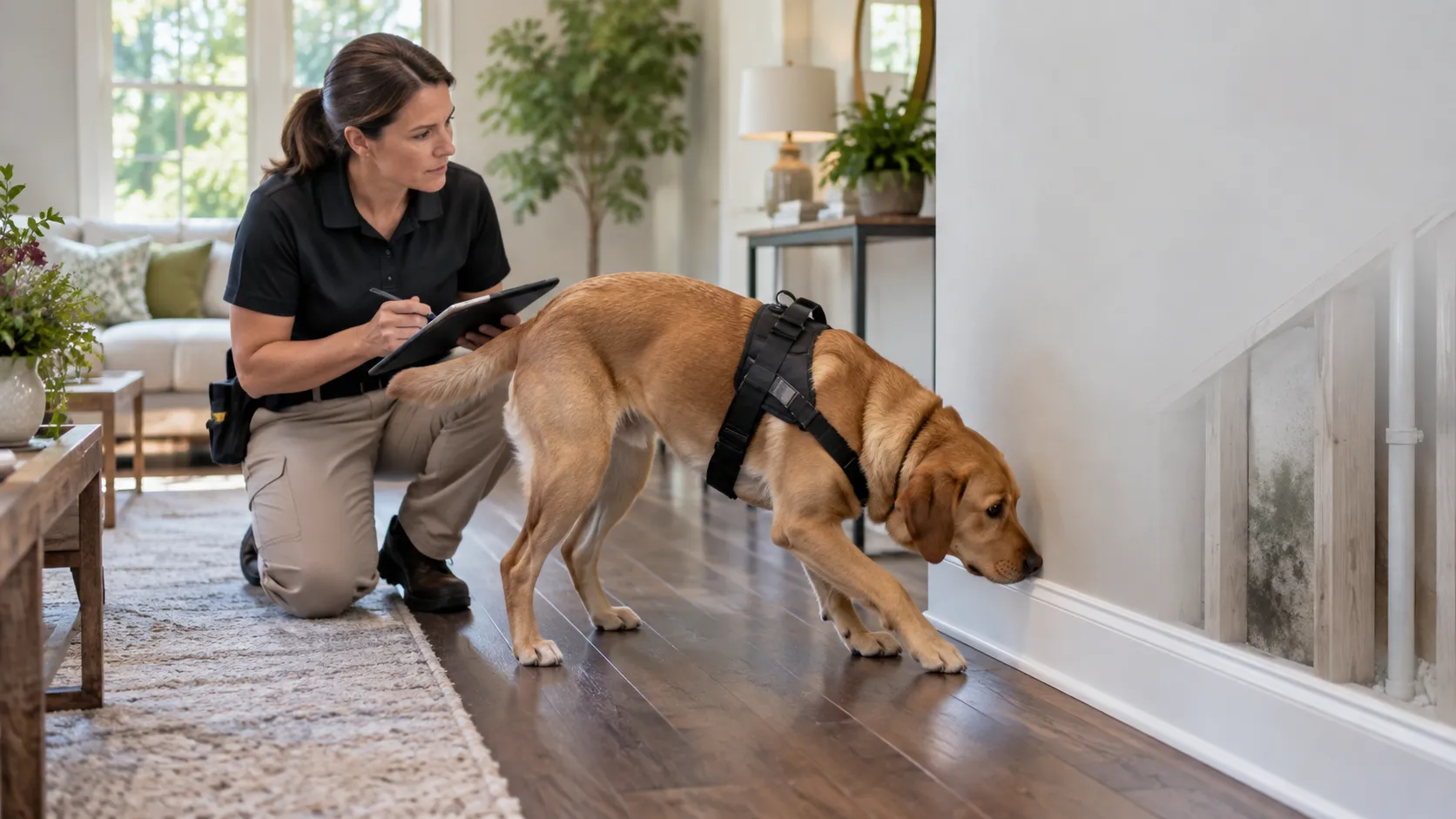
A mold dog inspection uses a trained dog and handler to search for the target odor. The handler guides a systematic inspection through accessible areas, and the dog gives its trained alert when it detects that odor.
As Tina explains:
“They want that scent signature. That’s what they’re after.”
Tina Craig
When investigating mold behind walls, this approach can help direct attention toward concealed areas without beginning with exploratory demolition. The dog isn’t looking for a stain or waiting for a wall to show visible damage.
During a residential mold inspection, the team considers access and documents alert locations. Those findings can help guide the next investigation or repair decision.
What an alert means
An alert identifies an area that needs attention. It doesn’t establish the mold species, exact depth, or full boundaries of concealed damage. Odor movement and access can affect the search, and dogs aren’t infallible.
Our role is to help locate suspected hidden mold. Further assessment may be needed to confirm conditions and determine what work is appropriate. The inspection also doesn’t diagnose the cause of someone’s symptoms.
Share the leak history and previous findings with the team. That context helps everyone understand the concern you’re trying to resolve.
Want to investigate before opening the wall? Schedule a residential mold dog inspection to help narrow the search.
What Should You Do If Hidden Mold Is Suspected?
Tina’s tub example shows why identifying a concealed area can change the next steps. Recalling the discovery when the enclosure was opened during follow-up work, she describes the homeowner’s surprise:
“And so when we open the box up, and there it is, people are like, I never would have known.”
Tina Craig
Mold Dog Network’s inspection service helps locate areas of concern. Opening assemblies, repairing leaks, and carrying out remediation are separate tasks for the appropriate professionals.
If you suspect mold behind walls:
- Record the clues. Photograph visible damage and note odors, leaks, and previous repairs.
- Get help for an active leak. Don’t wait for mold inspection results before arranging an appropriate response to ongoing water intrusion.
- Share the history and findings. Give the next professional enough context to investigate the concealed assembly.
- Have any necessary opening planned appropriately. Don’t start pulling off finishes simply to see what’s there.
- Address confirmed affected materials and the moisture source before reinstating finishes.
The EPA cautions that disturbing concealed mold can spread contamination. An experienced professional can determine how to investigate further.
Painting over a surface won’t resolve affected materials behind it. Fixing a leak matters, but it doesn’t establish that existing mold has been removed. The repair plan needs to address what’s found and why it happened.
Ready to stop guessing about what’s behind the wall? Contact Mold Dog Network to discuss your inspection options.
A Clearer Starting Point for Hidden Wall Concerns
A clean finish can’t tell you everything about a concealed wall assembly. Recurring odors, previous leaks, and deteriorating surfaces are worth investigating, even when you can’t point to visible growth.
That doesn’t mean every crack or musty smell confirms mold behind walls. It means you can take the concern seriously without deciding the repair scope on guesswork.
Tina’s examples show the value of looking beyond appearances. Gather the moisture history, understand what previous checks established, and use appropriate inspection findings to guide further work. Knowing which areas need attention gives you a more useful starting point for resolving the problem.