
The Biggest Red Flags for Mold During a Home Inspection
Most people expect mold to be easy to spot.
Sometimes it is. You might see staining, visible growth, soft drywall, or water damage under a sink. But in many homes, the biggest mold red flags are more subtle: a musty smell, a damp basement, fresh paint in one suspicious area, or a mold test that doesn’t match the home’s leak history.
Caleb Jones, co-owner of Mold Dog Network, explained why visible clues don’t always tell the full story:
“Mold is not always an easily visible issue.”
Caleb Jones
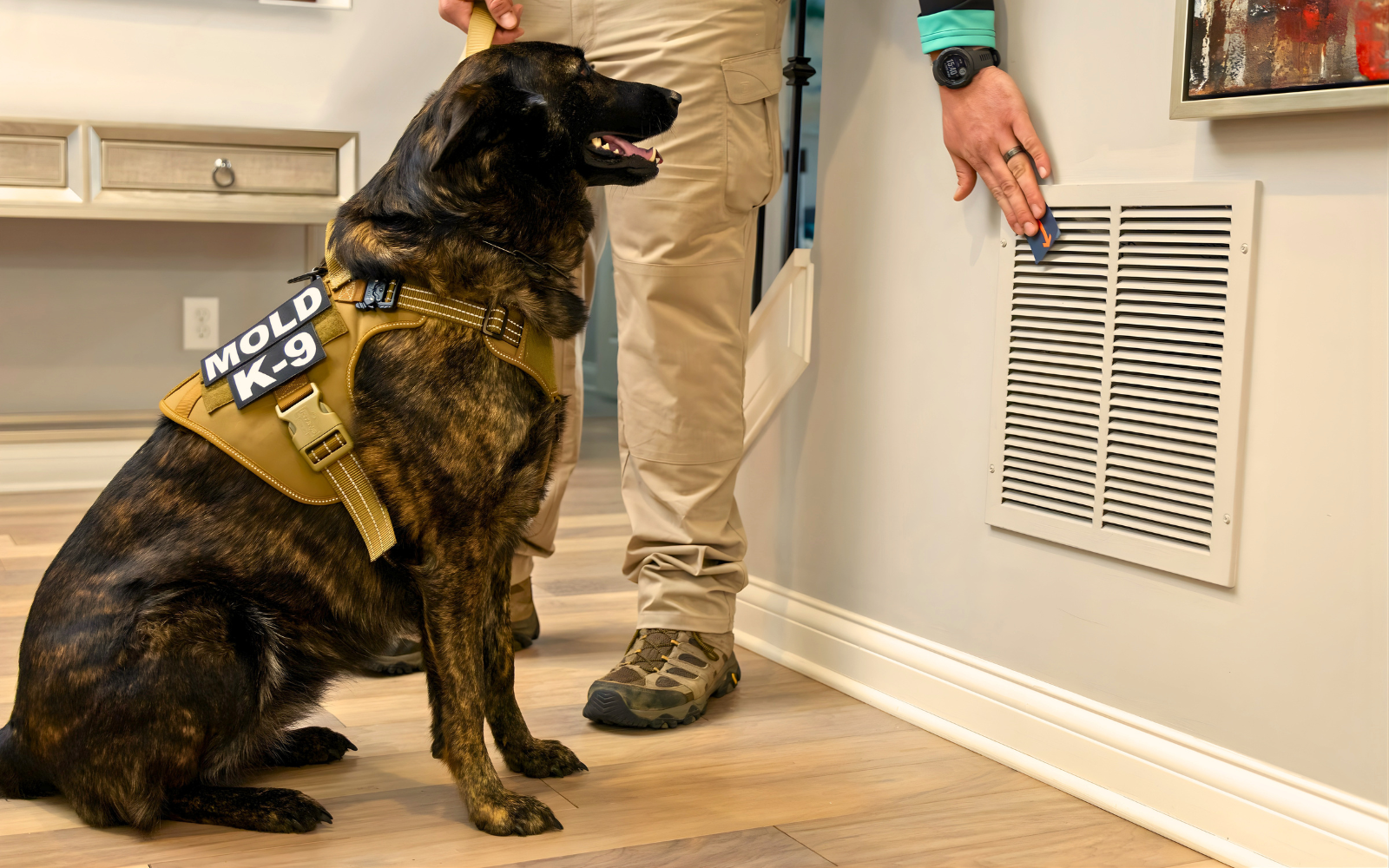
That’s why mold dog inspections can help when a home inspection raises concerns but doesn’t locate the source. A trained mold detection dog searches for mold odor behind walls, under flooring, inside cabinets, and in other areas that may look clean from the outside.
Red Flag #1: A Musty Smell With No Visible Mold
A musty smell is one of the biggest mold red flags during a home inspection.
The tricky part is that the room may look completely normal. No staining. No visible growth. No obvious water damage. But if the odor keeps coming back, it’s worth taking seriously.
Mold odor can come from behind drywall, under flooring, inside cabinets, around old plumbing, or near HVAC-related areas. A quick visual check may not be enough to explain it.
Caleb put the limitation simply:
“You can only access and test what you can see.”
Caleb Jones
If the surface looks clean but the smell is still there, there is likely a hidden mold source somewhere nearby.
For more on what homeowners can check themselves, see can you inspect for mold yourself.
If a room smells musty, don’t let a clean surface end the investigation.
Red Flag #2: Stains, Bubbling Paint, or Warped Materials
Moisture damage is one of the clearest warning signs that mold may need to be investigated.
During a home inspection, pay attention to ceiling stains, bubbling paint, soft drywall, swollen trim, warped flooring, musty cabinets, or discoloration around windows and plumbing fixtures. These signs don’t prove mold is present, but they do suggest water affected the material at some point.
That matters because mold needs moisture to grow. The EPA says wet or damp materials dried within 24–48 hours after a leak or spill will usually not grow mold. If materials stayed wet longer, especially inside walls, flooring, insulation, or cabinets, hidden mold becomes more likely.
It’s easy to treat a stain like a cosmetic issue. But if the moisture source was never addressed, painting over the area may only hide the clue.
Treat moisture damage as a clue, not just a cosmetic issue.
Red Flag #3: Past Leaks, Floods, or Plumbing Repairs
Past water damage matters, even if the home looks repaired now.
Dishwasher leaks, sink plumbing leaks, roof leaks, basement floods, toilet overflows, and HVAC condensation can all create conditions for hidden mold. The problem isn’t always where the water first appeared. Moisture can travel into cabinets, subfloors, wall cavities, insulation, and trim.
In one case Caleb shared, a home had leaks involving the kitchen dishwasher and plumbing behind the sink. The homeowners had already gone through remediation, but hidden mold issues remained because the full source area hadn’t been found.
That’s why repairs don’t always mean the concern is gone. New drywall, new flooring, or fresh trim may make the home look clean while the backside of materials or adjacent wall cavities still need attention.
If the home has a leak history, inspect before assuming repairs solved everything.
Red Flag #4: Recent Paint, New Flooring, or Fresh Repairs
Fresh paint and new flooring aren’t automatically suspicious. Plenty of sellers update a home before listing, and many repairs are completely legitimate.
But during a home inspection, it’s worth asking what was repaired and why.
A freshly painted ceiling may be covering an old roof stain. New flooring may hide previous water damage. Replaced trim may point to past moisture at the base of a wall. None of that automatically means there’s mold, but it does mean the history matters.
Caleb explained why hidden cavities can be so hard to evaluate visually:
“If there is an issue going on [in a] wall cavity… you will not find it, but other than straight guesswork or dumb luck.”
Caleb Jones
If fresh repairs line up with a musty odor, known leak, or damp area, a standard home inspection may not be enough.
For more detail, see what home inspectors may not look for.
Ask what was repaired, why it was repaired, and whether the source was ever checked.
Red Flag #5: Damp Basements, Crawlspaces, or Poor Ventilation
Basements and crawlspaces are common places for moisture problems.
A damp lower level, musty crawlspace, or poorly ventilated basement can create conditions where mold is more likely to grow. Sometimes the clues are obvious: staining, condensation, exposed mold-like growth, or a strong odor. Other times, the issue is less visible but still affects the rest of the home.
Moisture and odors from crawlspaces or basements can travel upward into living areas. Poor ventilation can also keep materials damp longer than they should be.
A damp basement doesn’t automatically mean hidden mold is everywhere. But it does mean the home deserves a closer look, especially if there’s odor, visible staining, or a history of water intrusion.
Don’t ignore damp lower-level spaces just because the main living area looks clean.
Red Flag #6: Musty HVAC Odors or Airflow Concerns
If the home smells musty when the HVAC system runs, don’t ignore it.
HVAC systems can move air through multiple rooms, which can make odors harder to trace. A musty smell near vents, returns, mechanical rooms, or duct-adjacent areas may point to moisture or mold concerns that aren’t easy to see during a standard walkthrough.
Testing may not always locate the source either. Caleb noted that homeowners can receive negative air quality tests even when mold issues are still present in HVAC-related areas. If spores aren’t captured during the sample window, the test may not explain what’s happening.
That’s where mold dog inspections may be helpful. A mold detection dog can search for mold odor in areas connected to walls, floors, cabinets, and HVAC-adjacent spaces, helping narrow down where the odor may be coming from.
For more on testing limits, see mold inspection vs mold testing.
If the smell gets worse when the HVAC runs, investigate the source.
Red Flag #7: Testing Doesn’t Match the Home’s History
A normal mold test can feel reassuring, but it doesn’t always rule out hidden mold.
If the home has a leak history, musty smell, moisture damage, or failed repairs, and the test says everything is fine, it may be worth looking deeper. Air testing only captures what’s airborne during the sample window. Swabs only test the exact surface sampled.
Caleb explained the issue with air testing:
“If the mold spores and stuff just don’t happen to be present in the five minute capture… you’ll come back and you’ll get a negative air quality test.”
Caleb Jones
That doesn’t mean testing is useless. It means testing should be interpreted alongside the history of the home. If the story of the home says “moisture problem,” but the test doesn’t explain the smell or damage, source location may be the missing piece.
If test results don’t match the warning signs, keep looking for the source.
When Mold Dog Inspections Help After a Home Inspection
A home inspection can reveal clues, but it doesn’t always locate hidden mold.
That’s where mold dog inspections can help. They’re useful when there’s a musty odor, leak history, suspicious repairs, failed testing, HVAC-related odor, or buyer/seller uncertainty. Instead of relying only on visible staining, a trained dog searches for the odor associated with mold growth.
Caleb described their job clearly:
“Mika is trained to find mold. That is what she’s trained to find. No matter where that mold is, that is her main target and main focus.”
Caleb Jones
During the inspection, the handler marks and documents alert areas. That gives the homeowner, buyer, seller, or remediation professional a clearer starting point for what to open, test, repair, or investigate next.
Mold dogs don’t identify mold species like a lab test. They don’t diagnose health symptoms. And they shouldn’t be presented as perfect. Their role is focused: help locate likely hidden source areas.
For the bigger picture, see what mold inspections include, cost, and when you need one. For the process itself, see what happens during a mold dog inspection.
Schedule a mold dog inspection when a home inspection raises mold concerns but doesn’t locate the source.
Conclusion: Don’t Ignore Mold Red Flags Just Because Mold Isn’t Visible
Mold red flags can be subtle.
A musty odor, water damage, damp basement, fresh repairs, HVAC smell, or test result that doesn’t match the home’s history can all point to a hidden issue.
A standard inspection may reveal clues, but it may not locate mold behind walls, under floors, inside cabinets, or near HVAC-related areas.
That’s where mold dog inspections can help homeowners move from suspicion to finding the source.
Ready to stop guessing? Schedule a mold dog inspection with Mold Dog Network and find out where hidden mold may be hiding.