
Lab tests being performed on blood to establish mold exposure
Mold Inspections

Will Mold Exposure Show Up in Bloodwork?

Will mold exposure show up in bloodwork? The answer depends on what your doctor is looking for. Blood tests can sometimes identify immune sensitization to particular molds, such as mold-specific IgE, but that doesn’t prove mold in your home caused your symptoms. Other blood tests are used only for specific medical conditions and aren’t general tests for household mold exposure. There’s also no routine blood test that can simply confirm “mold toxicity.” This guide explains what mold-related bloodwork can and can’t tell you, why results need clinical interpretation, and how investigating your home answers a completely different question.

A sick homeowner in a consultation with their doctor
Mold Inspections

How Do Doctors Know If Mold Is Making You Sick?

How do doctors know if mold is making you sick? There isn’t one test that can answer the question by itself. Doctors may look at your symptoms, medical history, where and when those symptoms occur, existing allergies or asthma, physical examination findings, and targeted tests such as skin-prick or mold-specific IgE testing when appropriate. Even then, a positive allergy test shows sensitization – not proof that mold inside your current home caused your symptoms. This guide explains how clinicians investigate possible mold-related health concerns, why ruling out other causes matters, and where a separate investigation of your home can fit into the process.

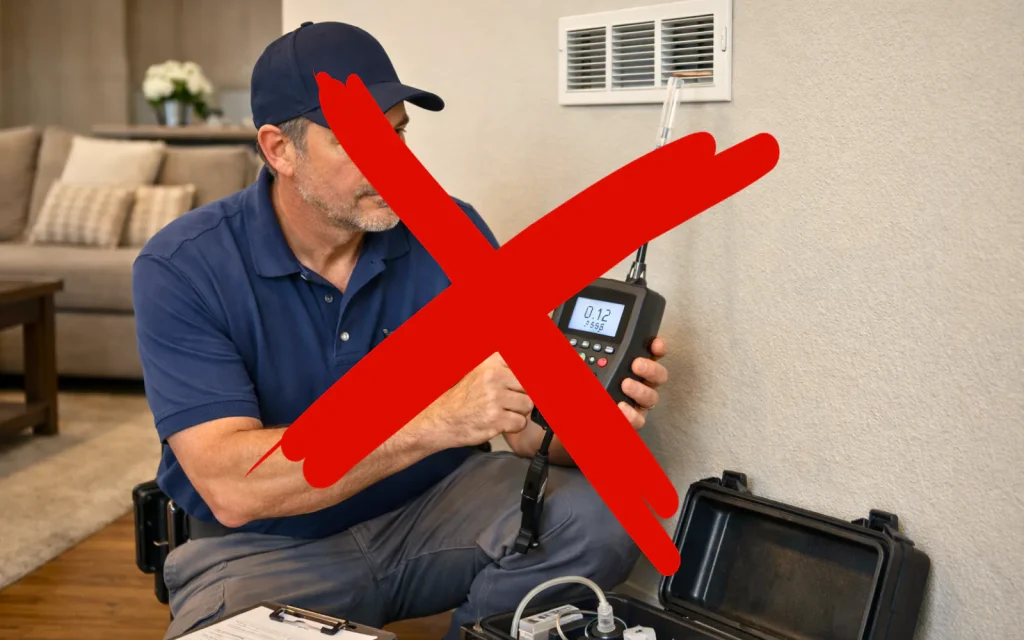
An image of air quality testing in progress with a large cross over it, representing the problems with air quality testing and the benefits of using mold dogs
Mold Inspections

Do Mold Tests Tell You Where the Mold Is?

Many homeowners assume that if they pay for mold testing, they’ll receive a report showing exactly where the mold is hiding. In reality, that’s rarely how mold testing works. Air samples, swab tests, and laboratory analysis can confirm the presence of mold or identify mold species, but they generally don’t pinpoint the hidden source. In this article, we’ll explain what mold tests can and can’t tell you, why homeowners are often left with more questions than answers, and when a mold dog inspection may be the better option for locating hidden mold.

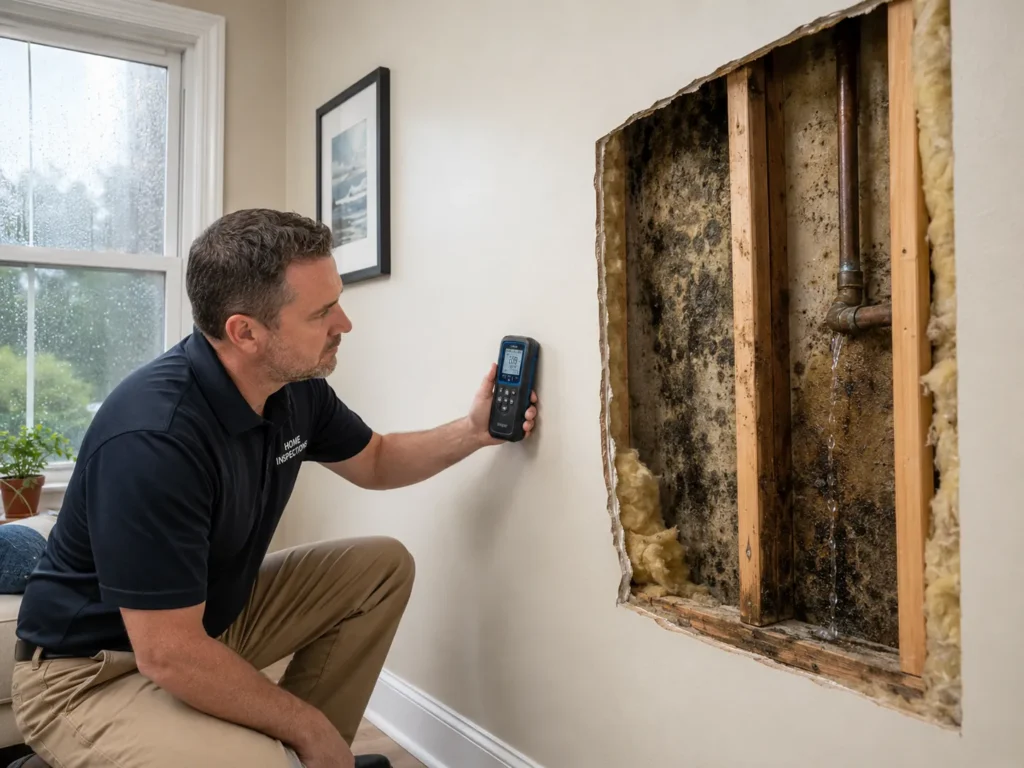
A man using a moisture meter during a typical remediation mold test
Mold Inspections

What Is the 5-Minute Mold Test (and Can You Trust It?)

You may have heard someone refer to an air sample as the “5-minute mold test.” While the name isn’t an official industry term, it describes one of the most common methods of mold testing: collecting an air sample over a short period and sending it to a laboratory for analysis. The problem is that many homeowners misunderstand what the test can actually tell them. In this article, we’ll explain how a 5-minute mold test works, where it can be helpful, why it sometimes misses hidden mold, and when a mold dog inspection may be the better next step.

Scroll to Top