
What Are the First Signs of Mold in Your House?
Mold doesn’t always start with something you can see. That’s one of the biggest misconceptions homeowners have. They expect mold […]
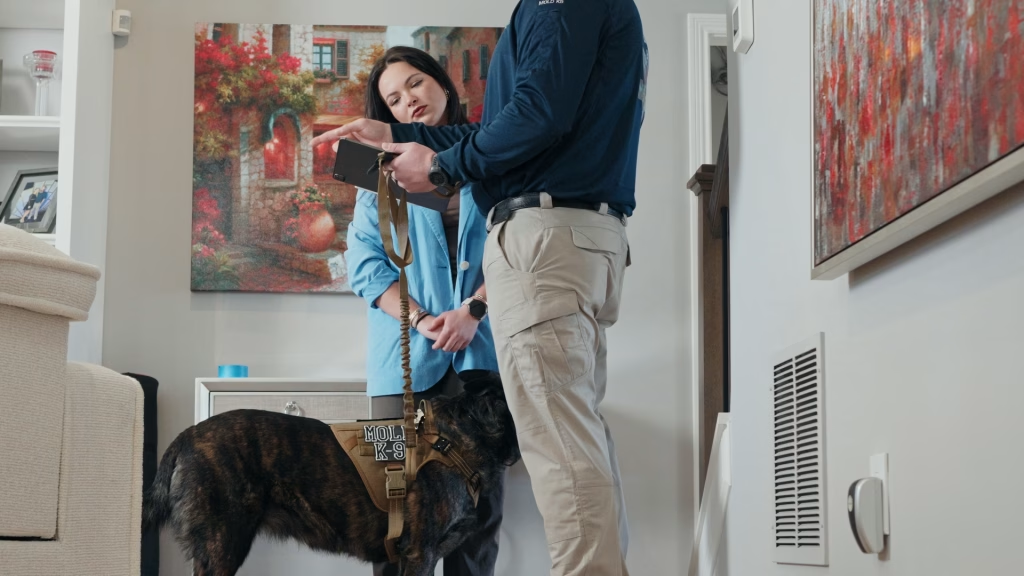
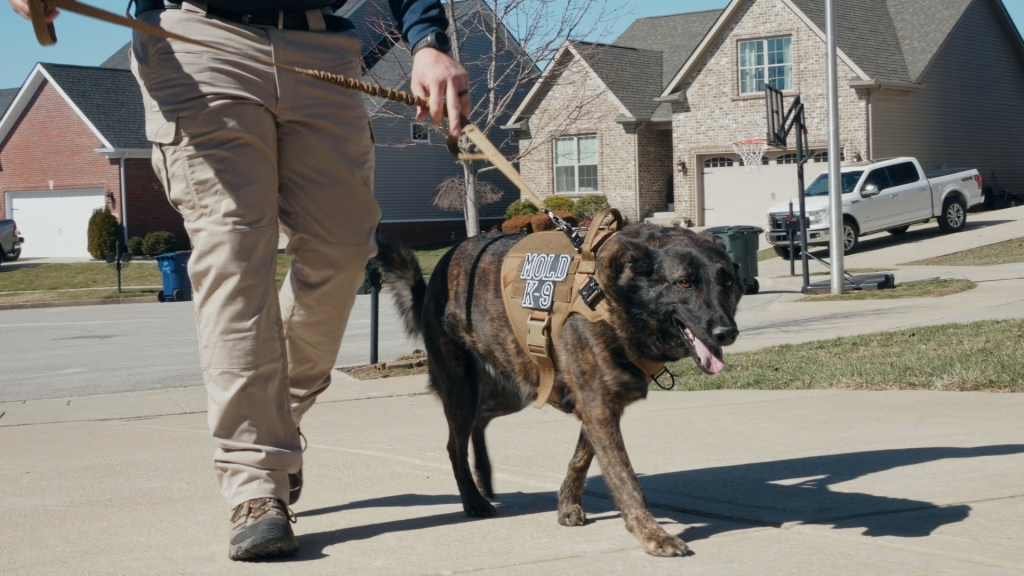
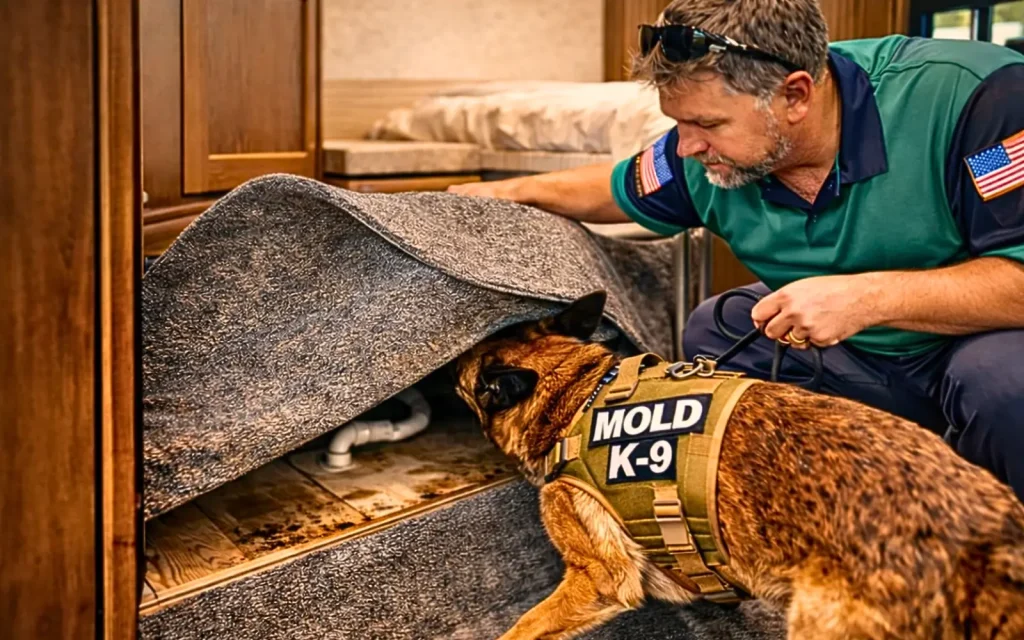
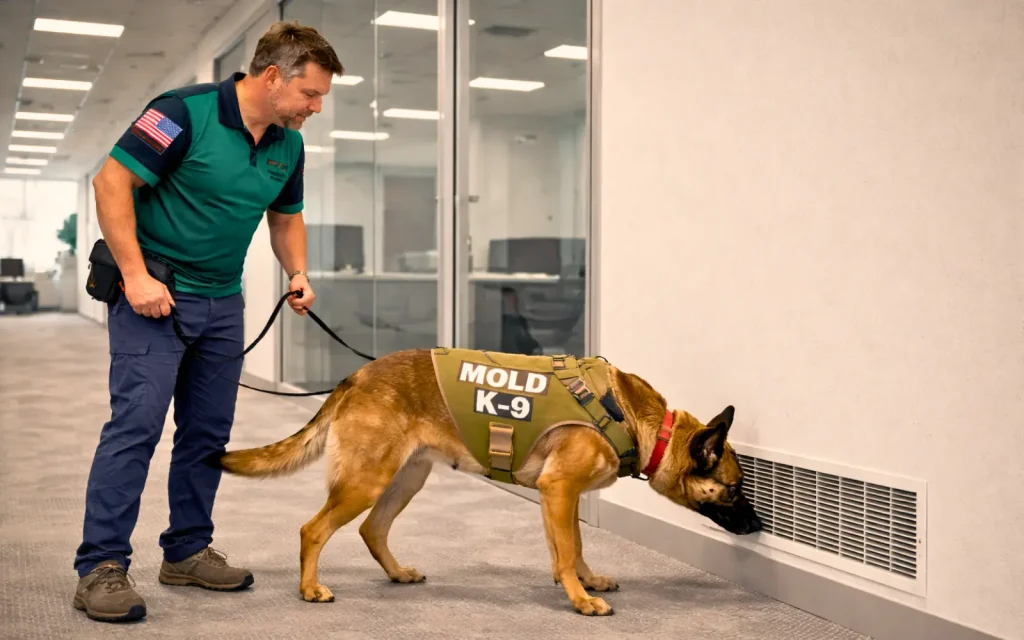
Hidden mold can grow quietly behind walls, under flooring, around chimneys, inside cabinets, and near HVAC systems long before you ever see a stain. You may notice a musty smell, recurring dust, past water damage, or symptoms that feel worse at home, but still be told everything looks fine. That’s what makes hidden mold so frustrating: the problem is often buried inside cavities where traditional inspections can miss it. A trained mold detection dog uses scent to help pinpoint where mold may be hiding, so homeowners can stop guessing and focus on the source.
You don’t need visible mold on the wall before a mold inspection makes sense. Many homeowners first notice a musty smell, past water damage, failed testing, or symptoms that seem worse at home. This guide explains nine signs it may be time to schedule a mold inspection, including hidden mold concerns, old leaks, damp rooms, HVAC odors, and failed remediation. You’ll also learn when mold dog inspections can help locate mold behind walls, under flooring, inside cabinets, and in other areas traditional inspections may not clearly evaluate.
Finding out a mold inspection has flagged a problem can feel overwhelming, but it doesn’t mean you need to panic or tear apart the whole house. The next step is understanding what was found, where the concern is located, and what kind of follow-up makes sense. This guide explains what happens after a mold inspection finds a problem, how to interpret mold dog alerts, when further investigation or testing may be useful, and how mold dog inspections can help homeowners move forward with clearer direction instead of guessing.
A mold inspection shouldn’t feel like a mystery. Whether you’re worried about a musty smell, past water damage, failed testing, or hidden mold behind walls, knowing what to expect can make the process much less stressful. This guide walks through what happens before, during, and after a mold inspection, including how Mold Dog Network prepares the home, how trained mold detection dogs search for mold odor, what an alert means, and what homeowners receive afterward. You’ll also learn why mold dog inspections can be especially helpful when visual inspections or air testing haven’t found the source.
A standard home inspection can be helpful, but it isn’t the same as a dedicated mold inspection. Home inspectors usually focus on visible, accessible areas and may not be able to evaluate what’s happening behind drywall, under flooring, inside cabinets, or within HVAC-related spaces. This matters when hidden mold is suspected after leaks, musty smells, failed testing, or past remediation. This guide explains what home inspectors typically look for, what they may not look for, and when mold dog inspections can help locate hidden mold odor that a standard inspection may not uncover.
A home inspection can reveal important mold red flags, but not every mold problem is visible. Musty odors, stains, warped flooring, damp basements, plumbing leaks, HVAC smells, and signs of past repairs can all point to possible hidden mold. This guide explains the biggest mold warning signs buyers, sellers, and homeowners should watch for during a home inspection, why some issues are easy to miss, and when mold dog inspections can help locate mold odor behind walls, under flooring, inside cabinets, or near HVAC-related areas.
Mold inspection and mold testing are often confused, but they don’t do the same job. A mold test analyzes a sample. A mold inspection should help locate where the problem may be coming from. That difference matters when mold is hidden behind walls, under floors, inside cabinets, or in HVAC-related areas. This guide explains how visual inspections, air testing, swab testing, and mold dog inspections compare, where each method can help, and why testing alone doesn’t always tell homeowners where mold is growing. If your test results didn’t explain the problem, source location may be the missing piece.
Mold inspection costs can vary widely depending on the type of inspection, property size, testing needs, and whether the goal is simply to document mold or actually locate the source. A cheaper inspection may be enough when mold is visible, but hidden mold behind walls, under flooring, or near plumbing can be much harder to find. This guide explains what affects mold inspection pricing, how visual inspections, air testing, swabs, and mold dog inspections compare, and why choosing the right inspection method upfront can help homeowners avoid repeated testing, missed mold, and unnecessary repairs.
You can check your home for obvious signs of mold, but a DIY mold inspection has limits. Mold often hides behind drywall, under flooring, inside cabinets, around plumbing, and in HVAC-related areas where homeowners can’t easily see it. This guide explains what you can safely look for yourself, what signs matter most, why air tests and swabs don’t always locate the source, and when mold dog inspections may be the better next step. If your home smells musty, has a water damage history, or still feels wrong after testing, it may be time to stop guessing.
If you think you need a mold inspection, the biggest question is often not whether mold exists somewhere in the home. It is where the mold is hiding. This guide explains what mold inspections include, what they cost, when to schedule one, and why traditional visual inspections, swabs, and air testing may fall short when mold is hidden behind walls, under flooring, inside cabinets, or in HVAC systems. Drawing from Mold Dog Network co-owner Caleb Jones’ experience in remediation and canine mold detection, this article explains how a mold dog inspection helps homeowners stop guessing and start finding the source.
Symptoms of hidden mold exposure often mimic chronic seasonal allergies or a persistent cold, including nasal congestion, wheezing, red or