
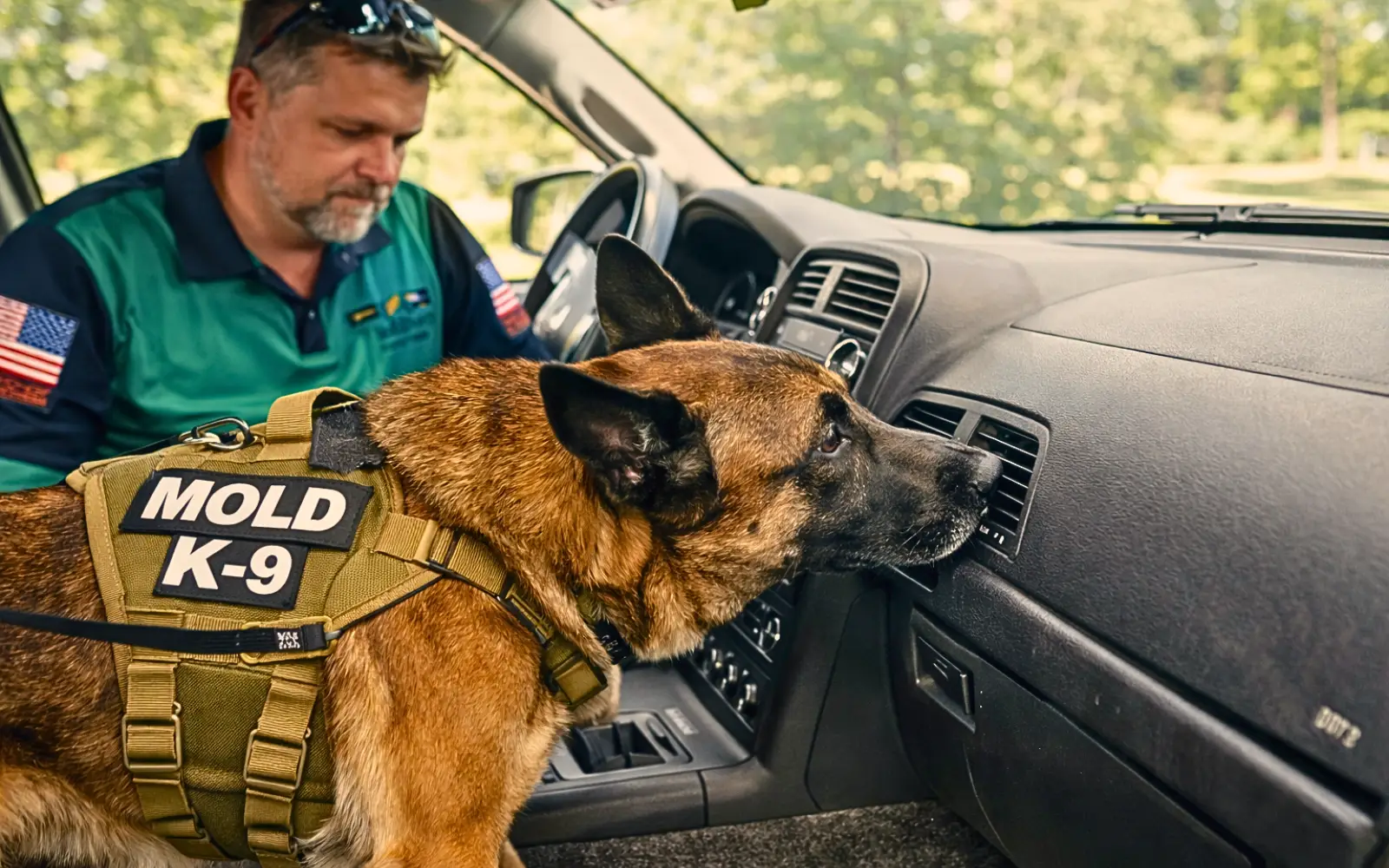
Mold in Cars: Can a Mold Dog Inspect a Vehicle?
Yes. Mold Dog Network uses trained dogs and handlers to inspect vehicles for suspected hidden mold. The search can help direct attention to areas that aren’t obvious from looking at the interior.
If you’re concerned about mold in cars, you may be dealing with a stubborn musty smell, a previous leak, or uncertainty about a used vehicle’s history. The seats look clean, but you still don’t know what happened underneath.
Tina, our co-owner, explains how these inspections work and what owners should expect. For a broader look at concealed locations, see where mold hides in homes, vehicles, and other spaces.
How Does Mold Develop in Cars?
Vehicles get wet in ordinary ways as well as dramatic ones. A spill can reach upholstery, rain can enter through an open window, and a failing seal can allow water into an area you rarely check.
“Things happen in our cars. We spill things.”
Tina Craig
Tina also points to sunroof leaks, flooding, and vehicles left unattended. Once water reaches cloth or padding, a clean-looking surface doesn’t establish how well the concealed materials dried.
That doesn’t mean every spill causes mold in cars. The relevant questions are what became wet, how long moisture remained, and whether the affected materials were assessed and dried appropriately.
Tina notes that parked vehicles often lack consistent temperature and humidity control. A wet interior can remain unnoticed between trips or during storage.
Flood history is worth checking when buying used. In its October 2026 release, CARFAX reported more than half a million water-damaged vehicles already on U.S. roads. That’s a water-damage figure, not a count of confirmed mold cases.
Tina describes how a vehicle can be dried, cleaned, and offered for sale without the next owner understanding its full history. Appearance alone won’t answer every question about concealed materials.
Does your car have a leak history or a musty smell that keeps returning? Ask Mold Dog Network whether a vehicle inspection fits your situation.
Where Do Mold Dogs Commonly Alert Inside Vehicles?
Tina identifies seats and floorboards as recurring alert locations in the vehicles her teams inspect.
“The majority of the time it’s in the seats or it’s in the actual floorboards.”
Tina Craig
She’s describing her experience, rather than giving a measured distribution across every vehicle. The common thread is concealed material, particularly cloth and padding that may have become wet.
| Area | What Tina describes |
| Seats and cushioning | Alerts involving cloth and padded materials |
| Carpet and floorboards | Areas where previous wetting may be concealed |
| Cabin filters and ventilation areas | Locations dogs may direct attention toward |
| Higher interior areas | Access may be needed when investigating an upper leak |
An alert near a cabin filter doesn’t establish that the filter is the original source. Further investigation may be needed to understand the relationship between the alert, airflow, and affected materials.
When investigating mold in cars, a seat that feels dry or carpet that looks tidy leaves questions about what’s underneath. Owners may only notice something unusual while cleaning an area they don’t normally examine.
If you know where water entered, tell the handler before the search. A sunroof leak, for example, gives different context from rainwater reaching the floor through an open window, even if the interior has since been cleaned and looks presentable.
Concerned about a hidden area beneath the seats or carpet? Tell our team where you’ve noticed moisture, odors, or previous damage.
What Happens During a Mold Dog Vehicle Inspection?
The handler and dog work through the vehicle systematically. Tina describes a familiar working approach adapted to the space being inspected.
A handler-led search through the vehicle
The handler opens a door, directs the dog into that area, and continues around the vehicle so the relevant interior areas can be checked.
“They go to the next door, open that door, let the canine in, let the canine check that area, and then around the vehicle likewise.“
Tina Craig
This is a working search guided by the handler. The dog is looking for its target odor, while the handler manages access and interprets the trained alert.
Our vehicle and RV mold inspections help investigate suspected mold in cars without beginning by dismantling the interior. The findings give you locations to discuss during appropriate follow-up.
Will the dog get onto the seats?
It may need to. Tina explains that owners sign off on this possibility before the search. If the dog is investigating an odor higher in the interior, such as near a suspected sunroof leak, remaining at floor level could restrict access.
If you’ve invested in a vehicle you take care of, it’s reasonable to want those details explained beforehand. Tell the team about any interior restrictions before booking. Don’t assume the dog will stay off the seats.
Ask about vehicle-specific preparation, access requirements, the appointment location, pricing, and scheduling. Let the team explain what’s appropriate for your vehicle rather than removing interior parts or attempting to prepare concealed areas yourself.
Inspection arrangements depend on the vehicle and circumstances. Discuss the expected appointment with the team instead of assuming a fixed duration applies to every car.
Want to know what an inspection would involve for your car? Contact Mold Dog Network to discuss access, preparation, and scheduling.
When Is a Vehicle Mold Inspection Worth Considering?
Tina points out why vehicle problems can escape attention:
“It’s not like we’re inspecting our vehicles. We’re jumping in and out of them.”
Tina Craig
An inspection may be worth discussing when there’s:
- A persistent musty odor without an obvious source.
- A known leak or wet interior with unanswered questions.
- Uncertainty about previous flood damage.
- A concern noticed after storage or a used-car purchase.
These situations justify questions; they don’t prove mold in cars is present.
For buyers, a vehicle-history check and independent mechanical assessment provide information a canine search doesn’t. Mold detection doesn’t establish roadworthiness or rule out electrical and mechanical damage.
If a vehicle has recently flooded, the National Highway Traffic Safety Administration advises assessment before starting it, because damage may be hidden. Don’t drive a potentially unsafe vehicle to an inspection appointment; discuss appropriate arrangements first.
Tina also hears from people who report feeling unwell in a vehicle. That experience doesn’t establish the cause. A mold inspection investigates environmental concerns, while medical concerns belong with a healthcare professional.
Unsure whether a persistent odor or past water event warrants inspection? Share the vehicle’s history with our team before deciding the next step.
What Do the Findings Mean, and What Happens Next?
The handler documents alert locations to help guide further investigation. An alert directs attention to an area; it doesn’t establish mold species, every affected boundary, or the precise repair needed.
Materials, access, and odor movement can affect the search, and dogs aren’t infallible. Our role is to help locate suspected hidden mold so the next assessment has a clearer starting point.
Tina distinguishes detection from treatment when describing one vehicle owner’s next step:
“He’s bringing that vehicle in for treatment, from the mitigation company.”
Tina Craig
That separate step matters. Investigating mold in cars can involve an automotive professional assessing a leak or ventilation concern and an appropriately qualified provider assessing affected interior materials.
Before agreeing to work, ask:
- What conditions have been confirmed?
- What moisture source needs attention?
- Which materials require further assessment or treatment?
- How will the completed work be evaluated?
An alert doesn’t automatically mean every seat needs replacing. Equally, cleaning an exposed surface doesn’t establish that concealed materials have been addressed.
Keep the inspection findings, vehicle history, and proposed work together so each professional understands what’s known. The appropriate response depends on the conditions found, rather than a universal spray or cleanup package.
Ask the next provider to explain how the proposed work relates to the documented findings. You should understand which concern each part of the plan is intended to address.
Ready for a clearer starting point? Contact Mold Dog Network to discuss your vehicle inspection concerns.
A Clearer Picture of What’s Happening Inside Your Car
Trained mold dogs can inspect vehicles, with a handler guiding the search and documenting findings. Tina’s examples show why seats, padding, floorboards, and ventilation areas deserve attention when there’s a relevant moisture history.
A tidy interior doesn’t answer every question about concealed materials. An odor alone doesn’t confirm mold in cars either.
Start with what you know: past leaks, water exposure, recurring odors, and previous work. Discuss access before booking, understand what the findings mean, and involve the right professionals for follow-up. That gives you a more useful basis for decisions about your vehicle.