
What Do Home Inspectors Not Look For When It Comes to Mold?
A standard home inspection can be incredibly helpful, especially when you’re buying or selling a home.
But it’s important to understand what it is, and what it isn’t.
A home inspector may notice visible staining, signs of leaks, moisture damage, roof issues, plumbing concerns, or obvious mold-like growth, but most home inspections are broad. They’re designed to evaluate the general condition of the property, not perform a deep mold investigation.
That matters because mold isn’t always visible.
Caleb Jones, co-owner of Mold Dog Network, has performed plenty of visual inspections himself. He explained the limitation clearly:
“I am limited to what I can physically see and potentially smell in the environment.”
Caleb Jones
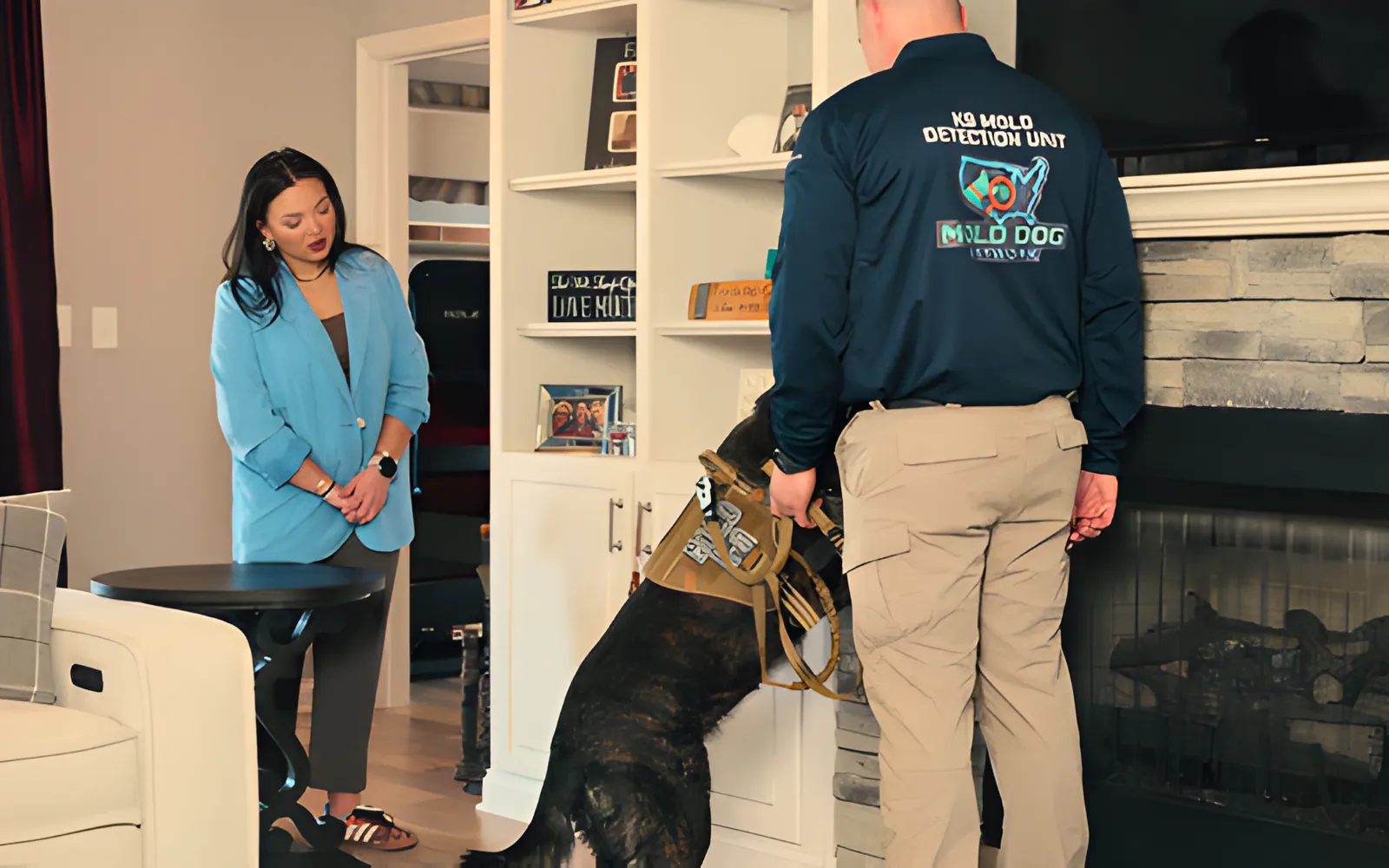
That’s where mold dog inspections can help. When mold may be hidden behind drywall, under flooring, inside cabinets, or in HVAC-related areas, a trained mold detection dog can search for mold odor and help locate areas a standard inspection may not uncover.
What Home Inspectors Usually Do Look For
Home inspectors are trained to look at many parts of a property. During a standard inspection, they may point out visible conditions that could suggest a moisture or mold concern.
That may include:
- Visible staining
- Signs of leaks
- Moisture damage
- Roof or plumbing concerns
- Ventilation problems
- Foundation or crawlspace moisture
- Visible mold-like growth
- Damaged drywall, flooring, or trim
This information can be valuable. If a home inspector sees staining under a sink, moisture in a basement, or damage near a window, that’s worth paying attention to. Those clues can help buyers, sellers, and homeowners understand where further investigation may be needed.
Caleb understands the value of visual inspections because he’s done them himself.
“I’ve done a lot of visual inspections in my day.”
Caleb Jones
But a visual inspection is still limited by what can be seen, accessed, and safely evaluated at the time of the inspection. It may identify warning signs, but it doesn’t always locate hidden mold.
Use a home inspection as helpful information, not the final answer on hidden mold.
What Home Inspectors May Not Be Able to See
Home inspectors usually can’t open walls, pull up flooring, dismantle cabinets, remove insulation, or tear into finished materials just to check for mold.
That means they may not be able to see inside:
- Finished wall cavities
- Covered subflooring
- Cabinet backs
- Ceiling cavities
- Insulation
- Closed HVAC areas
- Plumbing chases
- Areas hidden behind built-ins
- Recently painted or repaired surfaces
That’s where hidden mold can be missed.
A home may look clean on the surface while mold is growing on the backside of drywall, underneath flooring, behind cabinetry, or around plumbing inside a wall. If the inspector can’t see it, they may not be able to report it.
Caleb explained the issue directly:
“If there is an issue going on [in a] wall cavity… you will not find it, but other than straight guesswork or dumb luck.”
Caleb Jones
That’s why mold dog inspections are useful when the concern is hidden. The dog isn’t relying on visible staining. It’s trained to search for the odor associated with mold growth, even when the source isn’t obvious from the outside.
For more on homeowner limitations, see can you inspect for mold yourself.
If the concern is behind finished materials, don’t rely on sight alone.
Why a Clean Home Inspection Doesn’t Always Rule Out Mold
A clean home inspection can be reassuring, but it doesn’t always mean the home is free from hidden mold.
Mold can grow in places that still look normal from the living space. It may be on the backside of drywall, beneath flooring, behind cabinets, above a finished ceiling, or near an old leak that was repaired cosmetically but never fully dried.
Past repairs can also cover visual clues. Fresh paint, new trim, replaced flooring, or patched drywall may hide signs of an older moisture problem.
Caleb has seen this in homes that looked beautiful from the surface.
“We’ve also gone into very, very beautiful homes that don’t have any visual issues, and she’s alerted upwards of 18 or 20 different areas.”
Caleb Jones
That doesn’t mean every clean-looking home has mold. It means appearance alone isn’t always enough.
Water history matters too. The EPA says wet or damp materials dried within 24–48 hours after a leak or spill will usually not grow mold. If materials stayed wet longer, especially inside walls, cabinets, or flooring, hidden mold becomes more likely.
So if the home has a musty smell, old water damage, failed testing, or a history of leaks, a general inspection may not answer the source question.
If the home has a water damage history, inspect the source areas before assuming everything is clear.
What About Air Testing or Swabs During a Home Sale?
Buyers sometimes order air testing or swabs after a home inspection raises concerns. Those tests can be useful, but they have limits.
Air testing captures what’s airborne during the sampling window. If mold spores are present in the air at that moment, they may be detected. If spores aren’t moving through the air during the test, the result may not reflect hidden mold nearby.
Caleb explained the problem this way:
“If the mold spores and stuff just don’t happen to be present in the five minute capture… you’ll come back and you’ll get a negative air quality test.”
Caleb Jones
Swabs are also limited. They only test the exact surface sampled. If mold is growing behind that surface, beside it, or inside the wall cavity, the swab may not answer the real question.
That’s why testing can sometimes leave homeowners confused. A result may confirm mold without locating the source. Or it may come back normal even though the home still smells musty or has a water damage history.
For a deeper comparison, see mold inspection vs mold testing.
Use testing for sample data, but don’t expect it to always find the source.
When Should Buyers or Sellers Get a Mold-Specific Inspection?
A mold-specific inspection may be worth considering when the standard home inspection raises questions but doesn’t fully answer them.
Buyers should consider one when:
- There’s a musty odor.
- The disclosure mentions leaks or water damage.
- The home has a damp basement or crawlspace.
- There are stains, warped materials, or recent repairs.
- The HVAC smells musty.
- The home inspection flagged moisture issues but didn’t locate the source.
Sellers may also benefit from a mold-specific inspection before listing if they know the home has had water damage, there’s a recurring odor, or previous remediation was done and they want more clarity before negotiations begin.
Caleb summed up the reason this matters:
“Mold is not always an easily visible issue.”
Caleb Jones
That’s where mold dog inspections can add value for buyers and sellers. They can help locate mold odor in areas a standard inspection may not fully evaluate, giving everyone a clearer picture before decisions are made.
For more warning signs, see signs it’s time for a mold inspection.
Before closing or listing, investigate mold concerns that a standard inspection may not answer.
How Mold Dog Inspections Add Source-Location Insight
Mold dog inspections are designed to help locate mold odor at the source.
Instead of relying only on visible staining or surface clues, a trained mold detection dog searches areas where hidden mold may be present. That can include wall cavities, flooring, cabinets, plumbing-adjacent areas, HVAC-related spaces, and other areas that are difficult to evaluate by sight alone.
Caleb explained one of their canine’s roles clearly:
“Mika is trained to find mold. That is what she’s trained to find. No matter where that mold is, that is her main target and main focus.”
Caleb Jones
When the dog alerts, the handler marks and documents the area. That information can help a buyer, seller, homeowner, remediator, or other professional decide what to open, test, repair, or investigate next.
It’s also important to be realistic. Mold dogs don’t identify mold species like a lab test. They don’t diagnose health symptoms. And they shouldn’t be presented as perfect.
Their role is focused: find likely source areas.
For a broader overview, see what mold inspections include, cost, and when you need one. For the step-by-step process, see what happens during a mold dog inspection.
Schedule a mold dog inspection when you need to know where hidden mold may be located.
Conclusion: A Home Inspection Can Help, But It May Not Be Enough
A home inspection is valuable, but it’s not always enough when mold may be hidden.
Home inspectors may catch visible clues, moisture damage, or obvious mold-like growth. But if the concern is behind walls, under flooring, inside cabinets, or connected to HVAC-related spaces, a more targeted inspection may be needed.
That’s especially true when there’s a musty odor, water damage history, failed testing, health-related concerns, or uncertainty during a real estate transaction.
Mold dog inspections can help locate hidden mold odor and give homeowners clearer direction.
Ready to stop guessing? Schedule a mold dog inspection with Mold Dog Network and find out where hidden mold may be hiding.