
How Much Does a Mold Inspection Cost?
When you’re worried about mold, one of the first questions is usually, “How much is this going to cost?”
That’s fair. Nobody wants to spend money on an inspection unless it’s actually going to help, and we’ve all heard horror stories about remediation costing tens of thousands. But with mold, the cheapest option isn’t always the best value. The better question is: will this inspection help you find the source?
That matters because mold isn’t always sitting out in the open. It can hide behind drywall, under flooring, inside cabinets, around plumbing, or in HVAC-related areas. A surface-level inspection may be enough if the problem is obvious. But if the mold is hidden, you may need a more targeted approach.
Caleb Jones, co-owner of Mold Dog Network, explained the limitation clearly:
“You can only access and test what you can see.”
Caleb Jones
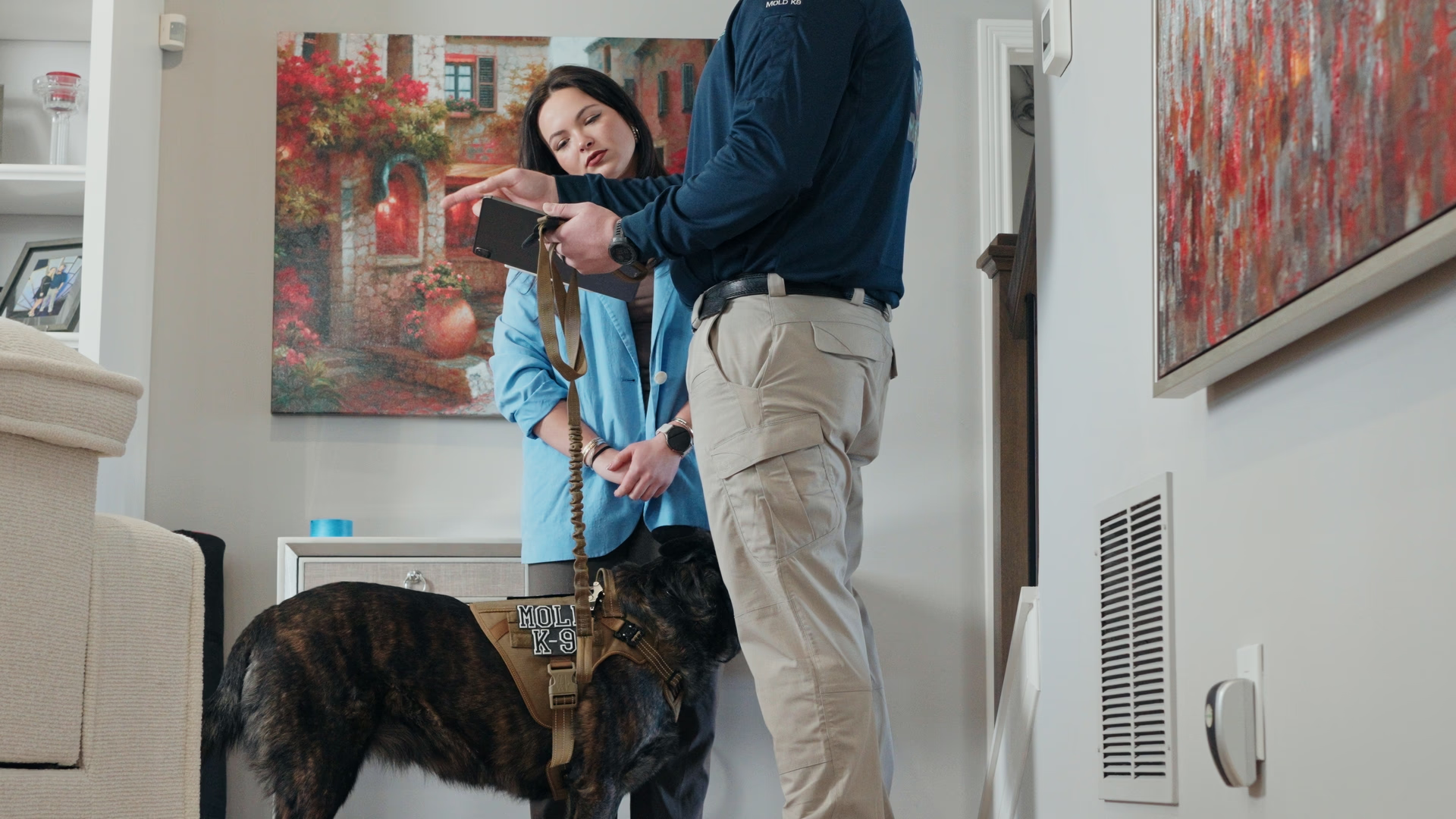
That’s why mold dog inspections can be so useful for homeowners who suspect hidden mold. Instead of relying only on what’s visible, trained mold detection dogs search for the odor of mold growth and alert their handler where that odor is strongest.
What Is the Average Cost of a Mold Inspection?
Mold inspection costs vary depending on the type of inspection, the size of the property, the number of samples taken, lab fees, travel, and how much investigation is needed.
A basic visual inspection may cost less than an inspection involving air testing, an industrial hygienist, or a trained mold detection dog. But each option answers a different question, and not all answers are equally valuable.
Visual inspections tell you what’s visible (not what’s hidden), and air tests will tell you what’s in the air at a given moment in time. Mold dogs are specially trained to actually locate the mold, making a mold dog inspection infinitely more useful for a homeowner with mold concerns.
MDN’s residential mold dog inspection pricing is based on square footage:
- Up to 2,000 square feet: $1,250
- Up to 3,000 square feet: $1,500
- Up to 4,000 square feet: $1,750
- Over 4,000 square feet: custom pricing
Pricing should always be confirmed directly with Mold Dog Network, since property type, travel, scope, and special circumstances can affect the final quote.
The important thing is to understand what you’re paying for. A cheaper inspection may tell you what’s visible. A more specialized inspection may help locate hidden areas that would otherwise be missed.
Contact Mold Dog Network for current pricing based on your property size and inspection needs.
What Affects the Cost of a Mold Inspection?
Several factors can change the cost of a mold inspection.
Property size is one of the biggest. Larger homes take more time to inspect, especially when the dog and handler need to move carefully through rooms, wall cavities, cabinets, flooring, and other potential problem areas.
Inspection type also matters. A visual mold inspection, air testing, swab testing, industrial hygienist assessment, and mold dog inspection are all priced differently because they do different things.
Lab testing can add costs too. Air samples, swabs, tape lifts, and lab analysis may be helpful in some situations, but they’re not always designed to locate the source of hidden mold. Mold testing tells you what kind of mold you have in your home, not where the mold source is.
Travel and service area may also matter. Mold Dog Network is based in central Kentucky and has done a lot of work in Kentucky, but Caleb said the team may travel when the situation is feasible.
“We’ve done a lot of work in Kentucky and also all of the surrounding states.”
Caleb Jones
There may also be differences between residential, commercial, and automotive inspections, since each type of property has a different layout and inspection need. It’s always best to reach out to discuss your individual needs.
Ask which inspection option fits your home before paying for tests that may not locate the source.
Why the Cheapest Mold Inspection Isn’t Always the Best Value
It’s natural to look for the lowest price. But with mold, the lowest-cost inspection can become expensive if it doesn’t answer the real question.
A cheaper visual inspection may be fine if mold is visible on a wall, joist, ceiling, or exposed surface. But if the problem is behind drywall or under flooring, you may walk away with the same uncertainty you had before.
That can lead to more testing, more inspections, unnecessary demolition, or remediation that only addresses part of the problem. If hidden mold is missed, the homeowner may end up right back where they started.
Caleb puts a lot of weight on the inspection stage because it affects everything that happens afterward.
“The inspection part of the process is the most important part of mold remediation in my opinion, because it has the highest chance of causing a failure later on down the road if something wasn’t caught earlier.”
Caleb Jones
That’s especially important after a water event. The EPA says that if wet or damp materials are dried within 24–48 hours after a leak or spill, mold will usually not grow. Once moisture sits longer, especially inside building materials, hidden mold becomes harder to rule out from the surface alone.
If you’re trying to understand when you should get a mold inspection, the home’s history matters just as much as the price.
Choose the inspection that helps you find the source, not just the lowest price.
Mold Inspection vs. Mold Testing Costs
Mold inspection and mold testing are often grouped together, but they’re not the same thing.
A mold inspection evaluates the home and looks for likely mold concerns. Mold testing analyzes a sample. Both can be useful, but they answer different questions.
Here’s the simple difference:
- Visual inspection: often cheaper, but limited to what can be seen.
- Air testing: captures what’s airborne during the sampling window, but may not locate the source.
- Swab testing: useful for visible growth, but only tests the exact spot sampled.
- Mold dog inspection: sometimes a higher investment, but focused on locating hidden source areas.
Caleb gave a clear example of why swab testing can miss the real issue.
“You could be swabbing a surface and… an inch to the right is an active mold growing colony.”
Caleb Jones
Air testing has a similar limitation. If spores aren’t moving through the sampled air at that exact time, the test may come back normal even though mold is hidden nearby.
Mold dog inspections don’t identify the species of mold like a lab test does. They don’t replace every type of testing. But they can help homeowners answer the one question testing often doesn’t answer: where should we look next?
For a deeper explanation, see mold inspection vs mold testing.
If testing hasn’t explained the problem, consider a mold dog inspection before paying for more samples.
When Is a Mold Dog Inspection Worth the Cost?
A mold dog inspection may be worth the cost when the concern is hidden mold and you need clearer direction.
That’s often the case when there’s a musty smell but no visible mold. It’s also common after a leak, flood, roof issue, plumbing problem, dishwasher leak, or HVAC moisture concern. If moisture reached building materials and sat there, mold may be growing somewhere you can’t easily see.
It can also be worth considering if you feel worse at home and better away, especially if you’re already working with a healthcare provider who suspects the home environment may be part of the picture. Mold Dog Network doesn’t diagnose health issues, but it can help investigate whether hidden mold may be present in the home.
CDC says mold can cause symptoms such as stuffy nose, sore throat, coughing or wheezing, burning eyes, or skin rash in some people. People with asthma, mold allergies, or weakened immune systems may have stronger reactions.
A mold dog inspection may also make sense when previous air testing came back normal but concerns remain, when remediation failed post-testing, or when you’re buying a home and want more confidence before moving forward.
Caleb explained why hidden problems matter so much:
“It’s really the invisible problems and stuff that you need to be addressing.”
Caleb Jones
For more detail on the process, see what happens during a mold dog inspection.
If hidden mold is the concern, book a mold dog inspection and get a clearer place to start.
How to Think About Mold Inspection Cost Before You Book
Before booking any mold inspection, get clear on what you actually need answered.
Ask yourself:
- Am I trying to confirm visible mold or locate hidden mold?
- Do I need lab identification, source location, or both?
- Has the home had water damage?
- Have previous inspections or tests failed to explain the problem?
- Will this inspection tell me where to look next?
- What kind of report or documentation will I receive?
Those questions matter because the wrong inspection can leave you with more confusion and waste your money. The right inspection can give you direction.
Caleb described the value of that clarity after seeing mold detection dogs work in real homes:
“We were able to get the clients that affirmation that they needed that they do have a hidden problem within the home.”
Caleb Jones
For a broader breakdown, see what mold inspections include, cost, and when you need one.
Before you book, make sure the inspection matches the question you need answered.
Conclusion — The Right Inspection Can Save More Than It Costs
Mold inspection cost depends on what you need the inspection to do.
If the mold is visible, a basic inspection or surface test may be enough to help you move forward. But if the concern is hidden mold, unclear test results, failed remediation, or a home that still smells or feels wrong, the cheapest option may not give you the answer you need.
Mold dog inspections are designed to locate hidden mold odor at the source, helping homeowners get clearer direction before opening walls, rebuilding, or paying for more testing.
Ready to stop guessing? Schedule a mold dog inspection with Mold Dog Network and find out where hidden mold may be located.