
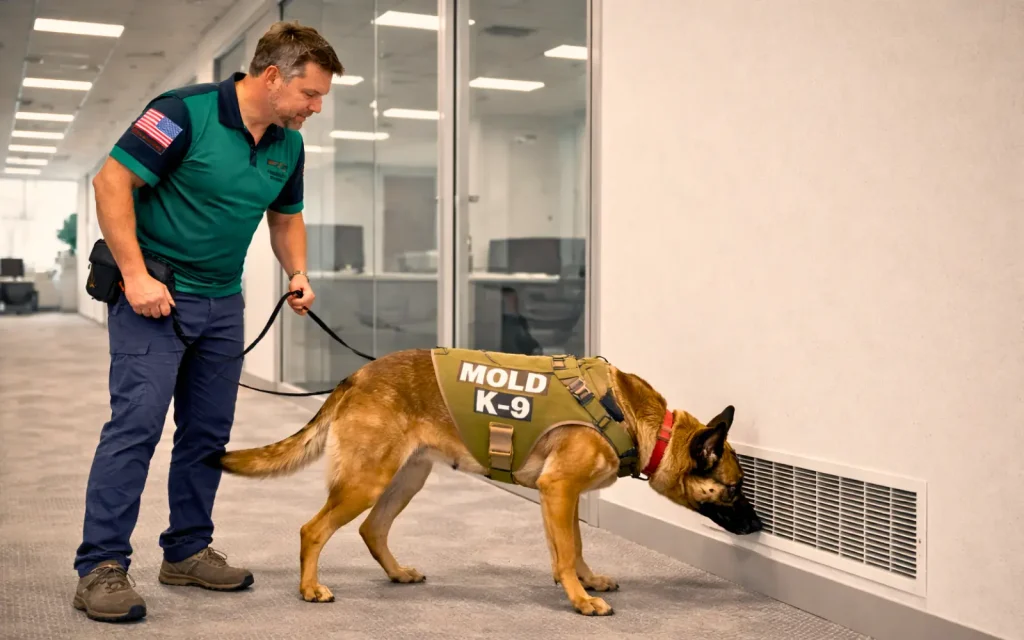
A mold dog snifing around an HVAC air vent during an office mold inspection
Mold Inspections

Mold in Air Ducts and HVAC Systems: What Homeowners Should Know

A musty smell from a vent doesn’t tell you exactly where the problem starts. Mold may affect ductwork, equipment components, or damp materials around the system. Drawing on Tina’s experience at Mold Dog Network, this guide explains common moisture problems, overlooked inspection locations, and a case involving hidden water in a new home’s ductwork. You’ll learn what a canine alert can help establish, why cleaning ducts alone may leave the cause unresolved, and which questions to ask before arranging repairs. The aim is a clearer understanding of your home’s conditions, with practical next steps based on findings rather than guesswork.

A mold dog snifing around an HVAC air vent during an office mold inspection
Mold Inspections

Mold in HVAC Systems: Why It’s Hard to Find and Easy to Spread

Musty odors that appear when your HVAC system runs may point to hidden mold in ductwork, drain pans, coolant-line cavities, attics, crawl spaces, or nearby walls. Because heating and cooling systems move air, a localized source can make the problem seem widespread and difficult to trace. This article explains how moisture, condensation, drainage issues, and poor maintenance contribute to HVAC-related mold—and why duct cleaning alone may not solve it. You’ll also learn how trained mold detection dogs help locate mold scent non-invasively, reducing guesswork and guiding more focused inspection, repair, and remediation decisions for homeowners concerned about their air quality.

Scroll to Top