
Mold Inspection vs Mold Testing: What’s the Difference?
A lot of homeowners use “mold inspection” and “mold testing” like they mean the same thing.
They don’t.
Mold testing analyzes a sample. A mold inspection should help you understand what’s happening in the home and where the problem may be coming from. That difference matters, especially when the mold isn’t visible.
If you smell something musty, feel worse at home, had a leak, or already received confusing test results, the real question may not be, “Is there mold in this sample?” It may be, “Where is the mold hiding?”
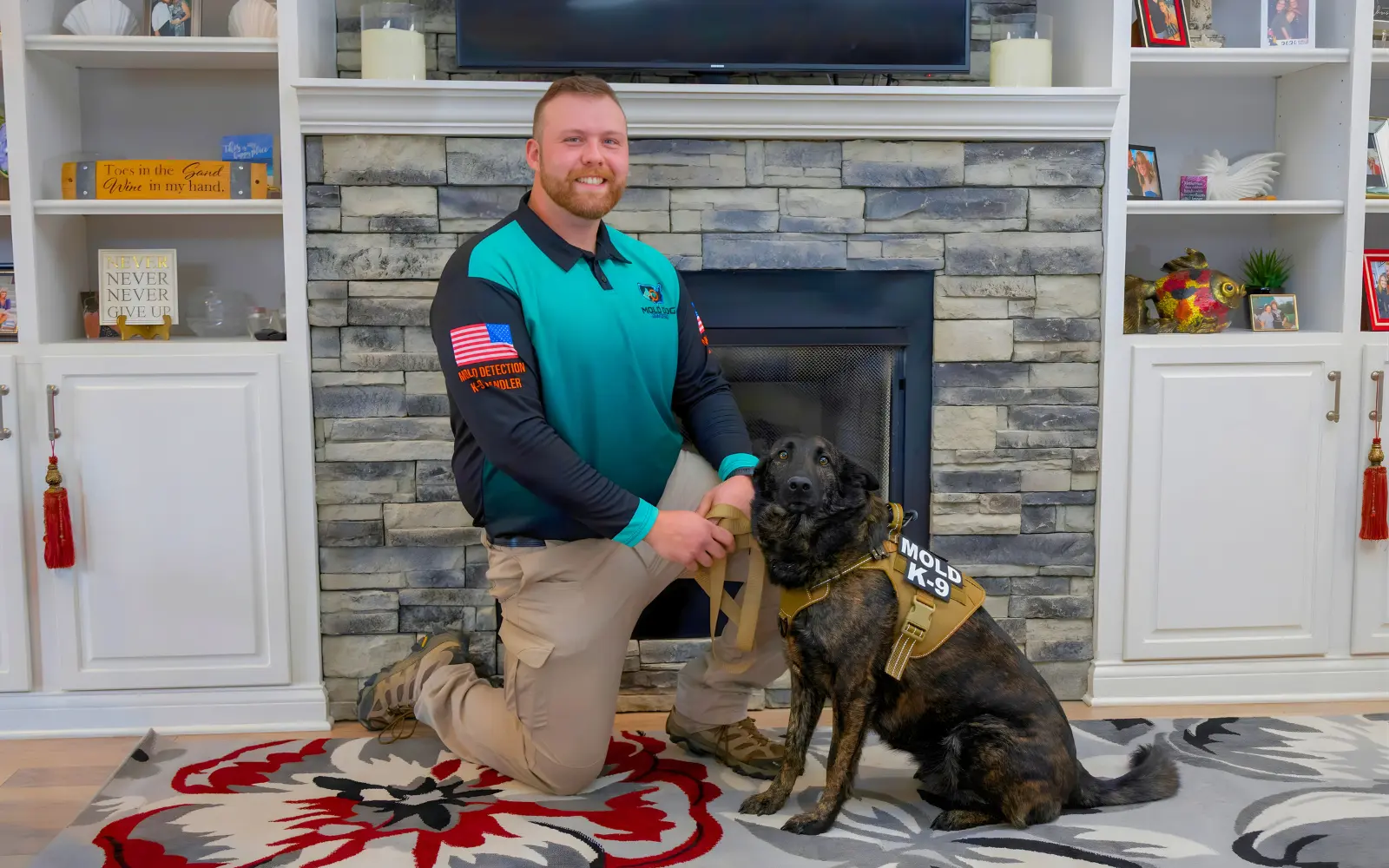
Caleb Jones, co-owner of Mold Dog Network, explained one of the biggest limits of traditional inspection and testing methods:
“You can only access and test what you can see.”
Caleb Jones
That’s why mold dog inspections can be helpful when visual inspections or testing haven’t given you clear answers. They’re focused on source location: finding where hidden mold odor may be coming from.
What Is a Mold Inspection?
A mold inspection is an evaluation of the property.
The goal is to look for signs that mold may be present and identify the most likely source areas. A traditional mold inspection may include checking for musty odors, visible staining, water damage, damp materials, plumbing leaks, HVAC concerns, basement moisture, roof issues, or areas where remediation has already been done.
That kind of inspection can be useful, especially when the problem is visible or the structure is exposed. If there’s mold on a joist in an unfinished basement, staining around a leak, or visible growth in an attic, a trained inspector may be able to identify the concern quickly.
But visual inspections have limits.
Caleb has done plenty of visual inspections himself, and he’s honest about where they fall short.
“I am limited to what I can physically see and potentially smell in the environment. But my senses are nowhere near as strong as what the canines are.”
Caleb Jones
A mold dog inspection is still an inspection, but it works differently. Instead of relying only on visible clues, a trained dog searches for the odor associated with mold growth. That can help locate hidden source areas behind walls, under floors, inside cabinets, or near plumbing and HVAC-related spaces.
For more on the process, see what happens during a mold dog inspection.
Choose an inspection when you need to understand where the problem may be coming from.
What Is Mold Testing?
Mold testing is different because it analyzes a sample.
Common types of mold testing include air samples, swab samples, tape lifts, and bulk material samples. These tests may help identify whether mold spores or mold growth were present in the sample collected.
Testing can be useful in the right situation. It may help with documentation, lab identification, indoor/outdoor comparisons, post-remediation questions, or specific requests from a remediation professional, healthcare provider, or industrial hygienist.
The problem is that testing doesn’t always tell you where the mold is growing.
A swab sample only reflects the exact spot tested. If the active growth is nearby but not on the sampled area, the result may miss the bigger issue.
“You could be swabbing a surface and… an inch to the right is an active mold growing colony.”
Caleb Jones
That’s why testing can sometimes create more questions than answers. A test may confirm mold is present without showing where it’s coming from. Or it may come back normal while the homeowner still smells something musty or feels like something is wrong.
Mold Dog Network’s core service is locating mold. It’s not lab species identification, and it shouldn’t be confused with a lab test. It answers a different question.
Use mold testing when you need sample information, but don’t expect every test to locate the source.
Why Testing Can Miss Hidden Mold
Mold testing can be helpful, but it has limits when the mold is hidden.
Air testing only captures a moment in time
Air testing measures what’s in the air during the sampling window. If mold spores are moving through the room during that time, they may show up. If they aren’t, they may not.
Caleb explained it this way:
“If the mold spores and stuff just don’t happen to be present in the five minute capture… you’ll come back and you’ll get a negative air quality test.”
Caleb Jones
That doesn’t mean air testing is useless. It just means a negative result doesn’t always prove there’s no hidden mold in the home.
Swabs only test one exact spot
A swab can tell you what was on the surface that was sampled. It can’t tell you what’s happening inside the wall behind it, under the floor nearby, or one inch away from the sampled area.
Hidden mold may not be releasing spores where you sample
Mold behind drywall, inside cabinets, below flooring, or around HVAC components may not release spores into the exact area being tested during the sampling period.
Timing matters too. The EPA says wet or damp materials dried within 24–48 hours after a leak or spill will usually not grow mold. But when moisture sits longer, especially inside building materials, hidden mold becomes harder to rule out from the surface alone.
For homeowners doing their own checks, it’s also worth reading can you inspect for mold yourself.
If the test is negative but the warning signs remain, look deeper before assuming the home is clear.
Mold Inspection vs Mold Testing: Which One Do You Need First?
The best first step depends on what you’re trying to answer.
If your biggest question is, “What type of mold is on this visible surface?” then testing may make sense.
If your biggest question is, “Where is the mold coming from?” then inspection should usually come first.
Inspection may be the better first step when:
- You smell mold but can’t see it.
- You’ve had a leak, flood, roof issue, or plumbing problem.
- You suspect mold behind walls, under flooring, or inside cabinets.
- Previous testing didn’t explain the problem.
- Remediation failed post-testing.
- You need to know where to open, investigate, or repair.
Testing may be useful when:
- You have visible growth and want lab identification.
- You need documentation.
- You’re comparing indoor and outdoor air samples.
- A professional has requested specific data.
- You’re doing post-remediation verification.
Caleb puts a lot of weight on the inspection stage because missed mold can affect everything that happens afterward.
“The inspection part of the process is the most important part of mold remediation in my opinion.”
Caleb Jones
That’s where mold dog inspections can fit well. When hidden mold is suspected, they help identify likely source areas before the homeowner spends more money on samples, demolition, or incomplete remediation.
Start with source location when the biggest question is, “Where is the mold?”
How Mold Dog Inspections Fit Into the Process
Mold dog inspections are designed to locate mold odor.
The dog searches areas traditional inspections may struggle to evaluate: finished walls, flooring, cabinets, plumbing-adjacent areas, HVAC-related spaces, and other places where mold can hide. When the dog alerts, the handler marks and documents the location so the homeowner has a clearer next step.
Caleb described Mika’s job clearly:
“Mika is trained to find mold. That is what she’s trained to find. No matter where that mold is, that is her main target and main focus.”
Caleb Jones
That focus is what makes the process valuable. A mold dog inspection doesn’t identify the mold species like a lab test. It doesn’t diagnose health symptoms. It doesn’t replace every professional involved in remediation. And it shouldn’t be presented as perfect.
Its role is specific: help locate likely mold source areas.
That can make the next step more targeted. Instead of opening random walls, ordering more samples, or guessing where remediation should start, the homeowner has documented alert areas to investigate.
For more on what comes next, see what happens after mold is found.
Use a mold dog inspection when you need help locating hidden mold before deciding what to test, open, or remediate.
What About Health Concerns?
Mold Dog Network doesn’t diagnose health issues, and it shouldn’t be used as a substitute for medical advice.
But many homeowners start asking mold questions because they feel worse at home and better when they leave. If you’re noticing that pattern, it’s worth speaking with a healthcare provider. If your provider suspects the home environment may be part of the picture, locating hidden mold can be a practical next step.
In one case Caleb shared, a family had already been through remediation but still couldn’t find all the hidden issues.
“The wife and the children started to have some health concerns… and they just could not figure out the most effective way to find all of the hidden issues in their home.”
Caleb Jones
CDC says mold can cause symptoms such as stuffy nose, sore throat, coughing or wheezing, burning eyes, or skin rash in some people. Functional Medicine Practitioners argue that mold can also cause neurologicial symptoms such as brain fog, migraines and chronic fatigue.
For more warning signs, see signs it’s time for a mold inspection.
If your home seems connected to symptoms, investigate the environment while working with your healthcare provider.
Conclusion: Testing Gives Data, Inspection Gives Direction
Mold inspection and mold testing both have value.
Testing gives information about a sample. Inspection helps locate where the concern may be coming from. When mold is visible, testing may be enough to answer a specific question. But when mold is hidden, source location often needs to come first.
That’s where mold dog inspections can help. They’re designed to locate hidden mold odor, giving homeowners clearer direction before they open walls, rebuild, remediate, or pay for more testing.
Ready to stop guessing? Schedule a mold dog inspection with Mold Dog Network and find out where hidden mold may be located.