
Musty Smell but No Visible Mold? Here’s What It Could Mean
A musty smell in your home can make you feel like you’re chasing a problem you can’t prove.
You walk into a room and notice it. You check the walls. Nothing. You look under the sink. Nothing obvious. You clean, change the HVAC filter, open windows, spray something, light a candle… and a few days later, there it is again.
That’s one of the most frustrating parts of hidden mold. You may smell something before you ever see anything.
At Mold Dog Network, this is one of the biggest signs homeowners mention when they call. Tina Craig, co-owner of Mold Dog Network, says odor is often one of the first clues they notice during an inspection.
“So one of the biggest signs are the smell, and when you go into a home, we often say that they have kind of a universal odor to them.“
Tina Craig
A musty smell but no visible mold doesn’t automatically mean your home is full of mold. But it does mean there may be moisture, microbial growth, damp building materials, or airflow carrying odor from somewhere hidden.
And that’s the part most homeowners miss: mold doesn’t have to be growing on the surface you’re looking at.
It may be behind the wall, under the floor, inside a ceiling cavity, around a chimney, behind cabinetry, in a crawl space, in an attic, or somewhere in the HVAC system.
That’s why this article matters. We’ll walk through what a musty smell may mean, why you may not be able to see the source, where the odor often comes from, and how a mold dog inspection can help you locate hidden mold without tearing your home apart.
- What a Musty Smell Usually Means
- Why You May Smell Mold but Not See It
- Common Places a Musty Smell Can Come From
- When a Musty Odor Becomes a Bigger Concern
- Why Air Testing or a Visual Check May Not Find the Source
- How a Mold Dog Inspection Helps When You Smell Mold but Can’t See It
- Don’t Ignore the Smell, But Don’t Panic Either
What a Musty Smell Usually Means
A musty smell usually points to moisture.
That moisture may be fresh, old, trapped, intermittent, or hidden inside building materials. It may come from a leak, high humidity, condensation, wet insulation, damp carpet padding, a crawl space, an attic, a chimney issue, or an HVAC problem.
Mold spores are naturally present in indoor and outdoor environments, but the EPA explains that they become a problem indoors when they land on wet or damp surfaces and begin growing. In other words, moisture is the trigger.
That’s why a persistent musty odor deserves attention. It’s not just an unpleasant smell. It may be a clue that something in your home isn’t drying the way it should.
Common sources of a musty smell include:
- Damp drywall or plaster
- Wet insulation
- Mold growth inside wall cavities
- Old water damage
- Moisture under flooring
- Crawl space humidity
- Attic ventilation problems
- HVAC condensation or duct odors
- Leaks under sinks or behind cabinets
- Chimney or roof-related moisture intrusion
The key word here is persistent.
A room that smells a little stale after being closed up for weeks is different from a musty odor that keeps returning after cleaning, airing out, and changing filters.
That’s often the moment homeowners start wondering whether they’re dealing with hidden mold. The house looks clean, but something still feels off.
If the musty smell keeps returning after cleaning, don’t keep masking it. A mold dog inspection can help locate where the odor may be coming from.
Why You May Smell Mold but Not See It
A musty smell but no visible mold often happens because the mold simply isn’t growing where you’re looking.
It may be behind the finished surface or inside a wall.
Drywall, flooring, cabinetry, insulation, built-ins, ceilings, and wall cavities can all hide moisture. A leak may dry on the visible side but stay damp inside the cavity. A ceiling may look fine after paint, while the space between floors is still holding moisture. A cabinet may hide a slow drip against the wall behind it.
Tina explained the problem in the simplest possible way:
“We just can’t see it.”
Tina Craig
That’s why visual checks can be so misleading. You may look at a wall and see clean paint. A mold detection dog may smell what’s happening behind that wall.
Tina gave the example of homeowners who had a water leak and thought they could dry it out themselves. The surface looked manageable. But moisture stayed trapped inside a wall or between floors, and mold grew inside that hidden chamber.
“It stays wet inside that chamber and grows mold and the dogs are like, it’s right there.”
Tina Craig
That’s the difference between what humans can see and what dogs are trained to detect.
Odor can also move. The strongest smell in a room may not be directly in front of the source. Airflow from HVAC systems, wall cavities, crawl spaces, attics, and gaps around plumbing can move musty odors into living areas.
That’s why homeowners sometimes say things like:
“It smells worse in this hallway, but I can’t find anything.”
“The smell comes and goes when the air kicks on.”
“It’s strongest after rain.”
“It smells musty near the fireplace, but the chimney looks fine.”
Those details matter. They can help point toward the hidden source.
If your home smells like mold but looks clean, the next step isn’t guessing. It’s finding out whether the source is hidden behind the surface.
Common Places a Musty Smell Can Come From
A musty smell has to come from somewhere. The hard part is that the source may be tucked behind materials you don’t want to disturb unless you have a good reason.
Here are some of the most common places Mold Dog Network often sees hidden mold concerns show up.
Chimneys and fireplace walls
Chimneys are one of the most common hidden mold trouble spots Tina mentioned.
“We see a lot around chimneys. Those are very common failure points in a home.”
Tina Craig
That surprises a lot of homeowners because the fireplace may look beautiful from the room. The mantle looks clean. The built-ins look dry. The brick or stone may look perfectly normal.
But chimneys take a beating from the weather. Rain, wind, temperature swings, failed chimney caps, worn flashing, aging caulk, masonry cracks, and spalling can all allow moisture to work its way into hidden areas.
And once water gets behind the finished fireplace wall or into the chimney chase, it may not show up as an obvious stain.
Tina described cases where mitigation companies opened built-ins beside a fireplace after a dog alert and found mold on the sides or backs of the cabinetry, as well as in the insulation around the chimney.
That’s a classic hidden mold situation: the room looks clean, but the cavity tells a different story.
Sinks, cabinets, and plumbing areas
Kitchen and bathroom cabinets are another common source of musty odors.
A small leak under a sink may not pour out onto the floor where you’d notice it. Instead, water can travel behind the cabinet, into the wall, under the toe kick, or beneath flooring.
Tina explained it this way:
“People at the kitchen sink, people will have water intrusions that they’re unaware of because the cabinetry hides it.”
Tina Craig
That’s why a cabinet can look clean from the front while hidden moisture is sitting behind it.
A musty smell under or near a sink should be taken seriously, especially if the cabinet base feels soft, there are stains around plumbing penetrations, the odor is stronger when doors are closed, or there’s a history of plumbing repairs.
HVAC systems
HVAC systems can also create or move musty odors.
Sometimes the issue is moisture inside or around the equipment. Sometimes it’s condensation. Sometimes it’s poor maintenance. Sometimes it’s the system carrying odors from another part of the home.
Tina was direct about this:
“We see that HVAC systems, if not put in correctly, and if they’re not operated and taken care of can present a real problem.”
Tina Craig
One of the more interesting hidden moisture issues she described involved coolant lines sweating inside a wall or ceiling cavity. That kind of moisture doesn’t look dramatic. It’s not a pipe bursting or a basement flooding. It’s slow moisture building up where no one can see it.
Over time, that can create the conditions for mold.
This is why a musty smell that gets stronger when the HVAC runs deserves attention. It could be the system itself, or it could be airflow carrying odor from a hidden source.
Crawl spaces, attics, and wall cavities
Crawl spaces and attics are common odor sources because they’re often out of sight and affected by humidity, airflow, insulation, roof leaks, poor ventilation, and ground moisture.
Wall cavities are another major hiding place. Tina described homes where missing or incomplete building materials allowed moisture and humidity to enter the wall system. In some cases, homeowners would never have known the issue was there without the dog.
That’s the important thing to understand: hidden mold doesn’t always start with a dramatic event. Sometimes it starts with a building detail that lets moisture collect year after year.
A musty smell has to come from somewhere. Mold Dog Network can help identify the areas where mold odor is strongest so you know where to look next.
When a Musty Odor Becomes a Bigger Concern
A musty smell by itself doesn’t tell the whole story. But when it shows up alongside other clues, it’s worth taking more seriously.
You should pay closer attention if the musty odor is paired with:
- A past roof leak, plumbing leak, appliance leak, or flood
- Sump pump failure or basement moisture
- A smell that gets worse after rain
- A smell that gets worse when the HVAC runs
- Recurring dust or particulate buildup
- Symptoms that seem worse indoors
- Previous mold testing that didn’t locate the source
- A specific wall, cabinet, floor, chimney, or room that smells stronger
- A history of remediation that didn’t fully resolve the concern
One of Tina’s more unusual observations was the amount of dust some homeowners report.
“We see a much higher level of particulate buildup in homes that are infested with microbial growth.”
Tina Craig
Again, dust alone doesn’t prove mold. But if you’re dusting constantly, smelling musty odors, and feeling worse at home, it may be time to look deeper.
Health concerns are another reason homeowners call Mold Dog Network. Tina described families dealing with major health decline and unexplained symptoms, sometimes after multiple inspections or mitigations.
Mold Dog Network doesn’t diagnose medical conditions. But the CDC does state that mold can cause symptoms like stuffy nose, sore throat, coughing, wheezing, burning eyes, or skin rash in some people. Some people, including those with asthma, mold allergies, chronic lung disease, or weakened immune systems, may be more sensitive.
So the question isn’t, “Can I prove this smell is mold right now?”
A better question is: Is there enough evidence to investigate the home more carefully?
If the smell keeps coming back, if you have a water history, or if you feel worse indoors, the answer may be yes.
If the odor is paired with water history, worsening symptoms, or recurring dust, it’s worth taking the concern seriously and scheduling a hidden mold inspection.
Why Air Testing or a Visual Check May Not Find the Source
Many homeowners do the “responsible” thing first. They look around. They check the obvious places. Some hire an inspector. Some order air testing.
Those steps can be useful. But they don’t always locate hidden mold.
A visual inspection can only assess what’s visible or accessible. If mold is inside a wall, behind cabinetry, under flooring, or inside a ceiling chamber, there may be nothing obvious to see.
Air testing has limits too. It measures what’s in the air at the time the sample is taken. If hidden mold is trapped behind materials and isn’t releasing enough spores into the sampled air at that moment, the test may not reveal where the source is. That’s also true because mold spores don’t stay airborne forever.
That’s why someone can smell mold but still struggle to get answers from basic testing.
Tina explained the human limitation well:
“Humans go into these properties with experience, textbook training, field training and they go in with tools… they’re using devices to try to make up for the God-given device that a canine owns.”
Tina Craig
That doesn’t mean inspectors or hygienists are useless; far from it. Their tools can be helpful. But hidden mold is tricky because moisture and odor don’t always behave in a neat, obvious way.
Dogs bring something different to the inspection: scent detection.
A trained mold detection dog doesn’t care whether the wall looks clean. It doesn’t care whether a cabinet looks new or a fireplace looks beautiful. It’s trained to find the scent signature associated with mold growth.
That can make a huge difference when the main clue is a musty smell but no visible mold.
If you’ve already had testing but still smell mold, a mold dog inspection may help locate the source instead of giving you another general result.
How a Mold Dog Inspection Helps When You Smell Mold but Can’t See It
A mold dog inspection is designed to answer the question homeowners are usually asking:
Where is the mold hiding?
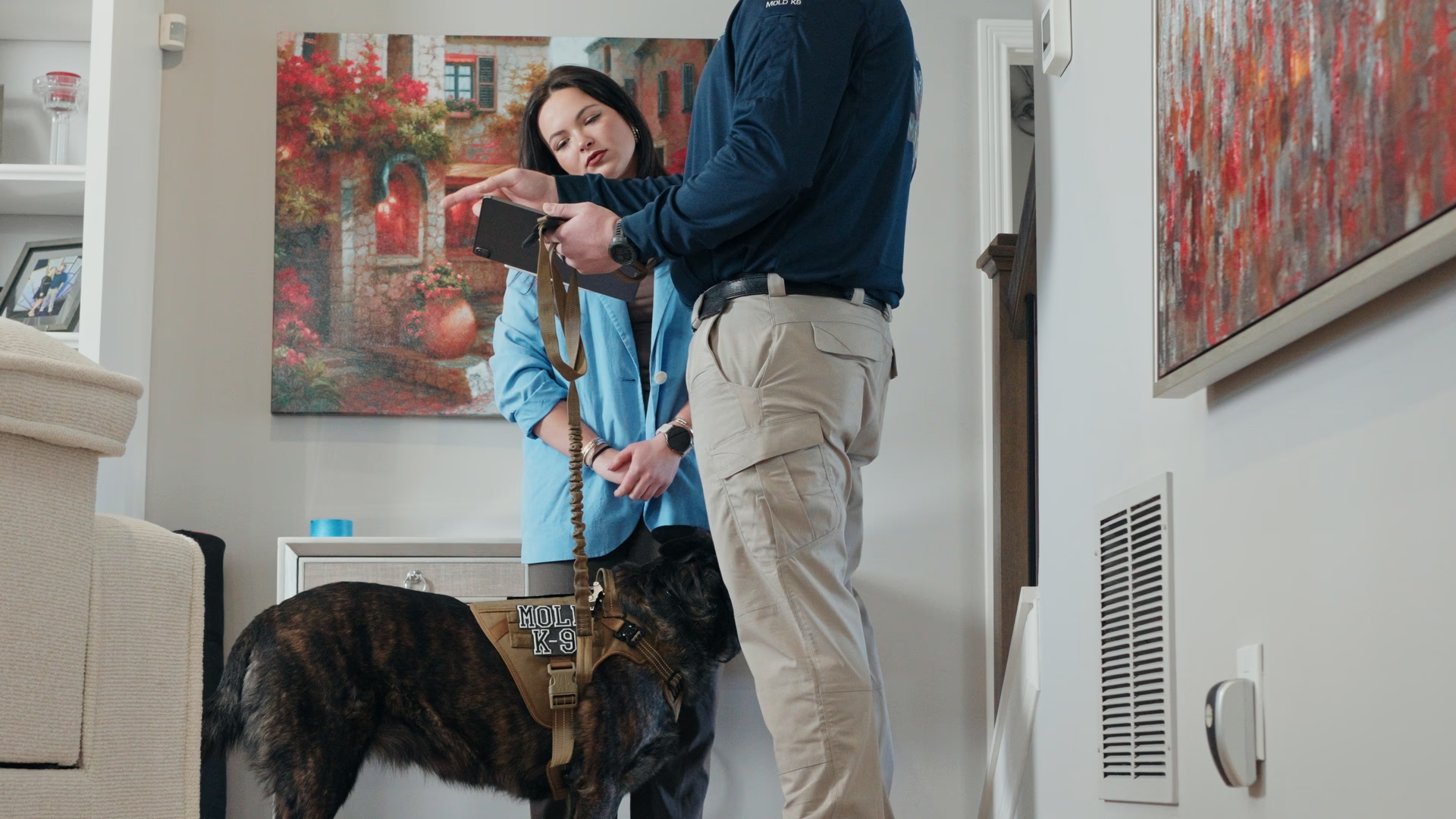
During an inspection, a trained handler brings the mold detection dog through the home systematically. The dog searches for mold scent signatures. When the dog detects that scent, it gives a trained alert. The handler documents the alert area so the homeowner has a clearer idea of where the odor is strongest.
Mold Dog Network’s homepage copy explains that the dog moves through the property with its handler, alerts when it detects mold odor, and the handler documents those alerts in a written report.
That report can then help the next step become more focused. Instead of opening random walls, guessing at multiple rooms, or spending weeks trying to trace a smell, you have specific areas to investigate.
Tina described the benefit clearly:
“The cool thing about Mold Dog Network is you’re gonna know if you have a problem and you’re gonna know where the problem hides.”
Tina Craig
That’s what most homeowners want by the time they call. Not a scare tactic. Not a vague answer. Not another round of “maybe.”
They want direction.
Mold Dog Network is focused on locating hidden mold. The goal is to help you find the source so you can make informed decisions about remediation, repairs, or further investigation.
We find the root cause, so you can stop guessing and start moving forward.
If your house smells musty but you can’t find the source, schedule a mold dog inspection and get a clearer path forward.
Don’t Ignore the Smell, But Don’t Panic Either
A musty smell but no visible mold doesn’t automatically mean disaster.
But it does mean your home may be giving you a clue.
There may be hidden moisture behind a wall, under flooring, around a chimney, in a ceiling cavity, beneath cabinetry, in a crawl space, in an attic, or somewhere in the HVAC system. And if the smell keeps returning, covering it up won’t solve the problem.
We get it. It’s stressful to smell something in your home and not know where it’s coming from. It’s even more stressful when you’ve already looked, cleaned, tested, or asked for help and still don’t have answers.
That’s where Mold Dog Network can help.
As Tina said:
“No more of that. The guessing game is over. You now know what you’re dealing with.”
Tina Craig
If you’re tired of smelling mold but not finding it, Mold Dog Network can help you locate where hidden mold may be hiding. Schedule your mold dog inspection today.