
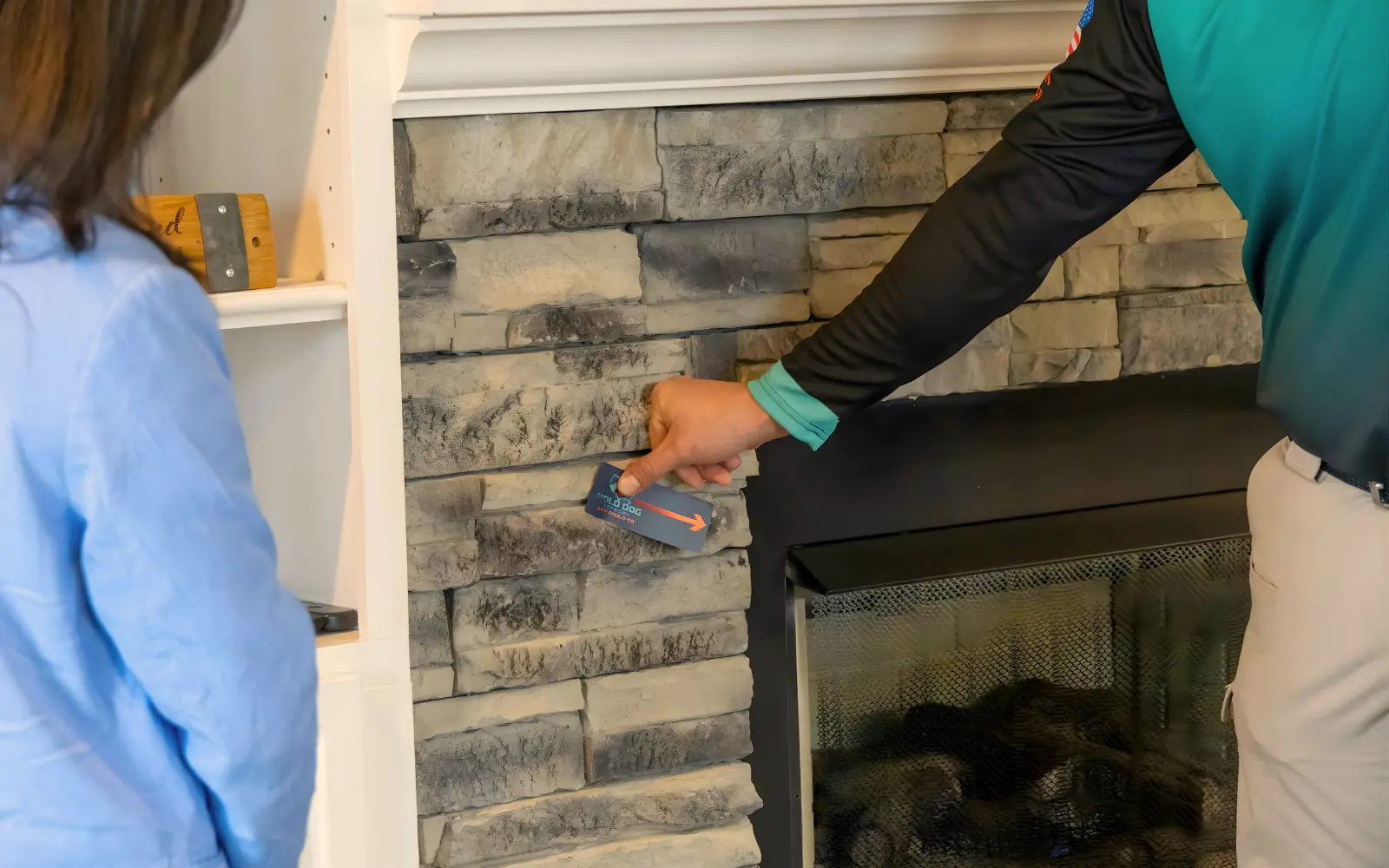
Hidden Mold in Your Home: Signs, Common Hiding Places, and How to Find It
Sometimes, mold doesn’t announce itself with a black patch on the wall or a stain spreading across the ceiling.
Sometimes, it starts with a smell you can’t quite place, a musty odor in one room, a damp, stale scent near the fireplace. It could be a strange heaviness in the air when the HVAC kicks on, or maybe it’s not the smell at all, maybe it’s the fact that you feel worse at home than you do anywhere else.
For many homeowners, hidden mold feels like a mystery they’re expected to solve with very little evidence. You may have cleaned, changed filters, checked under sinks, looked behind furniture, or even paid for testing, only to be told everything looks “fine.” But deep down, you still know something isn’t right.
Mold Dog Network sees this all the time. According to Tina Craig, co-owner of Mold Dog Network, smell is often one of the first clues that hidden mold may be present.
“One of the biggest signs are the smell, and when you go into a home, we often say that they have kind of a universal odor to them.”
Tina Craig
That’s what makes hidden mold so frustrating. It can grow behind walls, under flooring, around chimneys, inside cabinets, in crawl spaces, in attics, and around HVAC systems where you can’t see it from the room you’re standing in.
The goal here isn’t to scare you. It’s to help you stop guessing. In this guide, we’ll walk through the signs of hidden mold in your home, where it commonly hides, why traditional inspections can miss it, and how a trained mold detection dog can help locate the source without tearing your house apart.
Watch the full interview here!
- What Hidden Mold Is And Why It’s So Hard to Prove
- The Biggest Signs of Hidden Mold in Your Home
- Where Hidden Mold Commonly Hides
- Why Leaks, Chimneys, HVAC Problems, and Building Details Create Hidden Mold
- Why Visual Inspections and Air Testing Can Miss Hidden Mold
- How Mold Detection Dogs Find Hidden Mold Without Tearing Your Home Apart
- What Happens After the Dog Alerts?
- When to Schedule a Mold Dog Inspection
- Stop Guessing and Find the Source
- FAQ
What Hidden Mold Is And Why It’s So Hard to Prove
Hidden mold is mold growth that’s present inside the home but not visible on ordinary surfaces, and there are lots of places hidden mold can be missed by homeowners. It may be growing inside a wall cavity, under flooring, behind cabinetry, above a ceiling, around a chimney chase, inside insulation, in a crawl space, in an attic, or near HVAC components.
That’s why hidden mold in your home can be so confusing. You can stand in a room that looks clean and still have microbial growth behind the surface.
The bottom line is that mold needs moisture to grow. That moisture may come from a range of sources: leaks, sump pump failures, condensation, HVAC problems, floods, high humidity, or building defects. The EPA recommends drying wet or damp materials within 24–48 hours after a leak or spill, because quick drying can help prevent mold growth in many cases.

The problem is that most homeowners don’t know moisture is trapped until long after that window has passed.
A leak may look “small” from the outside. A ceiling may dry on the surface but stay damp inside the chamber between floors. A chimney may look beautiful from the living room but have water traveling down inside the chase. A pipe may sweat behind drywall for months before anyone realizes there’s a problem.
That’s why hidden mold often only needs four things:
- Moisture or humidity
- Organic material, like drywall paper, wood, dust, insulation backing, or debris
- Time
- A hidden or low-airflow area where dampness can linger
Once those conditions line up, mold can start growing where homeowners can’t see it.
Tina summed up the difficulty plainly:
“We just can’t see it.”
Tina Craig
That’s the core issue. A home can look clean, but if water has been sitting inside a cavity, under a cabinet, behind a fireplace, or around a duct line, hidden mold may still be there.
If you suspect hidden mold in your home but nothing is visible, don’t start cutting into walls blindly. Schedule a mold dog inspection to narrow down where the source may be hiding.
The Biggest Signs of Hidden Mold in Your Home
Hidden mold rarely gives homeowners one perfect clue. More often, it’s a pattern. Here are some of the biggest signs worth paying attention to.
A musty smell that won’t go away
A musty smell with no visible mold is one of the most common reasons homeowners start looking for answers. The odor may be stronger in one room, close to a kitchen sink, in a basement, or when the air conditioning turns on.
A musty smell doesn’t automatically prove there’s mold. But it’s a clue that shouldn’t be ignored, especially when it keeps coming back after cleaning.
Dust that seems to come back too fast
One of the more surprising clues Tina sees is heavy particulate buildup. Homeowners may notice they’re cleaning constantly, but the home still looks dusty almost immediately.
“I dusted two days ago and I have to dust again because it looks like I’ve gone a month without dusting.”
Tina Craig
That doesn’t mean dust alone confirms mold. Homes can be dusty for plenty of reasons, including HVAC filtration issues, pets, construction dust, poor sealing, or normal household activity. But when unusual dust combines with musty smells, moisture history, and unexplained health concerns, it may be part of a bigger picture.
Health symptoms that seem worse at home
Mold Dog Network is not a medical provider and doesn’t diagnose health conditions. But many homeowners call because they feel like their home is affecting them. Tina described families dealing with severe health concerns, including headaches, insomnia or hypersomnia, neurological-type complaints, skin issues, digestive problems, fatigue, and other major declines.
The CDC states that mold can cause symptoms such as stuffy nose, sore throat, coughing, wheezing, burning eyes, or skin rash in some people. People with asthma, mold allergies, chronic lung disease, or weakened immune systems can be more vulnerable.
The key question for homeowners is often: Do I feel worse inside this house than I do when I’m away?
That question matters. It doesn’t prove mold by itself, but it can help you decide whether your home needs a closer look.
Past water damage that seemed “not that bad”
A small leak can turn into a hidden mold problem when the visible surface dries but the interior cavity doesn’t. Tina gave the example of a leak between floors:
“It stays wet inside that chamber and grows mold and the [mold] dogs are like, ‘It’s right there.’”
Tina Craig
That’s the kind of situation that makes hidden mold so easy to miss. From the room below, the ceiling may look fine after repainting. From the room above, the floor may look normal. But between the two, trapped moisture can create the perfect place for mold to grow.
If you’ve got a musty smell, recurring dust, or symptoms that seem worse indoors, a mold dog inspection can help you stop wondering whether your home is part of the problem.
Where Hidden Mold Commonly Hides
Hidden mold can grow almost anywhere moisture gets trapped. But after inspecting homes with trained mold detection dogs, Mold Dog Network sees certain areas show up again and again.
Chimneys and fireplace walls
Chimneys are one of Tina’s biggest callouts.
“We see a lot around chimneys. Those are very common failure points in a home.”
Tina Craig
A chimney may look fine from inside the home, but it’s exposed to wind, rain, changing temperatures, failed caps, worn flashing, worn caulking, and masonry issues. Unlike the walls of the house, the chimney stack is sticking up into the weather. If the brick or stone isn’t protected properly, moisture can easily wick in.
Over time, hairline fractures, spalling, flashing failure, or worn sealant can let water travel into the chimney chase. From the living room, the fireplace may look beautiful, and the built-ins may look perfect. But behind that finished surface, water may be moving where no one can see it.
Tina described cases where mitigation teams opened up built-ins around a fireplace after a dog alert and found mold on the sides or backs of cabinetry and inside insulation around the chimney.
That’s exactly why hidden mold in your home can be so hard to accept. The area may not look damaged and there may be no obvious stain. But the mold dog is responding to scent, not appearance.
Kitchen sinks and bathroom cabinets
Under-sink leaks don’t always spill out where you can see them. Cabinetry can hide slow water intrusions, and water can travel behind the cabinet, down the wall, or under the flooring.
Tina explained that water around kitchen sinks can hit the floor, hit the wall behind the cabinetry, and stay hidden because the cabinet is covering the area.
That’s why a cabinet can look “mostly fine” from the front while the wall or subfloor behind it is holding moisture.
Ceilings and floor cavities
A leak from an upper level can settle between the floor above and the ceiling below. Homeowners may see a stain, paint over it, and assume the problem is gone. But if moisture stayed inside the chamber, mold may continue growing.
This is especially important after bathroom leaks, tub overflows, upstairs laundry issues, refrigerator line leaks, and plumbing supply failures.
HVAC systems and coolant lines
HVAC systems can be especially tricky because they move air through the home. Tina said HVAC systems can become a real problem if they’re not installed, operated, or maintained correctly.
One of her more interesting examples involved coolant lines sweating inside hidden cavities. She described cases where insulation around coolant lines wasn’t keeping up with changing weather conditions, so the line sweated inside a drywall box, ceiling, or wall. That wasn’t a burst pipe or a major flood: It was slow, repeated moisture buildup.
“Now that’s not a rush of water. That’s just moisture building up inside of a cavity inside the house.“
Tina Craig
Slow moisture can be just as serious as dramatic water damage because it often goes unnoticed longer.
Wall cavities and missing building materials
Some hidden mold problems come from the way the home was built. Tina described homes where exterior building materials were missing or incomplete. In one case, a wall had extremely thin foam board where proper materials should have been, allowing water and humidity to infiltrate the wall section.
When warm indoor air and cold outdoor air clash inside a poorly protected wall cavity, moisture can form. Tina even described walls opened up with ice inside them because the house wasn’t built right. Over time, repeated freezing, thawing, and moisture buildup can create ideal mold conditions.
Appliances and unexpected items
Sometimes the dog alerts somewhere no one expected. Tina mentioned one inspection where a canine detected on a wet-mopping Roomba appliance. When investigated, there were mold colonies inside it.
That doesn’t mean every appliance is a mold problem. It means mold follows moisture. If something stores water, creates condensation, traps damp debris, or doesn’t dry properly, it can become part of the story.
The EPA recommends keeping indoor humidity below 60%, ideally between 30% and 50%, to help control moisture and mold risk.
Hidden mold in your home usually has a source. Mold Dog Network helps you locate that source so remediation can be focused instead of based on guesswork.
Why Leaks, Chimneys, HVAC Problems, and Building Details Create Hidden Mold
Most homeowners understand that a flood can cause mold. What’s harder to understand is how small, quiet moisture problems can do the same thing because those problems don’t always look urgent from the outside.
Hidden mold can feel so unfair. You may have done what seemed reasonable at the time. You dried the visible water, painted the stain, replaced the filter. You ran a fan for a day and you checked the cabinet. But if the moisture was inside a cavity, under a floor, or behind a finished surface, the visible cleanup may not have reached the actual problem.
The important part is this: mold doesn’t need a dramatic event. It needs enough moisture, enough time, and the right material to grow on.
Tina’s chimney explanation is a perfect example. The chimney sits exposed to the elements. Water hits it. Wind hits it. Flashing ages. Caulking wears down. Small failures start allowing water into the chase. And because the chimney area is often boxed in by masonry, built-ins, mantles, wall chambers, and insulation, homeowners may not see the damage until the mold dog detects the scent or the area is opened up.

HVAC moisture can be even less obvious. A coolant line sweating inside a wall doesn’t create the same panic as a burst pipe. It may not drip through the ceiling right away. It may simply add moisture over and over again until mold has the conditions it needs.
Hidden mold inspections need to be source-focused because of these things. It’s not enough to say, “There may be mold somewhere.” Homeowners need to know where to look, what failed, and what needs to happen next.
Don’t assume dry-looking surfaces means the cavity is clean. Let a mold dog check where hidden mold may be growing.
Why Visual Inspections and Air Testing Can Miss Hidden Mold
Visual inspections, air samples, tape lifts, swabs, moisture meters, and thermal cameras can all be useful. They have a place. A trained industrial hygienist or inspector may be able to identify visible mold, moisture patterns, elevated airborne spores, or areas that deserve further investigation.
But hidden mold is difficult because it doesn’t always cooperate with human tools.
Air samples only capture conditions at a specific moment and a wall cavity may contain mold without releasing enough spores into the sampled air at that exact time. A visual inspection can only identify what’s visible or accessible and a thermal camera may suggest temperature differences, but it doesn’t directly “see” mold. A moisture meter can help identify damp materials, but it still depends on where it’s used and what materials are accessible.
Tina put it another way:
“Humans go into these properties with experience, textbook training, field training and they go in with tools… they’re using devices to try to make up for the God-given device that a canine owns.”
Tina Craig
That’s not an attack on inspectors or hygienists. It’s a reality of hidden mold. Humans are working with eyesight, training, tools, and sampling. Dogs are working with scent.
And scent is the whole point.
A mold detection dog isn’t looking for a stain. It isn’t deciding whether a wall “looks suspicious.” It’s not biased by the fact that the room is beautiful, recently renovated, or freshly painted. The dog is trained to detect the odor associated with mold growth and alert where that scent is strongest.
That can be especially helpful when a homeowner has already spent money on testing but still doesn’t know where the mold is hiding.
If you’ve had an inspection or test that didn’t give you clear answers, a mold dog inspection can be the next step to find where the odor of active mold growth is strongest.
How Mold Detection Dogs Find Hidden Mold Without Tearing Your Home Apart
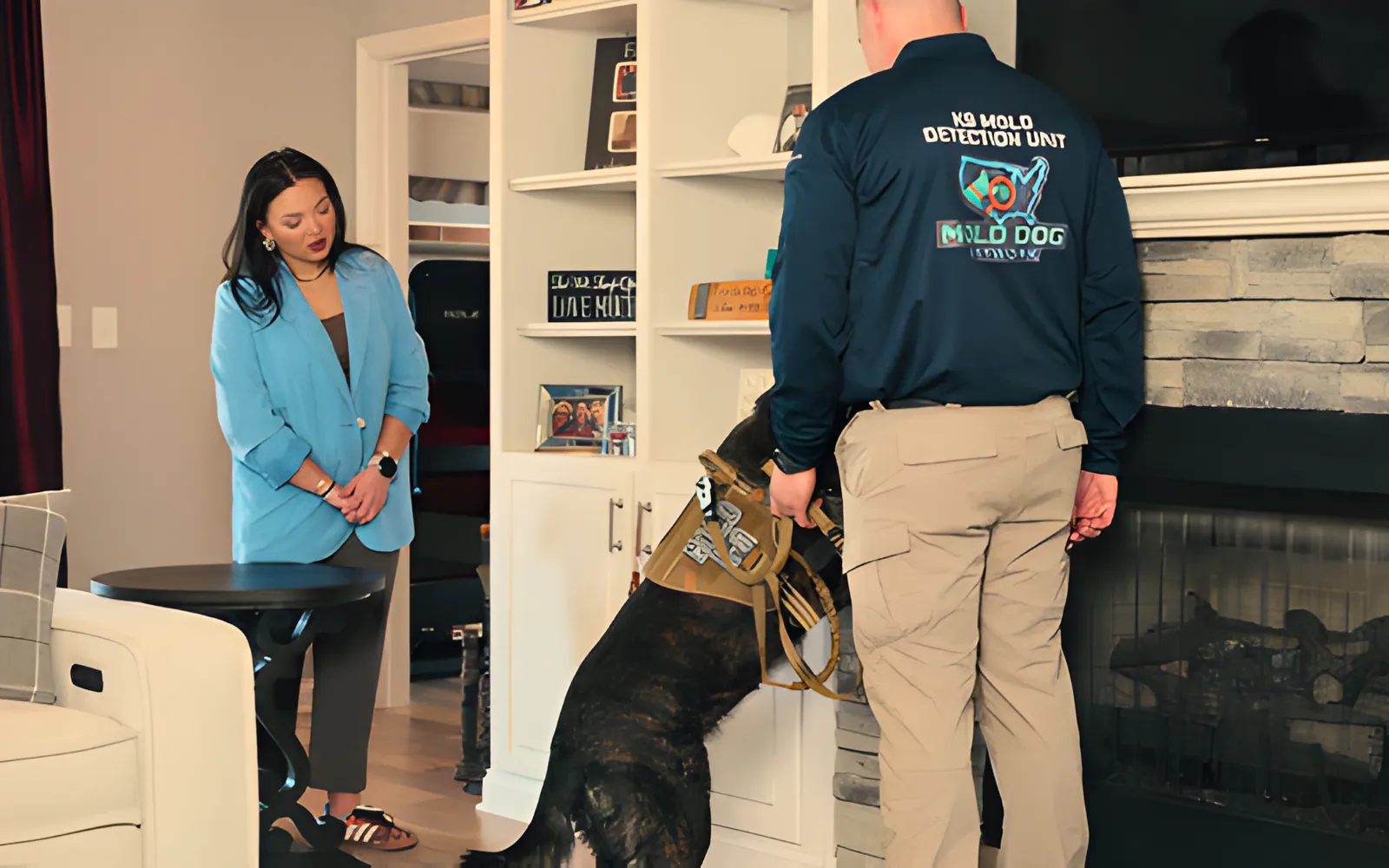
A mold dog inspection is designed to help homeowners find direction before anyone starts opening walls, pulling up floors, or guessing where remediation should happen.
The dog works with a trained handler and moves through the property systematically. As the dog inspects, it’s searching for the scent signature associated with mold growth. If the dog detects that scent, it gives a trained alert. The handler then documents the alert area so the homeowner has a clearer idea of where mold may be present.
Tina described the dogs’ focus this way:
“They don’t care what a wall looks like. They don’t care what the layout of a house looks like… All they want is that scent.”
Tina Craig
That’s what makes mold dogs so valuable for finding hidden mold in your home. They’re not distracted by paint, decor, assumptions, or the homeowner’s hopes about where the problem is or isn’t. They’re trained to follow scent.
This doesn’t mean the dog “remediates” the mold or replaces every other professional involved. Mold Dog Network’s role is focused on locating the areas where mold odor is detected. From there, homeowners can use the report to work with a remediation company, industrial hygienist, contractor, or other qualified professional.
Put simply, we find the source so the next step can be more targeted. That’s a very different experience than tearing into multiple areas of the home and hoping one of them reveals the problem.
Before anyone starts opening walls, floors, or ceilings, schedule a mold dog inspection to find out where the dog detects mold odor.
What Happens After the Dog Alerts?
A dog alert gives you information. It gives you a starting point. It doesn’t mean you should panic, and it doesn’t mean the whole house is automatically ruined.
But it also shouldn’t be dismissed.
After a mold detection dog alerts, the next step is usually to use the report to create a more focused plan. Depending on the situation, that may include the homeowner opening a specific area carefully, identifying the moisture source, repairing the leak or building defect, removing contaminated materials, treating the affected area, or bringing in a remediation company to handle the work properly.
The key is that you’re no longer guessing.
Tina described how homeowners often feel after an inspection:
“No more of wondering. The guessing game is over. You now know what you’re dealing with.”
Tina Craig
That certainty matters because mold remediation can be stressful. It can be expensive. It can involve opening parts of the home that no one wants to disturb. Most homeowners don’t want to do that two, three, or four times because the original inspection missed the actual source.
A dog alert helps narrow the search.
It’s also important to understand that the number of alerts doesn’t always tell the whole story. One alert can still matter. Tina made that point strongly:
“That one location can make an entire house sick and it can make the people in it sick.”
Tina Craig
In other words, one hidden colony under a garden tub, behind a chimney, inside a wall, or near an HVAC system may still affect the home. The goal isn’t to count alerts and decide whether you’re “safe enough.” The goal is to understand where mold may be hiding, why it’s there, and what needs to be addressed.
Mold Dog Network has also seen more severe cases. Tina recalled one home where the canine detected on every floor, wall, and ceiling, and when the mitigation company opened those areas, the chambers were full of visible mold.
That kind of situation is overwhelming. But even then, the inspection gave the family direction. They weren’t left wondering where to begin. They knew the scale of the problem.
A dog alert gives you direction. Mold Dog Network helps you understand where the problem may be hiding so you can move into the next step with a clearer plan.
When to Schedule a Mold Dog Inspection
You don’t need to wait until mold is visible to take your concerns seriously.
A mold dog inspection may make sense if:
- You smell mold but can’t see it
- You feel worse at home than you do away from home
- You’ve had leaks, flooding, roof issues, sump pump problems, or HVAC moisture issues
- You’ve had air testing or visual inspections that didn’t locate the source
- You’re preparing for remediation and want a more targeted plan
- You’re worried about hidden mold behind walls, under floors, inside ceilings, around chimneys, or in HVAC systems
- Your doctor, industrial hygienist, insurance agent, or remediation company suggested a canine inspection
- You’ve had remediation before but still feel like something was missed
Mold Dog Network serves homeowners from its base in Lexington, Kentucky, and surrounding Kentucky areas, with clients also reaching out from Ohio, Indiana, Tennessee, and beyond when they’re willing to cover travel.
Tina explained the value of what they do simply:
“You’re gonna know if you have a problem and you’re gonna know where the problem hides.”
Tina Craig
That’s what homeowners are usually really looking for: answers. Not vague suspicion. Not another round of “maybe it’s here.” Not weeks of exploratory demo.
Just a clearer path forward.
A mold dog inspection is especially helpful when you’re stuck between I know something’s wrong and I don’t know where to look. The dog helps bridge that gap by focusing on the scent of mold growth, even when the source is hidden behind building materials.
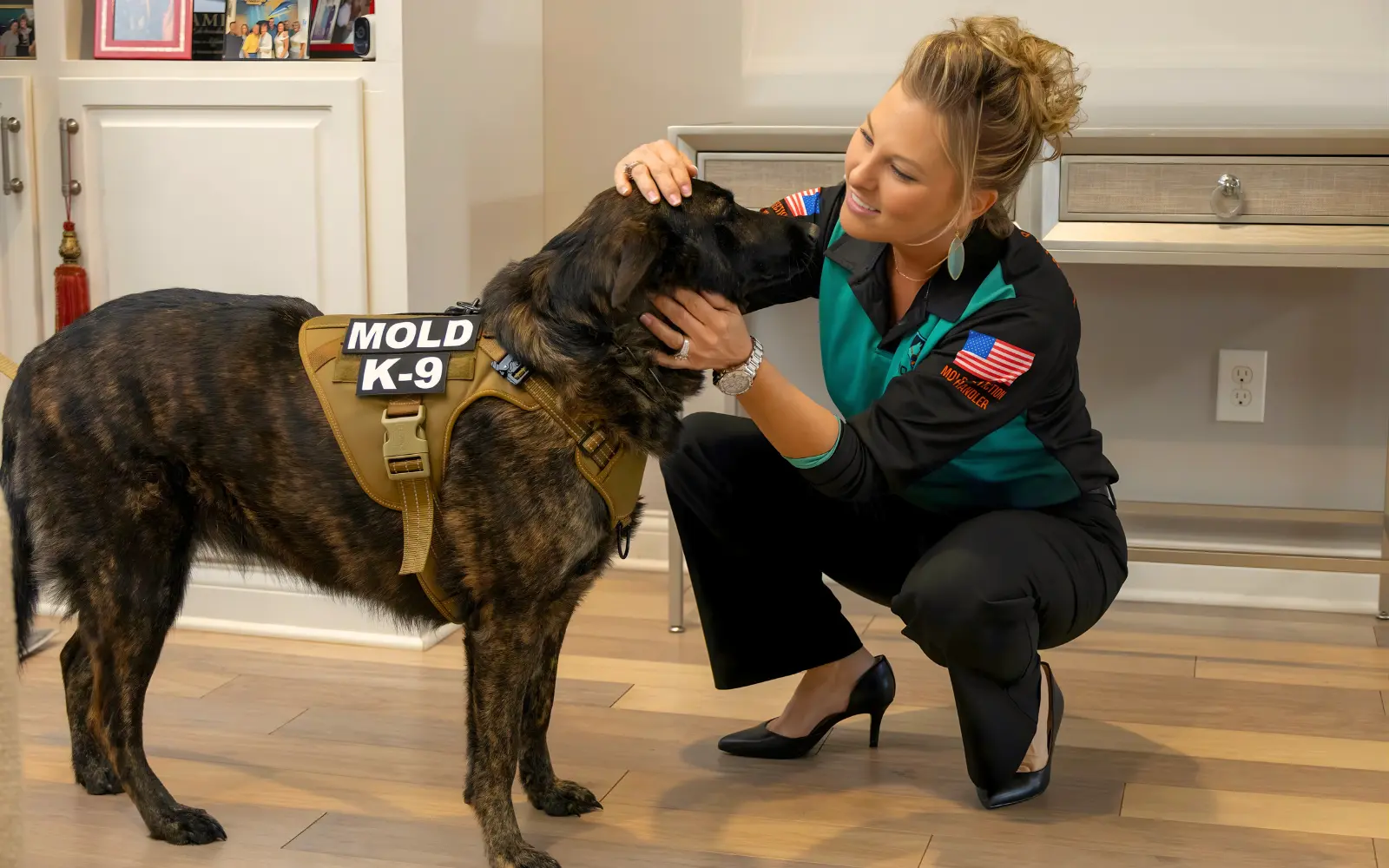
If you’re tired of wondering where hidden mold is coming from, schedule a mold dog inspection and get same-day direction.
Stop Guessing and Find the Source
Hidden mold in your home can be frustrating. We get it. It’s stressful to feel like your home may be making you sick and still not know where the problem is.
But hidden mold usually has a source. It may be behind a wall, under flooring, around a chimney, inside a ceiling cavity, behind cabinetry, in a crawl space, in an attic, or around the HVAC system. Once you know where the dog detects mold odor, you can stop guessing and start making a more focused plan.
Mold Dog Network uses trained mold detection dogs to locate hidden mold quickly, accurately, and non-invasively, helping homeowners identify problems that traditional inspections often miss.
If you suspect hidden mold in your home, you don’t have to keep living with the question mark. Schedule a mold dog inspection with Mold Dog Network and find out where the problem may be hiding.