
Can a House Full of Mold Be Saved? What to Know Before You Panic
Finding out your home may have mold can feel terrifying.
Maybe a dog alerted in several rooms. Maybe an inspector found mold behind a wall. Maybe remediation opened one area and the problem was worse than anyone expected. Or maybe your family has been feeling sick for months and you’re starting to wonder, Is this whole house contaminated?
That thought can send anyone into panic mode.
But before you decide the house is ruined, take a breath.
A house with mold may still be saved. What matters is finding out where the mold is, why it’s there, how far it’s spread, and what needs to happen next. Panic can lead to expensive guesses. More data gives you a plan.
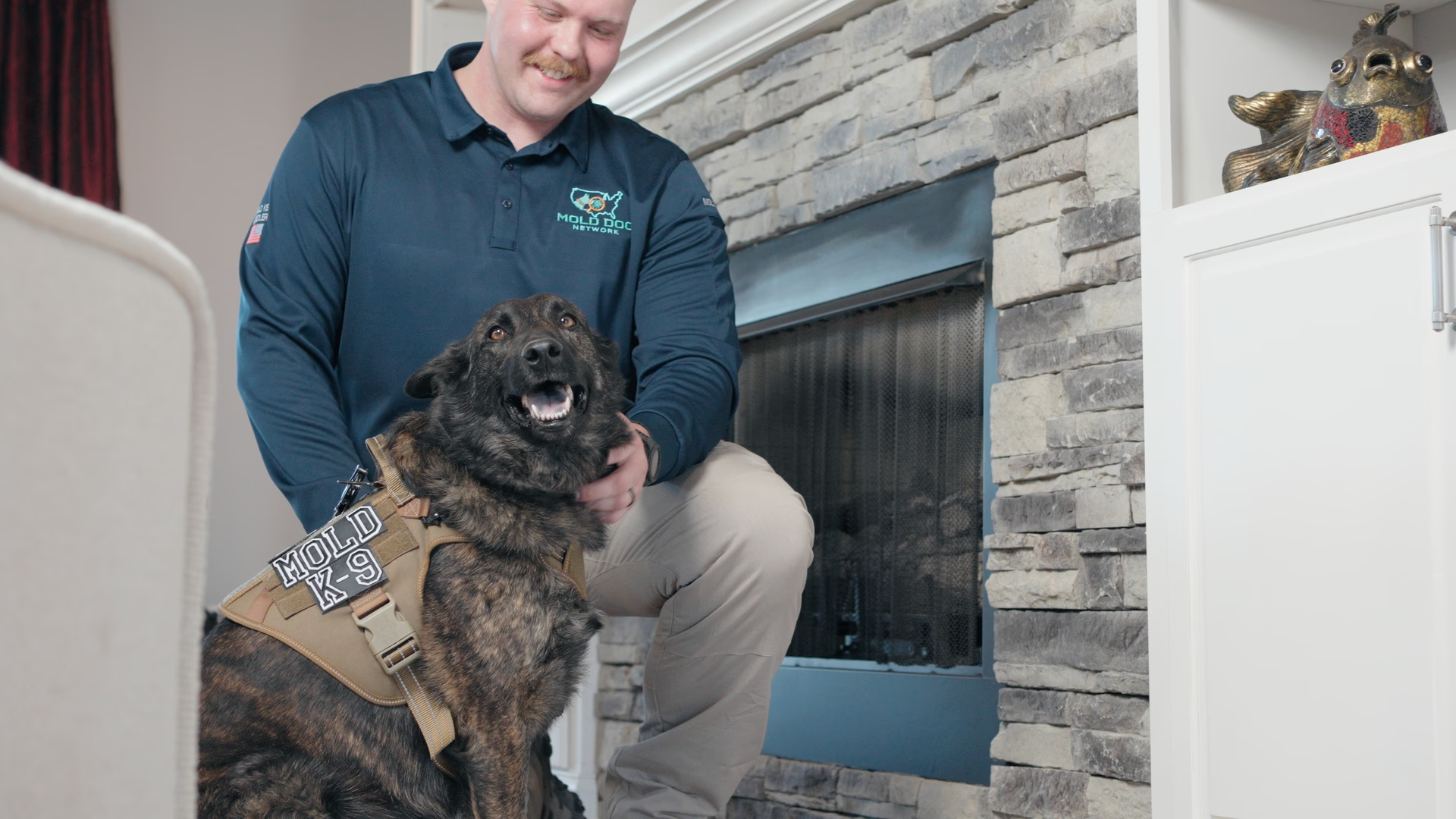
That’s exactly where Mold Dog Network helps. Trained mold detection dogs locate mold scent signatures so homeowners can stop wondering where the problem is hiding and start making informed decisions.
Tina Craig, co-owner of Mold Dog Network, described the relief many homeowners feel after finally getting answers:
“No more of that. The guessing game is over. You now know what you’re dealing with.”
Tina Craig
If you’re worried there’s hidden mold in your home, the goal isn’t to jump straight to worst-case scenarios. The goal is to find the source.
- Can a House Full of Mold Be Saved?
- One Mold Source Can Still Affect the Whole Home
- When Mold Looks Widespread, What Matters Most?
- A Severe Mold Problem Doesn’t Always Look Severe at First
- Why Guessing Makes Mold Problems More Expensive
- How Mold Dogs Help When You’re Afraid the Whole House Is Affected
- What to Do Before You Decide the House Is Ruined
- A Mold Problem Needs a Plan, Not Panic
Can a House Full of Mold Be Saved?
Yes, many homes with mold can be saved.
But the honest answer is: it depends.
Some homes have one hidden mold source that needs targeted remediation. Others have multiple affected areas. Some have mold behind walls, under flooring, around chimneys, inside HVAC-related cavities, in crawl spaces, or in attics. Severe cases may require major remediation, material removal, structural evaluation, or temporary relocation for sensitive occupants.
What matters most is not just whether mold exists. It’s the full picture:
- How much mold is present
- Where the mold is growing
- What materials are affected
- Whether the moisture source can be fixed
- Whether remediation is done correctly
- Whether there’s structural damage
- Whether people in the home can safely remain during the process
The EPA explains that moisture control is the key to mold control. If the water problem isn’t fixed, mold growth can come back.
That’s why the first step isn’t ripping everything out. It’s understanding what caused the mold in the first place.
Was there a roof leak? A plumbing leak? A sump pump failure? A chimney issue? HVAC condensation? Poor ventilation? A crawl space problem? Missing exterior building materials? Until the moisture source is addressed, remediation may not hold.
Tina said it plainly:
“You either way you go you do not want to have the mold making your home its home.”
Tina Craig
That doesn’t mean you should panic. It means you should take the problem seriously and get clear information before making expensive decisions.
If you’re worried your house has widespread mold, the first step is finding where the problem is hiding. A mold dog inspection can help you get a clearer picture before making big decisions.
One Mold Source Can Still Affect the Whole Home
One of the biggest misunderstandings about mold is that a “small” source always means a small problem.
That’s not always true.
Sometimes a homeowner feels relieved when the dog alerts to only one area. And yes, one alert is usually less overwhelming than twenty. But one active mold source can still affect the air, odor, dust, and overall feel of the home, especially if it’s connected to airflow.
Tina made this point clearly:
“One critical thing to remember is that just because the canine detects on one primary place… that one location can make an entire house sick.”
Tina Craig
That may happen when the source is near an HVAC system, inside a wall cavity, under flooring, in an attic, around a crawl space, or in a location where air naturally moves through the home.
The EPA explains that mold reproduces through tiny spores that travel through indoor and outdoor air.
That doesn’t mean one alert always equals whole-house contamination. It means one source shouldn’t be dismissed just because it looks contained from the outside.
A hidden colony under a garden tub, behind a fireplace wall, around an HVAC line, or inside a ceiling cavity may be more impactful than it appears. The question is not only “How many areas were found?” It’s also:
Where is the mold, how much moisture is feeding it, and how is air moving around it?
That’s why locating the source matters so much. You don’t want to overreact, but you also don’t want to ignore the one area that may be affecting the whole home.
If you’ve been told there’s “only one spot,” don’t ignore it. Mold Dog Network can help locate the source so the next professional can evaluate how far the impact may have spread.
When Mold Looks Widespread, What Matters Most?
When a home feels like it may be full of mold, it’s easy to spiral.
You start thinking about the cost. The walls. The floors. The furniture. The air. The health symptoms. The possibility of moving out. The fear that remediation won’t work.
We get it. Mold remediation can be stressful, especially when you don’t know how far the problem goes.
But widespread concern still needs a structured plan. These are the questions that matter most.
1. Where is the source?
Hidden mold has to be located before it can be properly addressed. It may be behind walls, under floors, inside ceilings, around chimneys, behind cabinets, in HVAC systems, in crawl spaces, or in attics.
If you don’t know where the mold is, every next step becomes more expensive and uncertain.
2. What caused the moisture?
Mold isn’t the root problem. Moisture is.
Leaks, floods, humidity, condensation, chimney failures, HVAC issues, sump pump problems, poor drainage, and building defects can all feed mold growth. If the moisture source isn’t fixed, the mold can come back.
3. What materials are affected?
Porous materials like drywall, insulation, carpet padding, and some wood products may need removal depending on contamination and condition. Non-porous or semi-porous materials may be handled differently by remediation professionals.
This is where qualified remediation guidance matters.
4. Are people in the home getting sick?
Mold Dog Network doesn’t diagnose medical conditions. But many families call because they feel worse at home and better away from the house.
The CDC states mold can cause symptoms like stuffy nose, sore throat, coughing, wheezing, burning eyes, or skin rash in some people, while people with asthma, mold allergies, immune compromise, or chronic lung disease may be more vulnerable.
5. Has remediation already failed?
This is a major red flag.
Tina talked about families who had already tried to solve the problem but were still sick:
“Some of these families have had multiple mitigations done and they’re still sick… the mitigation companies are missing it. Industrial hygienists are missing it.”
Tina Craig
That’s heartbreaking, but it also shows why source-finding matters. If remediation doesn’t address the actual hidden source, the home may still feel wrong afterward.
If remediation has already been done but the home still feels wrong, a mold dog inspection can help identify whether hidden mold sources were missed.
A Severe Mold Problem Doesn’t Always Look Severe at First
A severe mold problem doesn’t always look dramatic from the outside.
That’s one of the hardest things for homeowners to understand. You may expect a serious mold issue to come with obvious stains, black patches, peeling walls, or a heavy odor in every room.
Sometimes it does.
But sometimes the home looks cleaner than the cavities behind it.
Tina shared one particularly memorable inspection where the dog alerted in multiple areas:
“We had one where the canine detected on floors, walls, and ceiling… each one of those chambers was full of mold and it was visible mold.”
Tina Craig
That’s the kind of case that reminds homeowners not to rely on appearance alone.
The room may look normal. The floor may feel mostly fine. The ceiling may have been painted. The wall may look freshly repaired. But inside the chamber, mold may be growing on materials that stayed wet long after the visible surface dried.
This can happen after roof leaks, plumbing failures, upstairs bathroom leaks, appliance leaks, floods, crawl space moisture, HVAC condensation, or building defects.
That doesn’t mean every hidden mold concern is severe. Many inspections find targeted areas rather than whole-house problems. But if you’re asking, can a house full of mold be saved, the first thing you need is an accurate picture of what’s actually happening.
Not fear. Not assumptions. Not “maybe it’s everywhere.”
Actual locations.
That’s where mold dogs can help.
If you’re worried mold may be more widespread than it looks, don’t rely on appearances alone. A mold dog inspection can help identify hidden areas of concern.
Why Guessing Makes Mold Problems More Expensive
Guessing is one of the fastest ways to make a mold problem more stressful and more expensive.
When you don’t know where the source is, you may end up paying for steps that don’t solve the problem.
That can look like:
- Opening the wrong walls
- Pulling up flooring unnecessarily
- Cleaning ducts when the source is somewhere else
- Replacing finishes without fixing the leak
- Painting over stains
- Paying for repeated testing without a clear location
- Remediating visible mold but missing hidden mold
- Going through multiple rounds of remediation
Every wrong guess costs money, time, and emotional energy.
Tina described the difference a mold dog inspection can make:
“They finally have answers that nobody else could give them… now they don’t have to tear their whole house up looking for this.”
Tina Craig
That’s the goal.
Not to create panic. Not to make the problem seem worse. Not to tell homeowners their house is doomed.
The goal is to stop searching blindly.
A mold dog inspection helps locate areas where mold odor is strongest, giving homeowners and remediation professionals a more focused place to begin.
That matters because controlled remediation starts with knowing where the problem is.
If your home has hidden mold behind walls, under floors, around chimneys, inside HVAC-related cavities, in crawl spaces, or in attics, the source needs to be found before the fix can be trusted.
Before spending money on exploratory demolition or another round of vague testing, find the source. Mold Dog Network can help you focus the next step.
How Mold Dogs Help When You’re Afraid the Whole House Is Affected
When you’re afraid your house is full of mold, you don’t need more vague opinions.
You need a clearer map.
A mold dog inspection is designed to help identify where mold odor is present, even when it’s hidden behind finished materials. During the inspection, a trained handler and mold detection dog move through the property systematically. The dog searches for mold scent signatures. When the dog detects that scent, it gives a trained alert. The handler documents the alert areas and provides a report the homeowner can use for next steps.
Tina explained the value this way:
“The cool thing about Mold Dog Network is you’re gonna know if you have a problem and you’re gonna know where the problem hides.”
Tina Craig
That report may help guide remediation, further inspection, contractor evaluation, or moisture-source repairs.
It’s important to be honest here: mold dogs are highly effective, but they’re not magic. Mold Dog Network doesn’t claim that dogs are perfect, and no inspection method can promise every microscopic concern is identified. But from experience, well-trained mold dogs are 90–95% accurate.
That realism matters. It builds trust.
The point isn’t perfection. The point is that mold dogs give homeowners a stronger, non-invasive way to locate hidden mold than guessing, relying only on what’s visible, or opening areas at random.
If you’re overwhelmed by the idea of mold throughout your house, a mold dog inspection can give you a clearer map of where to start.
What to Do Before You Decide the House Is Ruined
Before you decide your house can’t be saved, slow the process down.
A mold concern needs a plan, not panic.
Do:
- Locate the mold source before making major decisions
- Identify and fix the moisture issue
- Document musty odors, water history, symptoms, and known leaks
- Keep humidity controlled
- Use qualified remediation professionals
- Consider temporary relocation if occupants are highly sensitive or symptoms are severe
- Follow medical guidance if a healthcare provider advises you to leave the home
- Schedule a mold dog inspection if hidden mold is suspected
Don’t:
- Assume the house is unsalvageable based on fear alone
- Start tearing out random materials
- Ignore one dog alert because it seems “small”
- Remediate without fixing moisture
- Keep repeating the same failed approach
- Stay in the home if a medical professional advises otherwise
- Cover up odors or stains without investigating
Tina made a practical point about dog alerts:
“Wherever the canine detects, it just is what it is.”
Tina Craig
That can be hard to hear, especially if the alert is in a place you hoped would be fine. But it’s also what helps homeowners move forward.
You don’t have to like the answer to benefit from having it.
Once you know where mold odor is detected, you can work with the right professionals to open, verify, remediate, repair, and prevent the moisture from returning.
Before you decide what the house needs, find out where mold is actually hiding. Mold Dog Network can help you get the answers first.
A Mold Problem Needs a Plan, Not Panic
So, can a house full of mold be saved?
Often, yes. But it depends on the extent of the problem, the materials affected, the moisture source, the occupants’ health needs, and whether remediation is done properly.
The first step is not panic. It’s source location.
We get it. When you’re worried your home is making you sick, every decision feels urgent. But expensive guesses can make the process harder. You need to know where the mold is hiding and what’s feeding it.
Mold Dog Network helps homeowners locate hidden mold non-invasively using trained mold detection dogs, giving you clearer direction before remediation begins.
If you’re afraid your house is full of mold, Mold Dog Network can help you stop guessing and start with the source. Schedule a mold dog inspection today.